
Pepper Spot
Leptosphaerulina arachidicola
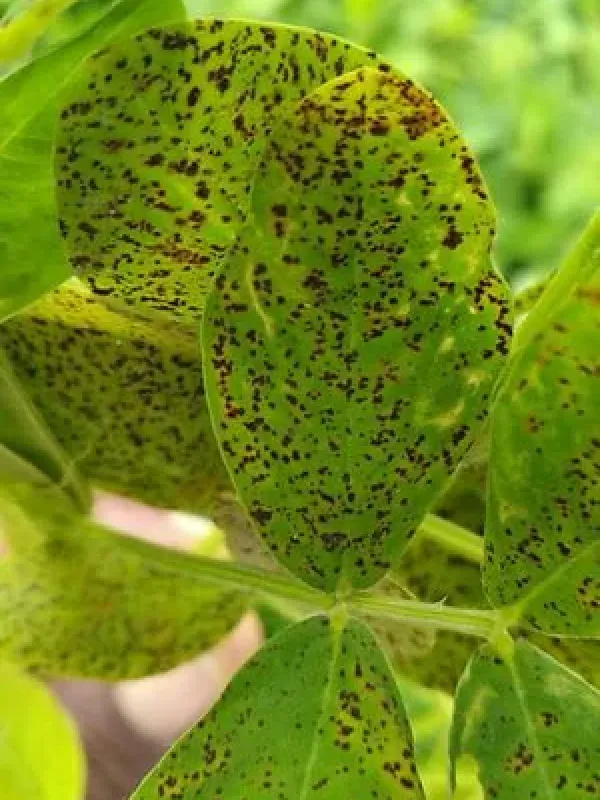
Description
Symptoms
Initial symptoms appear as small, chlorotic spots on the leaves, which gradually develop into brown or dark-colored necrotic lesions.
The center of these lesions often turns grayish, while the edges remain dark, creating a distinct halo around the affected area.
As the disease progresses, these lesions can merge, leading to premature yellowing and leaf shedding, which drastically reduces the canopy leaf area.
Microscopic black dots, representing the fungus's fruiting bodies (pseudothecia), can be observed on the dead tissue when examined under a magnifying glass.
Infection typically starts on the lower leaves and spreads upward, a pattern common to many fungal diseases affecting groundnut crops.
Pathogen
The disease is caused by the ascomycete fungus Leptosphaerulina arachidicola. This microorganism belongs to the class Dothideomycetes and acts as a specialized parasite.
The fungus's life cycle involves the formation of pseudothecia on infected plant debris left in the soil after harvest. These structures serve as the primary source of inoculum for the next growing season.
During the growing season, the pathogen spreads via ascospores, which are released into the atmosphere under moist conditions and dispersed by wind to healthy plant tissues.
The fungus primarily infects the leaf foliage, but under favorable environmental conditions, the infection can also spread to petioles and stems, reducing the overall photosynthetic capacity.
The pathogen is morphologically adapted to germinate rapidly in the presence of free moisture on the leaf surface, which makes it particularly destructive in humid temperate climates.
Conditions for development
The primary factor triggering Pepper Spot development is high relative humidity (above 80%) combined with heavy dew during night and morning hours.
The optimal temperature range for mycelial growth and active sporulation is between +20°C and +28°C, which coincides with the peanut crop's active growing phase.
Free moisture on leaf surfaces for several consecutive hours is essential for successful spore germination and infection penetration.
Densely planted fields that restrict airflow and promote humidity buildup within the canopy significantly accelerate the spread of the disease.
Prolonged rainy weather during critical stages of plant development can trigger severe epidemics, affecting nearly the entire foliage of the crop.
Why it matters
Pepper Spot causes significant yield losses in peanuts by reducing the leaf surface area responsible for photosynthesis.
Severe infection leads to substantial plant weakening, resulting in lower bean mass and poorly filled pods.
Premature defoliation deprives the plant of necessary nutrients, negatively impacting both the quality and quantity of the final produce.
During widespread infection, agronomists observe a sharp decline in oil content and seed quality, which directly reduces the market value of the harvest.
Furthermore, weakened plants become more susceptible to secondary infections, which can collectively lead to total yield losses of up to 20–30%.
Protection
Effective management begins with proper crop rotation, with a recommended break of at least 3–4 years between peanut plantings on the same field.
Deep plowing of crop residues is a crucial cultural practice, as it helps bury the primary inoculum and prevents the buildup of the fungus in the soil.
The application of systemic fungicides at the early onset of disease symptoms is essential to effectively suppress fungal development during the growing season.
Regular field scouting and monitoring are vital to timely identify the disease and implement necessary control measures to protect crop health.
- Planting resistant peanut cultivars.
- Applying balanced mineral fertilizers, avoiding nitrogen over-application.
- Implementing effective weed control to remove potential alternative hosts.
Discussion
No discussions yet — be the first.