
Coccocarpia
Coccocarpia
Coccocarpia is a genus of foliose lichens belonging to the family Coccocarpiaceae. It is important to clarify that this is not a plant disease in the agricultural sense, but a non-parasitic organism.
What the section contains
Coccocarpia
These organisms are symbiotic entities composed of a fungal partner and cyanobacteria (genus Nostoc). They use the tree bark simply as a substrate to anchor themselves.
Because they do not penetrate the living cells of the host plant or extract sap, they are classified as epiphytes rather than pathogens. They derive all necessary nutrition from the atmosphere.
There are approximately 20 species in this genus, primarily found in humid tropical and subtropical environments, with rare occurrences in temperate forest zones.
The presence of Coccocarpia on tree trunks is a natural ecological phenomenon and acts as a sign of environmental stability and air quality in the surrounding area.
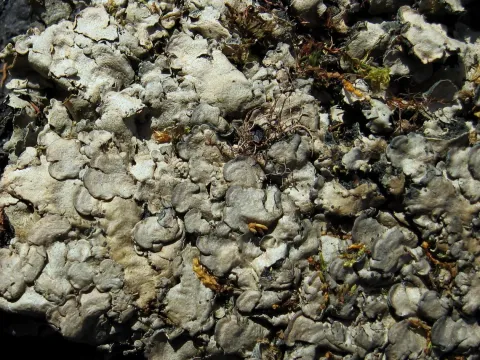
Coccocarpia typically appears as tightly appressed, foliose rosettes on the surface of tree bark. The thallus color ranges from grey to bluish-grey or light brown.
The surface of the thallus often feels velvety to the touch. The margins of the rosettes are frequently slightly upturned, giving the lichen a distinct profile.
When moist, the lichen becomes more vivid and pliable, which makes it easier to spot during or immediately after rainy weather in the forest or garden.
Over time, these rosettes can coalesce into larger patches, covering significant areas of rough, old bark, changing the visual texture of the tree surface.
Microscopically, the structure reveals a clear layering where the cyanobacterial photobionts are integrated into the fungal hyphae network.
These lichens have a high requirement for atmospheric humidity. They thrive in areas with frequent rainfall or consistent fog and are largely absent from arid zones.
Coccocarpia species are known as sensitive bioindicators of air quality, particularly their intolerance to high levels of sulfur dioxide and other pollutants.
They prefer semi-shaded locations with moderate light, where the humidity remains high enough to prevent desiccation during the day.
Temperature stability is crucial for their development; they are rarely found in climates with harsh, long-lasting frosts, preferring warmer, stable conditions.
Mature trees with slow-growing, fissured bark provide the best conditions for the spores to germinate and for the thallus to maintain a firm attachment.
Coccocarpia does not cause direct harm to trees. It does not damage wood, cause rot, or compete for nutrients with the host plant.
Some concerns exist regarding the potential for dense lichen coverage to interfere with gas exchange in the bark, though there is little evidence of significant negative impact.
In neglected orchards, a thick covering might hide minor pests or create damp micro-pockets that favor other, truly pathogenic microorganisms.
For growers, the presence of these lichens is often a diagnostic symptom indicating that a tree is old or that the bark growth has slowed down significantly.
Overall, they are considered harmless and are an integral part of the biodiversity in healthy, mature forest and orchard ecosystems.
Since Coccocarpia is not a disease, chemical fungicide treatments are neither recommended nor effective, as they could disrupt the beneficial ecosystem.
Standard orchard maintenance, such as regular pruning to improve airflow and light penetration, is the most effective way to prevent excessive lichen growth.
If physical removal is desired for aesthetic reasons, gently brushing the bark with a soft tool during the dormant season is sufficient.
Whitewashing trunks with lime is a traditional horticultural practice that alters the surface pH, making the bark less hospitable for lichen colonization.
Maintaining the overall vigor of the tree through proper irrigation and nutrition ensures steady bark growth, which naturally discourages the accumulation of epiphyte colonies.