
Coccocarpiaceae
Coccocarpiaceae
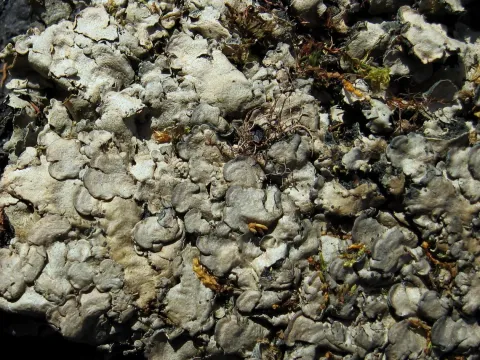
The Coccocarpiaceae family consists of lichens characterized by a foliose thallus. They typically appear as rosette-shaped or irregularly spread plates that are firmly attached to the substrate.
What the section contains
Coccocarpiaceae
The color of the thalli ranges from grayish and bluish tones to dark brown. A crucial diagnostic feature is the lower surface of the thallus, which is often devoid of rhizines, helping to distinguish these species.
A distinctive trait is the presence of cyanobacteria as the photobiont. This gives the thalli a specific texture that can become gelatinous in high humidity and brittle during dry conditions.
Fruiting bodies, known as apothecia, develop on the thallus surface. They exhibit clear coloration, often contrasting with the main thallus color, which is a key identification marker for researchers.
When examining tree bark, one may notice the characteristic wrinkling of the lobes. These features depend on light levels and moisture availability, which shape the appearance of each specimen.
It is important to clarify that Coccocarpiaceae are not pathogens or plant diseases. They are a family of symbiotic organisms composed of a fungal partner and cyanobacteria.
Biologically, they do not cause tissue damage to plants. Lichens use tree bark merely as a physical substrate for attachment and do not engage in parasitic relationships with the host plant.
The fungal component provides protection for the photobiont against desiccation and intense radiation, while the cyanobacteria provide energy through photosynthesis, forming a mutualistic symbiosis.
The presence of these organisms on fruit tree bark is often mistaken for a disease, yet they are not the agents of necrosis, decay, or other phytopathological processes.
Study of the Coccocarpiaceae family belongs to the fields of lichenology and ecology, as they function as epiphytes rather than pests within agricultural ecosystems.
Coccocarpiaceae prefer regions with a moderately humid and stable climate. They are extremely sensitive to air pollution, particularly sulfur dioxide, making them important bioindicators.
Their primary habitats include old-growth forests, humid orchards, and coastal zones. They rarely thrive in areas with significant industrial air pollution.
For successful growth, they require available space on tree bark and moderate light levels. Excessive direct sunlight can inhibit their development and metabolic activity.
Seasonal moisture fluctuations significantly impact the metabolic rate of the photobionts within the lichen. Periods of prolonged rainfall promote their growth and expansion.
Substrate stability is critical; therefore, they are more commonly found on older trees with stable, non-shedding bark rather than on young, fast-growing saplings.
From an agronomic perspective, members of this family do not harm crops. They do not act as parasites and do not extract nutrients from the plant's tissues.
Massive colonization of tree trunks by epiphytes may sometimes provide shelter for small pests like scale insects, but this is a consequence of environmental conditions rather than direct damage caused by the lichen.
Surface coverage of tree bark by lichens does not impede gas exchange to a degree that would affect crop yield or the overall health of garden trees.
In professional orchard management, a large presence of lichens is an indicator of low-intensity maintenance rather than a threat from pathogenic flora.
Consequently, the harmfulness of Coccocarpiaceae to agriculture is non-existent; they are not factors in reducing the productivity of agricultural crops.
Specific control measures against Coccocarpiaceae are unnecessary as they are not pests. If their presence is undesirable for aesthetic reasons, standard maintenance practices are sufficient.
- Mechanical cleaning of tree bark using soft brushes or scrapers.
- Whitewashing trunks with lime solutions for general maintenance.
- Ensuring proper pruning to improve canopy ventilation.
- Applying fertilizers to stimulate active tree growth.
- Sanitary pruning to improve overall orchard health.
Cleaning bark is primarily beneficial for removing dead tissues where harmful insects might overwinter. This is a standard sanitation procedure rather than lichen eradication.
The use of heavy fungicides to combat lichens is ineffective and irrational, as these chemicals do not target disease pathogens and only lead to environmental pollution.
The best strategy is to maintain high-quality agricultural practices that promote tree vitality, making the bark less hospitable for long-term lichen colonization.