
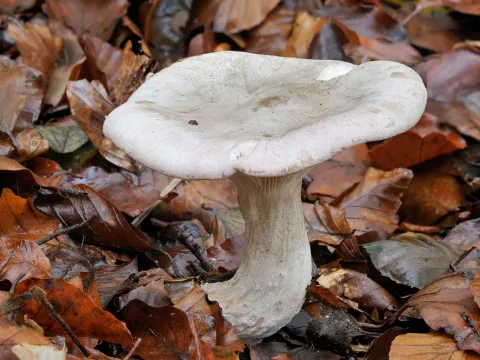
Clouded agaric
Clitocybe nebularis
The Clouded agaric (Clitocybe nebularis) is not a plant pathogen and does not cause diseases in agricultural crops. In agronomy, it is classified as a saprotrophic fungus that lives on decomposing organic matter.
What the section contains
Clouded agaric
This fungus acts as a decomposer, feeding on forest floor litter, dead leaves, and decaying wood. It lacks the biological mechanisms required to infect or damage the living tissues of cultivated plants.
The mycelium develops in the upper layers of the soil, significantly contributing to the mineralization of organic compounds. It is a vital component of the natural nutrient cycle in various ecosystems.
There is no evidence that Clitocybe nebularis produces toxins or enzymes harmful to the vascular systems of crops. It coexists with plant roots without causing any antagonistic or parasitic interactions.
Therefore, it is scientifically incorrect to categorize this organism as a plant disease. Its presence in the field is a sign of healthy biological activity within the soil structure.
Clouded agaric thrives in environments with high moisture levels and a steady supply of decaying organic matter. It is most active during the autumn months when rainfall is frequent.
The fungus prefers humus-rich soils found in woodlands or areas adjacent to forest edges. It requires a thick layer of organic debris, such as leaf mold or pine needles, to sustain its mycelial network.
Optimal growth depends on consistent humidity levels. Periods of prolonged drought will typically halt the development of fruit bodies, as the fungus is sensitive to substrate desiccation.
In managed agricultural environments, the application of fresh wood chips or excessive surface mulching can provide an ideal environment for the colonization of this fungus near cultivated areas.
Dispersal is achieved through spores carried by wind currents. These spores settle on damp substrates, where they germinate to initiate new mycelial colonies under favorable microclimatic conditions.
The Clouded agaric poses no threat to crop yield or plant health. As a saprotroph, it consumes only non-living material, meaning it cannot damage healthy or even stressed crops.
Unlike parasitic fungi that weaken plant defenses, this species is entirely benign. Its activities are restricted to the decomposition of dead organic debris present in the soil profile.
Literature on plant pathology confirms that Clitocybe nebularis is not associated with any wilting, rotting, or physiological disorders in vegetables, fruits, or cereals.
The presence of this fungus is often overlooked or considered beneficial, as it helps in the conversion of organic matter into stable humus, potentially improving long-term soil structure.
No agricultural damage has ever been attributed to this species. Its presence is merely a reflection of the organic content of the soil rather than a failure in plant health management.
Because the Clouded agaric is not a pathogen, there is no need for chemical control or fungicide application. Treating this organism as a disease is unnecessary and counterproductive to sustainable farming.
If fruit bodies are unwanted for any reason, they can be removed manually from the soil surface and disposed of as compost, ensuring they do not remain on the field.
Preventative measures focus on general site hygiene, such as managing the accumulation of plant debris. Keeping organic matter properly incorporated into the soil prevents the formation of thick surface mats favored by the fungus.
Improving soil drainage and aeration helps maintain a balance that discourages the mass development of saprotrophic fungi. These standard practices are sufficient to manage the presence of the species.
No further control is required as the fungus naturally integrates into the soil ecosystem. Its role in nutrient cycling makes it a part of the healthy biotic community rather than a pest to be eradicated.