
Clover leaf spot
Polythrincium trifolii
Description
Symptoms
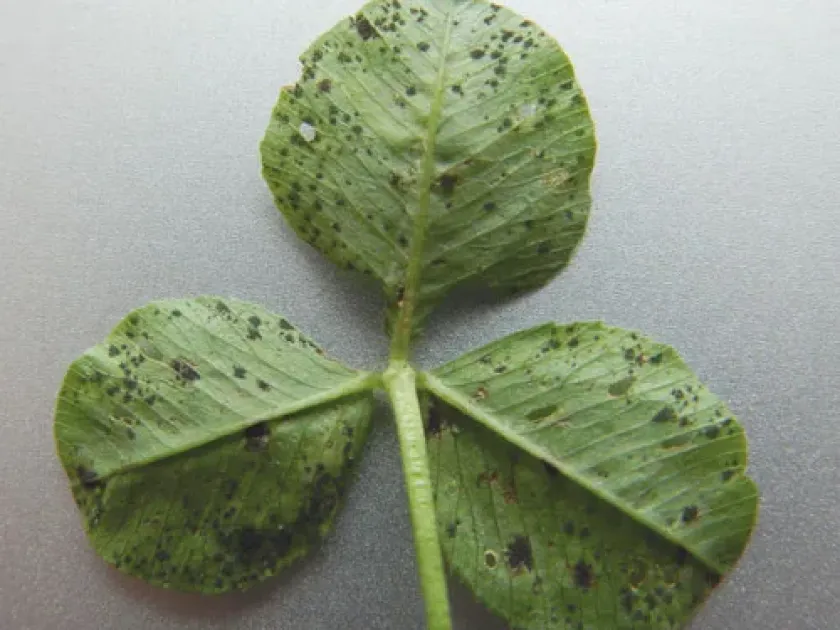
The primary symptom of the disease is the appearance of small, circular, black or dark brown spots on the leaves. These spots often grow in number and may coalesce, covering most of the leaf surface.
As the infection progresses, affected leaves show signs of chlorosis (yellowing) followed by necrosis. In severe cases, the foliage dries out prematurely and falls, severely impacting the plant's vitality.
The infection is not limited to leaves; petioles and stems can also be colonized by the fungus, leading to overall plant weakness and reduced photosynthetic efficiency.
Symptoms are most visible in the mid-to-late summer months when environmental conditions favor fungal reproduction and spread across the field canopy.
- Black spots on both sides of the leaves
- Leaf chlorosis and premature senescence
- Stunted stem growth
- Coalescence of lesions leading to tissue necrosis
Pathogen
The disease is caused by the fungus Polythrincium trifolii, a specialized pathogen that affects various clover species. It belongs to the order of hyphomycetes and thrives specifically on plants of the Trifolium genus.
The fungus produces numerous dark, cushion-like fruiting bodies (stromata) on both sides of the leaves, which serve as the primary source of conidia for spreading the infection during the growing season.
The pathogen overwinters as mycelium and conidia in infected plant debris left on the field surface. Once warmer temperatures and moisture appear in spring, these structures become active again.
Biological specialization is high, meaning this fungus does not typically cross-infect other legumes, but it remains highly persistent in clover-dominant forage systems.
The fungus colonizes the leaf tissues, eventually rupturing the epidermis to release its spores, which is visible as the distinctive dark spotting characteristic of the disease.
Conditions for development
Warm, humid conditions are essential for the development of Polythrincium trifolii. Frequent rainfall, morning dew, and persistent foggy conditions promote rapid conidial germination.
Dense clover stands provide an ideal microclimate for the pathogen by reducing airflow and maintaining a constant level of high humidity within the crop canopy.
Poor crop rotation practices contribute to high levels of inoculum in the soil. Since the fungus survives on plant residues, continuous planting of clover leads to rapid disease buildup.
Nutrient deficiency, particularly regarding potassium, makes clover plants significantly more susceptible to fungal pathogens and weakens their natural defensive responses.
The period between hay cuts is often the most critical time for the disease, as rapid regrowth combined with summer humidity creates an environment conducive to secondary infections.
Why it matters
The disease primarily reduces the yield and nutritional value of the clover crop. Infested leaves contain fewer proteins and minerals, lowering the quality of the harvested hay.
Severely affected plants struggle with photosynthesis, leading to reduced root reserves. This makes the stand more vulnerable to winter kill and competition from weeds.
Seed production is negatively impacted when the crop is infected, as the plant directs fewer resources toward seed development and maturation, resulting in lower yields and poor seed quality.
Persistent infestations often lead to the thinning of the clover stand, forcing farmers to replace the forage crop sooner than expected, which represents a significant financial loss.
The reduction in the overall longevity of the clover stand is one of the main economic consequences for farmers relying on these forage crops for multi-year feed production.
Protection
Crop rotation is the most effective preventative measure. Farmers should avoid planting clover in the same field for at least 3-4 years to allow fungal inoculum to decline naturally.
Choosing resistant or tolerant clover varieties is essential for managing the disease in regions where this pathogen is endemic and conditions for infection are common.
Early harvesting of clover for hay or silage can help reduce the amount of inoculum present in the field, as it physically removes the infected foliage before the fungus fully sporulates.
Proper field sanitation, including deep plowing and thorough incorporation of crop residues into the soil, helps to accelerate the decomposition of infected debris and kills the pathogen.
Balanced fertilization, especially maintaining adequate potassium levels, helps clover plants develop stronger cell walls and better resistance against fungal invasions.
Discussion
No discussions yet — be the first.