
Clover rust
Uromyces fallens
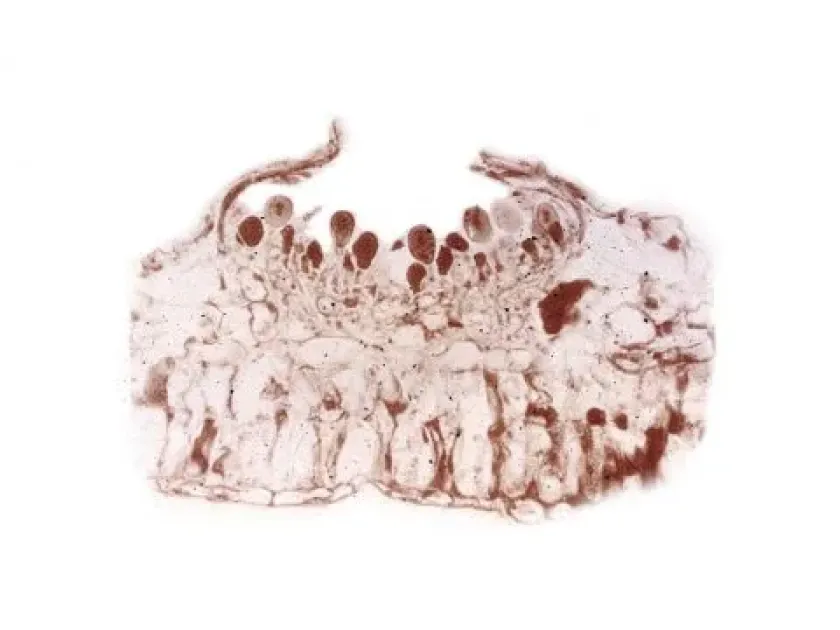
Description
Symptoms
The primary symptom is the appearance of numerous small, powdery, cinnamon-brown pustules, known as uredinia, on both the upper and lower surfaces of the leaves.
As the infection progresses, these pustules can spread to petioles and stems, causing them to become chlorotic, distorted, and stunted in their overall development.
Towards the end of the season, the color of the pustules shifts from reddish-brown to dark brown or nearly black as the fungus develops teliospores.
Heavy infections lead to premature yellowing, browning, and senescence of the leaves, resulting in significant defoliation and a general weakened state of the plant.
Infected patches are often visible across the field, as the wind-dispersed spores travel from plant to plant, creating localized clusters of disease.
Pathogen
Clover rust is caused by the fungus Uromyces fallens, an obligate parasite belonging to the order Pucciniales. It is highly specific to clover species, particularly red clover.
The fungus completes its life cycle by producing different types of spores, including urediniospores, which facilitate the rapid spread of the disease during the growing season.
As an obligate pathogen, Uromyces fallens relies entirely on living host tissue to obtain nutrients. It grows as a mycelium within the intercellular spaces of the clover leaves and stems.
The disease survives the winter as dormant mycelium in the root crowns of infected plants or as thick-walled teliospores on plant debris left in the field.
In the spring, these overwintering structures germinate to produce spores that initiate new infection cycles, maintaining the fungus's presence in the field year after year.
Conditions for development
The development of clover rust is highly dependent on environmental factors, particularly high humidity and warm temperatures ranging from 18 to 25 degrees Celsius.
Frequent rainfall, heavy dew, or irrigation patterns that keep the canopy moist for extended periods provide ideal conditions for spore germination and infection.
Poor air circulation within dense stands or weed-choked fields creates a microclimate that prevents rapid drying of the foliage, exacerbating the disease spread.
Nutrient stress, particularly potassium deficiency, can make the clover plants more susceptible to rust attack, as the plant's natural defense mechanisms are weakened.
Mild winters followed by warm, damp springs often result in an earlier and more severe onset of the disease, potentially leading to epidemic levels in susceptible varieties.
Why it matters
Clover rust causes significant losses in both forage yield and quality. The loss of leaf tissue reduces the plant's ability to photosynthesize and accumulate biomass.
Nutritional value is severely compromised, as the rust infection lowers the protein and carotene content of the hay, making it less suitable for livestock feed.
The disease reduces the plant's vigor, which can lead to thinning stands and a decrease in the overall longevity of the clover crop in a field.
In severe cases, farmers may experience significant economic losses, especially if the infestation hits at a critical time for harvesting high-quality hay or seed.
Seed production is also negatively affected, as the rust competes for nutrients that would otherwise go into seed development, leading to smaller, less viable seeds.
Protection
The most effective management strategy is the selection and planting of resistant clover varieties, which are specifically bred to withstand rust infection.
Implementing proper crop rotation and maintaining adequate field hygiene helps reduce the amount of inoculum that survives from one season to the next.
Timely harvesting of the clover crop helps to remove the infected plant material before the fungus can produce massive amounts of secondary spores.
Balanced fertilization, particularly ensuring adequate levels of potassium and phosphorus, improves plant health and helps the crop better tolerate rust pressure.
In certain intensive seed production systems, the application of fungicides may be necessary, though this should always be done in accordance with local regulations.
Discussion
No discussions yet — be the first.