

Description
Symptoms
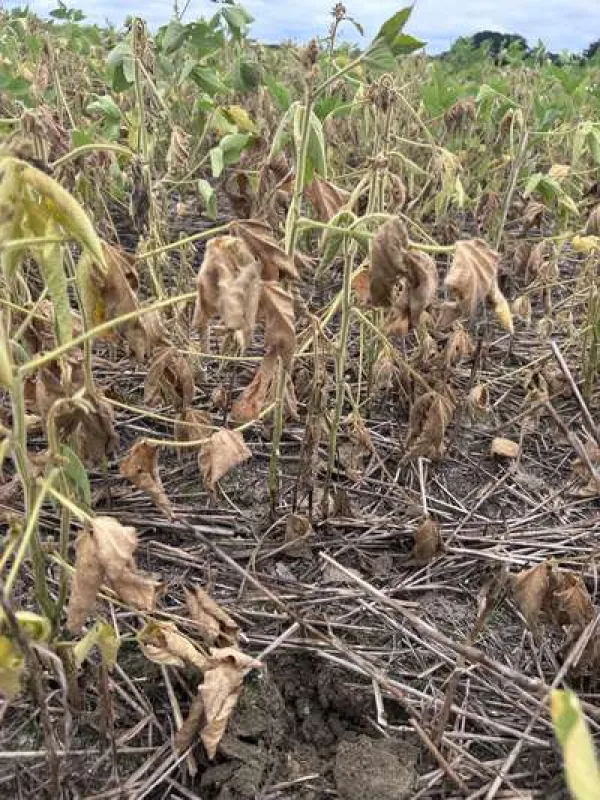
Symptoms of clover anthracnose initially appear as elongated or oval, light brown lesions with a dark border on stems and petioles.
As the infection progresses, these lesions darken and sink into the tissue, often causing the stem to collapse or break at the point of infection.
In humid conditions, small black fungal fruiting bodies called acervuli develop within the lesions, releasing masses of spores.
Wilting and curling of the upper parts of the stems are common visual indicators that the vascular system is being compromised by the fungus.
Severe infestations often cause the entire plant to yellow, wither, and eventually die, leading to visible thin spots or bare patches in the field.
Pathogen
The disease is caused by the fungus Colletotrichum destructivum, which is a common pathogen attacking various leguminous plants.
The fungus produces spores (conidia) in specialized structures that are easily dispersed by splashing rain and high-humidity wind currents.
It can survive as mycelium in infected plant debris, soil, or on seeds, making it a persistent threat in many clover-growing regions.
The pathogen thrives by penetrating the host's epidermal layer and colonizing the inner tissues, absorbing nutrients and damaging the plant's structural integrity.
Its ability to form latent infections means that symptoms may not always be visible until favorable environmental conditions trigger a mass outbreak.
Conditions for development
Warm and humid weather conditions are the primary drivers for the development and spread of clover anthracnose across a field.
Optimal temperatures for fungal growth generally range between +20°C and +25°C, providing the pathogen with high metabolic activity.
Frequent rainfall acts as a dispersal mechanism, splashing spores from the soil or lower infected leaves to the upper parts of the canopy.
Dense clover stands that lack proper air circulation create a localized humid microclimate, which significantly speeds up the infection cycle.
Nutrient deficiencies, particularly low potassium levels, make plants more susceptible to the stress caused by the fungal attack.
Why it matters
Clover anthracnose causes significant yield losses by reducing the total biomass of the clover crop, which is crucial for livestock fodder.
The nutritional quality of the forage is diminished, as infected plants have lower protein content and decreased digestibility for grazing animals.
In seed production fields, the disease reduces both the quantity and quality of seeds, posing a risk of spreading the pathogen to new areas.
The premature death of stands often requires early replanting, leading to increased costs for seeds, fertilizers, and field preparation.
Over time, the disease limits the longevity of the clover stand, forcing farmers to shorten rotation cycles and manage fields more intensively.
Protection
The most effective strategy for managing clover anthracnose is the use of resistant or tolerant cultivars, which minimize the impact of the fungus.
Implementing a long-term crop rotation strategy prevents the buildup of the pathogen in the soil and reduces the risk of recurrent infections.
Treating seeds with appropriate fungicides before planting is essential to eliminate any seed-borne inoculum that could start an outbreak.
Proper nutrient management, ensuring adequate levels of potassium and phosphorus, helps plants withstand the impact of environmental and biotic stress.
- Regular field scouting to detect early infection.
- Removing and destroying infected plant debris after harvest.
- Maintaining optimal stand density to improve airflow.
- Application of systemic fungicides where economically feasible.
Content graph
Connections · Clover anthracnose
Most often together:
Marketplace
Products · 3


Community
Discussion
No discussions yet — be the first.