
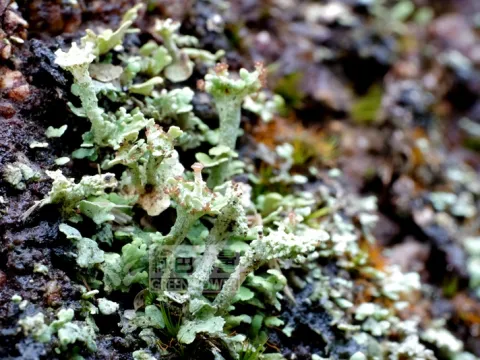
Cladonia
Cladonia
Cladonia is a genus of lichens that appears as bushy, branched, or scale-like growths on the bark of trees. These organisms often form cup-shaped or antler-like structures that vary in color from pale gray to yellowish-green.
What the section contains
Cladonia
You can identify these growths by their specific morphology, which often looks like miniature vegetation clinging to the trunks and main branches. Unlike fungal diseases that rot the wood, these are superficial structures.
A key sign of their presence is the alteration of the bark texture. Over time, the area beneath the lichen may feel spongier or retain more moisture than the surrounding clean bark.
In dry conditions, Cladonia becomes brittle and hard, while during humid weather, it softens and expands. The expansion of these colonies is usually slow but steady if the environmental conditions remain favorable.
It is important to note that their appearance is often linked to the vitality of the tree; healthy, rapidly growing trees shed their bark often enough to prevent significant lichen colonization.
Cladonia is not a plant pathogen in the traditional sense, as it does not feed on the host plant's tissues. It is a composite organism made of a fungus and algae, living in a symbiotic relationship.
While not a parasite, its classification in agronomy is that of an epiphyte. It utilizes the tree surface only as a physical substrate for anchoring and gathering nutrients from the atmosphere.
The reproduction occurs via spores that are dispersed by wind. Once they land on a suitable, damp surface, they begin to develop into the characteristic thallus structures of the lichen.
Biologically, the organism is independent of the tree for its energy needs, as it produces its own nutrients through photosynthesis. However, its presence signifies that the bark is not actively growing or shedding.
It acts as a colonizer of tree surfaces and is highly specialized in surviving on bark, provided that the tree itself remains relatively stable and unperturbed over long periods.
High humidity and poor air circulation are the primary drivers for the development of Cladonia. Lichens thrive in environments where moisture persists on the bark for extended periods.
Trees with dense, unpruned crowns provide the necessary shade and humidity levels that are conducive to the growth of lichen colonies, preventing them from drying out.
Bark stability is a crucial factor. Trees that are stressed, old, or growing slowly have static bark that provides the perfect, undisturbed surface required for spores to take root.
Environmental cleanliness is also a factor; Cladonia species are known to be sensitive to air pollution. Therefore, their presence can sometimes be an indicator of a relatively clean, pollution-free atmosphere.
Micro-cracks, fissures, and the rough surface of mature bark provide the structural support needed for the lichen to gain a firm hold, which is why it is more common on older orchard trees.
The harm caused by Cladonia is largely indirect. By forming a dense layer on the trunk, the lichen blocks the natural pores of the bark, which can impede the tree’s gas exchange and respiration.
These colonies create a micro-habitat that traps moisture against the bark. This persistent dampness can soften the bark and lead to the development of opportunistic fungal rots or bacterial infections.
Furthermore, the space between the lichen and the bark provides a sheltered hiding spot for various pests, such as mites, scale insects, and larvae, which can damage the tree.
Trees heavily covered in Cladonia may suffer from reduced physiological efficiency, often appearing weak or stagnant compared to cleaner trees in the same orchard.
Although it does not kill the tree directly, the long-term impact includes a reduction in the vigor of the bark, which can lead to increased vulnerability to environmental stressors.
The most effective physical control method involves cleaning the trunks and branches using a wire or stiff nylon brush. This is best done in damp weather when the lichen is softer and easier to remove.
Following mechanical removal, applying a lime-wash or a copper-based solution (such as Bordeaux mixture) to the bark can help prevent the regrowth of lichen spores.
Pruning is a vital preventive measure. By thinning the canopy, you increase light penetration and air circulation, creating an environment that is hostile to lichen colonization.
Chemical control using copper-based fungicides during the dormant season is a standard practice to eliminate existing colonies without harming the tree's internal systems.
Encouraging tree vigor through proper fertilization and watering is the best long-term strategy. Fast-growing bark naturally sloughs off, denying lichens the surface stability they need to thrive.