
Cladophialophorosis
Cladophialophora
Description
Symptoms
External signs of cladophialophorosis are often expressed as local necrosis of tissues. Irregularly shaped spots with a dark coating, which represents the fungus's sporulation, may appear on leaves and stems.
When the vascular system is affected, wilting occurs, starting from the lower levels. Tissues inside the stem may show characteristic browning when cut, indicating a disruption in the transport of water and nutrients.
In some cases, the disease provokes shoot deformation and premature leaf fall. A slowdown in growth rates becomes noticeable at early stages of infection, significantly reducing the overall viability of the crop.
The development of the disease is accompanied by the appearance of specific velvety spots of dark olive or almost black color. Unlike many other leaf spots, the coating in cladophialophorosis is characterized by high density.
At later stages of infection, affected areas dry out and crack, opening the way for secondary infections that cause stem rot.
Pathogen
Cladophialophorosis is a group of fungal diseases caused by imperfect fungi of the genus Cladophialophora. These pathogens belong to the class of hyphomycetes and are often associated with vascular system and tissue damage in plants, and can also act as opportunistic parasites.
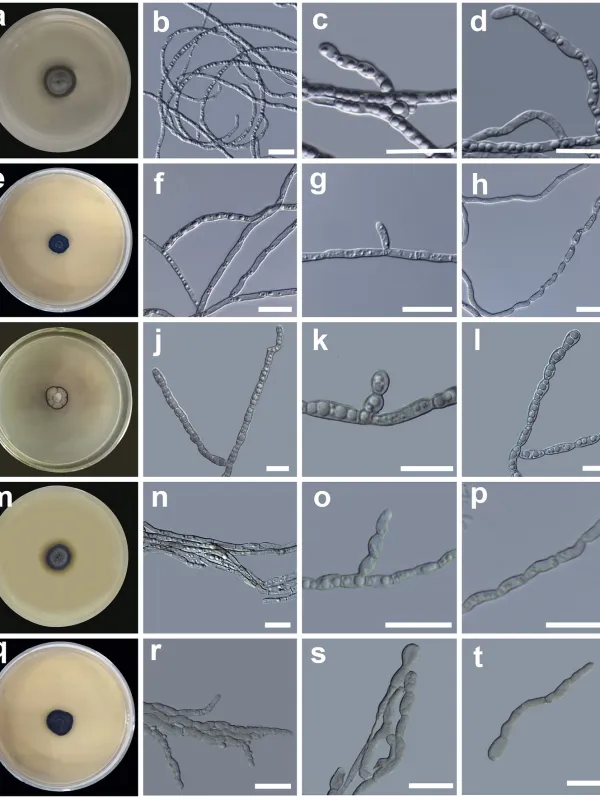
The pathogen is characterized by slow colony growth and a specific structure of conidiophores, which form chains of brown conidia. The fungus is capable of surviving in the soil and plant debris for a long time as mycelium or chlamydospores.
Many species of the genus Cladophialophora demonstrate high ecological plasticity, easily shifting from a saprotrophic lifestyle on dead organic matter to parasitism on weakened plants. This makes them difficult to control in agricultural ecosystems.
The biology of the pathogen is closely related to its ability to decompose complex organic compounds, including cellulose. By producing various enzymes, the fungus successfully penetrates the host's cell walls, causing their degradation.
In addition to plants, some species of this genus pose a risk to human and animal health, which necessitates strict compliance with safety measures when working with infected material.
Conditions for development
The development of cladophialophorosis is favored by high air humidity and moderate temperatures in the range of 20–25 degrees Celsius. The fungus spreads most actively under conditions of prolonged rain or excessive watering.
The presence of water droplets on the leaf surface is a mandatory factor for spore germination. Thick plantings, where ventilation is impeded, create an ideal microclimate for rapid pathogen progression.
The infection is often transmitted through infected seeds, soil, or plant residues left in the field from the previous season. Pruning tools can become mechanical carriers of spores if they are not disinfected.
Weakened plants due to mineral deficiency or environmental stress factors significantly increase the susceptibility of crops to fungal infection.
The spread of conidia occurs mainly through air currents, raindrops, or pests that mechanically carry spores to healthy tissues.
Why it matters
The damage caused by cladophialophorosis lies in a direct reduction of crop yield. Vascular damage leads to premature leaf death, which critically reduces photosynthetic intensity and fruit development.
Crop quality declines due to the loss of commercial appearance and the accumulation of fungal metabolites in plant tissues. In some cases, the produce becomes unsuitable for storage due to the risk of secondary rot.
The disease can lead to the total loss of planting material in nurseries and greenhouses. Economic damage consists of the costs of protection measures and losses from decreased production.
The long-term survival of the pathogen in the soil makes it difficult to cultivate susceptible crops in infected areas in subsequent years. This forces producers to extend crop rotations, which is not always profitable.
A particular danger lies in the slow, latent nature of the disease, which is why control measures are often taken too late, when a significant portion of the crops is already infected.
Protection
The main control method is strict adherence to crop rotation, excluding susceptible crops from the cycle for 3–4 years. Removing and destroying plant debris is a mandatory stage of field sanitation.
To prevent the spread of infection in greenhouses, it is necessary to maintain an optimal humidity regime and ensure high-quality ventilation. Disinfecting tools and equipment helps contain infection foci.
The application of chemical fungicides with systemic action is effective at early stages of symptom development. The choice of products should be made in accordance with state pesticide registers.
- Use of healthy certified planting material
- Regular disinfection of greenhouse structures
- Ensuring balanced plant nutrition
- Elimination of weeds — reservoirs of infection
Biological control methods based on the use of antagonistic microorganisms show promising results within integrated plant protection systems, reducing pesticide load.
Discussion
No discussions yet — be the first.