
Cladonia uncialis
Cladonia uncialis
Description
Symptoms
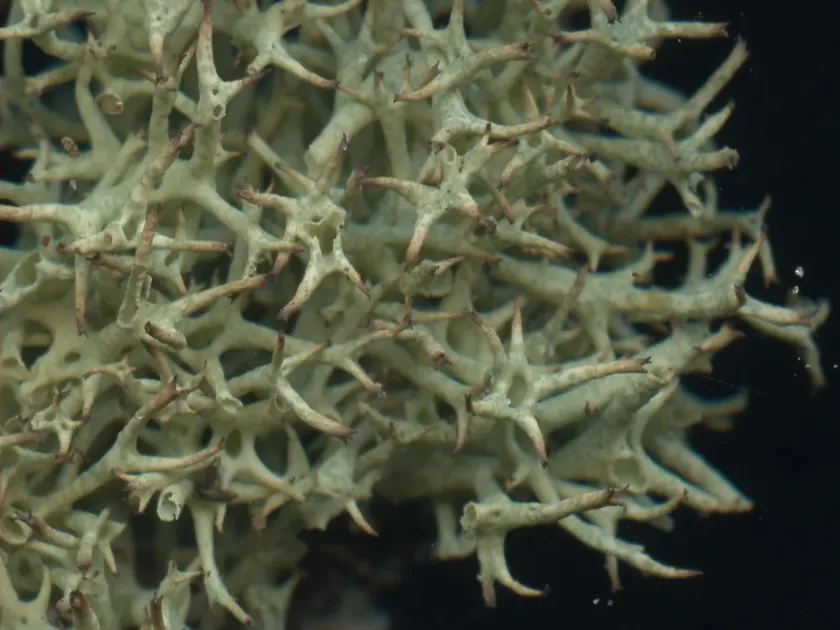
The visual characteristics of Cladonia uncialis include hollow, branched, straw-colored or greenish-gray thalli resembling small bushes.
It typically forms dense mats or patches on sandy soil, rocky substrates, or occasionally at the base of old tree trunks.
Unlike true plant diseases, it does not produce fungal mycelium spots, water-soaked lesions, or rapid wilting of agricultural foliage.
The structure remains firm and is not prone to disintegration or decay, which are hallmark traits of bacterial or fungal plant infections.
The lichen is static and slow-growing, covering localized areas rather than systemic infection patterns found in pathogens.
Pathogen
Cladonia uncialis is fundamentally a lichen, not a plant pathogen or an agent of infectious plant disease.
The organism consists of a fungal partner and an algal partner living in symbiosis, distinguishing it from parasitic fungi that cause crop damage.
It does not possess the mechanisms to invade host plant tissues, extract plant nutrients, or cause necrotic symptoms in agricultural crops.
In the context of agronomical health, it is categorized as an epiphytic organism or a soil-dwelling non-parasitic colonizer.
No agricultural fungicides are indicated for control because there is no biological mechanism for this lichen to act as a parasite.
Conditions for development
Ideal conditions for Cladonia uncialis include moist, cool environments with acidic, nutrient-poor soil where competition is limited.
It is sensitive to atmospheric pollution, serving as a bio-indicator for air quality rather than a marker of plant pathology.
Exposure to direct sunlight in open areas helps the algal component, though it requires specific humidity levels to maintain metabolic activity.
In intensively managed agricultural systems, the species is rarely present due to frequent soil disturbance and chemical interventions.
It thrives in undisturbed ecosystems, demonstrating a preference for stable, long-term environmental conditions.
Why it matters
There is no economic damage associated with Cladonia uncialis in commercial agriculture, as it does not compete with crops for resources.
While some growers perceive lichens on trees as detrimental, they are generally harmless and colonize only aged or stressed surfaces.
They do not produce toxins or suppress the growth of cultivated plants, and their role is mostly neutral in agro-ecosystems.
Massive colonization of lichens may indirectly indicate a lack of management, but it is not a direct threat to the yield of crops.
It plays a positive ecological role by stabilizing the soil surface and contributing to nitrogen cycling in natural forest and meadow areas.
Protection
Direct control measures against this species are not required in agricultural settings because it is not a threat to plant health.
Mechanical cleaning can be performed in orchards if desired for aesthetic reasons, using soft tools that do not harm the bark of the trees.
Cultural practices such as pruning and maintaining optimal tree spacing will prevent high humidity conditions that favor lichen growth.
The use of pesticides against lichen is strictly discouraged as they provide no benefit and may harm the surrounding beneficial microflora.
Focusing on soil fertility and balanced crop nutrition naturally suppresses the niche where lichens would typically establish themselves.
Discussion
No discussions yet — be the first.