
Cladonia pyxidata
Cladonia pyxidata
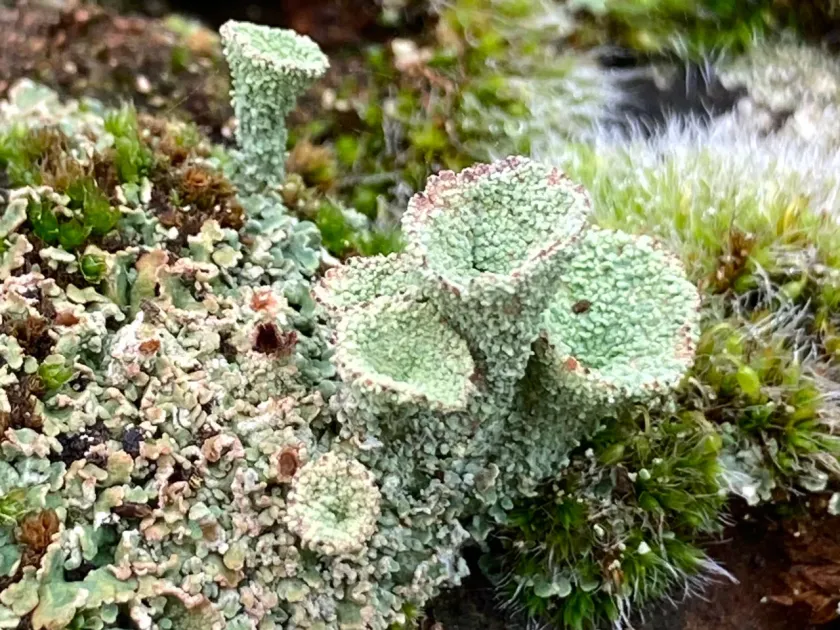
Description
Pathogen
It is important to clarify that Cladonia pyxidata (the cup lichen) is not a plant pathogen or a disease of crops. It belongs to the biological group of lichens, which are symbiotic organisms consisting of fungi and algae.
This organism does not parasitize crops, nor does it invade plant tissues. It uses the soil surface only as a mechanical substrate for attachment.
In an agricultural context, identifying this lichen as a disease is biologically incorrect. It does not possess the mechanisms required to infect or degrade the health of agricultural plants.
The lichen is a natural inhabitant of various environments and does not produce toxins or phytopathogenic substances harmful to vegetation.
Presence of this lichen on agricultural fields is an indicator of environmental conditions rather than an infection outbreak.
Conditions for development
The development of Cladonia pyxidata is primarily triggered by prolonged lack of soil cultivation or disturbance in the field management plan.
It prefers acidic, nutrient-poor soils where competitive higher plants are absent or struggling to grow due to lack of fertility.
Environmental factors favorable for colonization include high surface moisture and sufficient light exposure, common in abandoned or neglected plots.
The spread is facilitated by spores, which are easily transported by wind to colonize new, suitable substrates.
Once the soil is properly tilled, aerated, and fertilized, the lichen loses its competitive advantage and disappears naturally.
Why it matters
Cladonia pyxidata causes no direct damage to crops. It is not a parasite and does not consume plant nutrients or water from the root zone.
The indirect harm is related to the indication of poor soil condition. Its existence on a field usually points toward soil acidification or poor drainage issues.
In rare cases, dense coverage on the surface might slightly hinder soil gas exchange, but this does not pose a threat to large-scale agricultural production.
It does not cause plant wilting, necrosis, or any other pathological symptoms associated with crop diseases.
Because it is not a pathogen, there is no economic loss directly attributable to this species in healthy, managed agroecosystems.
Protection
No chemical fungicides or pesticides are required to manage this lichen. Its presence is easily addressed through standard agronomic practices.
Tillage operations such as plowing or disc harrowing are highly effective as they physically destroy the lichen thallus.
Adjusting the soil pH through liming will create an environment unsuitable for Cladonia pyxidata, promoting crop health instead.
Improving the drainage system and enhancing nutrient management will help suppress the growth of lichen through competition with crop plants.
- Deep soil cultivation
- Soil pH adjustment via liming
- Improving drainage and aeration
- Regular fertilization to support crop growth
Discussion
No discussions yet — be the first.