
Cintractia
Cintractia
Cintractia is a genus of basidiomycetous fungi within the order Ustilaginales (smut fungi). These pathogens are highly specialized parasites that predominantly infect plants in the sedge family (Cyperaceae) and various grass species.
What the section contains
Cintractia
The pathogen propagates via teliospores, which develop inside the host plant's reproductive organs. The fungal mycelium penetrates the tissues, growing systemically and eventually replacing the plant's developing seeds with spore masses.
The fungus's life cycle is tightly synchronized with the host's development. Spores can persist in the soil or on crop debris, allowing the pathogen to survive during periods when the host plant is dormant or absent.
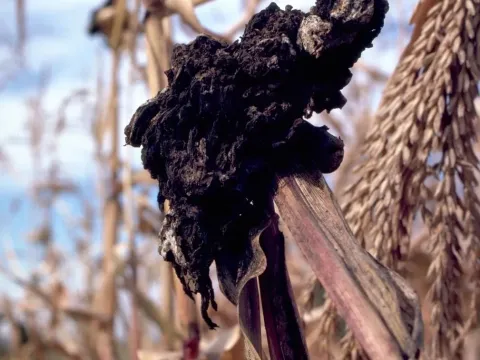
As the fungus matures, it causes significant morphological changes, transforming healthy floral parts into a black, dusty mass of spores. Infection usually initiates during the seedling stage or the early growth phases of the host.
This genus exhibits a high degree of host specificity. While this limits the range of susceptible species, it often leads to persistent infection cycles in endemic environments where the host plants are abundant.
The primary symptom of a Cintractia infection is the replacement of spikelets or flower parts with a black, powdery spore mass. Externally, these often appear as dark swellings or galls that may be concealed by glumes or bracts.
Affected organs are severely deformed and lose their normal functional structure. The infection is often not visible until the plant enters the reproductive stage, at which point the internal damage becomes apparent.
In the early stages, the infection may remain latent within the stem or developing inflorescence, making it difficult to detect before the spores reach maturity.
Once the membrane covering the spore mass ruptures, the spores are released and dispersed by wind, rain, or physical contact. This "dusting" effect is a key indicator of the disease's presence in a field.
Infected plants may also show signs of stunted growth or abnormal curvature of the inflorescence, standing out as visually distinct from healthy, productive plants.
The development of Cintractia is heavily influenced by environmental conditions, particularly during the critical period of seedling germination. Moderate soil temperatures (15–20°C) and consistent soil moisture provide the optimal environment for spore germination.
High humidity and rainfall during the flowering stage significantly increase the risk of infection. Moisture facilitates the movement of spores onto stigmas or into leaf sheaths, where the pathogen enters the plant.
Dense planting patterns, which restrict air circulation, create a microclimate characterized by high humidity at the soil surface, favoring the spread and establishment of the fungal mycelium.
Poorly managed nitrogen fertilization, which can lead to prolonged vegetative growth and tender tissue development, may increase plant susceptibility to infection by slowing the natural hardening of tissues.
Continuous cropping of susceptible species on the same land allows for the accumulation of a high spore load in the soil, which acts as a primary source of inoculum for subsequent growing seasons.
The primary economic impact of Cintractia is the total loss of grain yield in infected plants. Because the fungus replaces the grain with spores, infected plants produce zero marketable yield.
Beyond direct yield loss, the infection compromises the quality of harvested seed lots. Spores clinging to healthy seeds can contaminate the entire harvest, leading to the spread of the pathogen to clean fields in the following cycle.
Infected plants suffer from metabolic disturbances, making them more vulnerable to secondary pathogens and abiotic stresses, such as drought or cold, which further reduces overall plant health.
Massive outbreaks in an agroecosystem incur significant costs related to intensive fungicide programs and the implementation of rigorous quarantine or management protocols.
For seed producers, the risk is particularly severe, as even low levels of latent infection can lead to the rejection of batches and the loss of seed certification, resulting in substantial financial losses.
The most effective strategy for managing Cintractia is the use of high-quality, certified seed treated with systemic fungicides. Seed treatment is essential to eliminate both surface-borne and early-stage systemic infections.
Implementing a proper crop rotation is critical to disrupt the pathogen's life cycle. Avoiding the cultivation of susceptible host species on the same field for several years helps deplete the spore bank in the soil.
Agronomic practices aimed at promoting rapid and uniform crop establishment help the plants bypass the most vulnerable developmental stages where the pathogen is most likely to penetrate the tissues.
- Utilizing cultivars or hybrids with established genetic resistance to smut diseases.
- Eliminating wild sedge populations in the vicinity that may serve as alternative reservoirs for the fungus.
- Deep plowing or incorporating crop residues to bury contaminated material and accelerate its decomposition.
In high-risk scenarios, prophylactic or early-stage foliar applications of systemic fungicides (particularly azoles) can effectively suppress mycelial development and prevent the systemic spread of the disease.