
Cintractiaceae smut fungi
Cintractiaceae
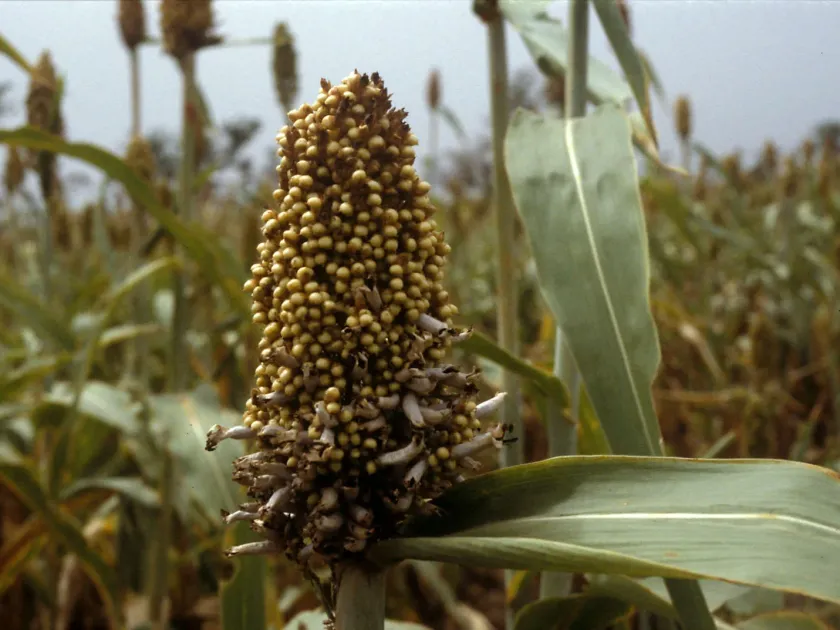
Description
Symptoms
The primary external manifestation of the activity of fungi in this family is the formation of spore masses within the tissues of the host plant, most often in the inflorescence organs.
Affected organs become severely deformed, increase in size, and gradually disintegrate, turning into a black or brown powdery mass of teliospores.
A seemingly healthy plant may appear stunted, showing slowed growth and chlorotic leaf blades during the active period of mycelial development.
A characteristic sign is the complete failure to produce viable seeds, as the tissues of the ovary and spikelets are replaced by the parasitic fungus.
Upon maturation of the spore mass, the plant's epidermis ruptures, releasing a large number of spores, which are disseminated by wind, water, or insects to neighboring plants.
Pathogen
The pathogens are fungi from the family Cintractiaceae, belonging to the order Ustilaginales (smut fungi).
These are obligate parasites that specialize primarily in monocotyledonous plants, particularly those in the sedge family (Cyperaceae).
The life cycle of the fungus includes a dormant stage of teliospores, which can remain viable in the soil and on plant debris for several years.
Upon germination, teliospores produce basidia with basidiospores that infect young host plant tissues during the active growth phase.
The fungus mycelium develops intracellularly and intercellularly, gradually colonizing the plant's reproductive organs to complete its reproductive cycle.
Conditions for development
Active infection development is observed under high humidity and moderate temperatures, which favor spore germination.
Dense stands of host plants create a microclimate with poor ventilation, facilitating the rapid spread of secondary infections.
The presence of liquid moisture on plant surfaces is a critical factor for the successful infection of young tissues by basidiospores.
Soil conditions and agricultural practices significantly impact plant immunity: weakened plants are more susceptible to fungal mycelium penetration.
The resistance of the pathogen to adverse environmental conditions is ensured by the thick walls of the teliospores, allowing them to survive cold winters.
Why it matters
The main economic damage lies in the total loss of seed productivity of the affected plants within infection clusters.
The infection leads to a decrease in the biological productivity of plant communities, which is particularly critical for grazing lands and natural ecosystems.
The parasite depletes the plant's resources by diverting nutrients intended for the development of reproductive organs.
The constant presence of spores in the soil poses a threat of infecting subsequent generations of plants in following years if conditions are favorable.
In some cases, the mass spread of smut can lead to the degradation of plant cover over significant areas.
Protection
The most important preventive method is to follow crop rotation and remove infected plants from infection clusters to prevent spore dispersal.
It is recommended to use only healthy, certified planting material that is free from pathogen spores.
The use of systemic fungicides effectively suppresses the development of mycelium within tissues if the treatment is applied during the early stages of the disease.
Regular phytosanitary monitoring allows for the early detection of initial infection signs and the localization of fungal spread centers.
Improving the overall condition of crops through balanced mineral nutrition enhances the natural resistance of plants to smut fungi infection.
Discussion
No discussions yet — be the first.