
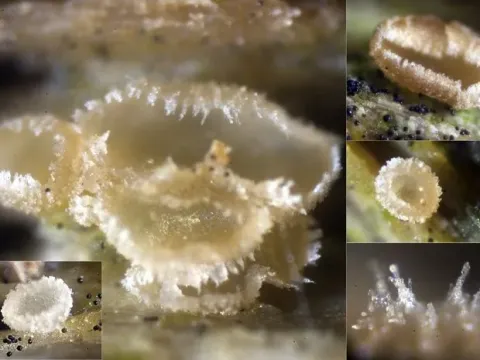
Cistella dentata
Cistella dentata
The causative agent of the disease is the ascomycetous fungus Cistella dentata, belonging to the order Helotiales. This micromycete is a member of a specialized group of fungi frequently found on decaying plant debris, particularly on wood and stems of various plants.
What the section contains
Cistella dentata
Cistella dentata is classified as a facultative parasite or saprotroph, which can infect weakened tissues of cultivated plants under favorable conditions. The fungus forms small fruiting bodies called apothecia, which are characterized by a distinct dentate (toothed) margin.
The life cycle of the pathogen is closely tied to the presence of moist organic matter, where it can persist for long periods. Its biology has been studied primarily in the context of mycology, but agronomic interest has increased due to reports of its presence on the stems of agricultural crops.
The mycelium of the fungus actively penetrates the epidermis, utilizing enzymatic mechanisms to break down the host plant's cell walls. This process leads to the gradual degradation of tissues and weakens the overall immune system of the plant.
Reproduction occurs via spores, which are disseminated by wind or rain splashes. The high rate of sporulation allows the fungus to rapidly colonize suitable substrates when optimal microclimatic conditions occur.
The primary symptom of infection consists of small, barely visible fruiting bodies appearing on the surface of stems or leaves. These often localize in areas where the plant tissue has been mechanically damaged.
Changes in color and the emergence of necrotic spots of irregular shape are common on affected tissue areas. Over time, the lesion zone may enlarge, leading to the softening of the stem tissues.
Under high humidity conditions, a light bloom representing a cluster of spores and hyphae may appear around the necrosis zones. This is a critical moment signaling the active spread of the infection within the crop stand.
Plants affected by Cistella dentata often show signs of premature wilting. Since the fungus interferes with the normal transport of nutrients through the vascular system, the upper parts of the shoots begin to dry out.
When examined under a microscope or a strong magnifying glass, the distinct dentate edges of the apothecia can be observed on the stems, which gives this microorganism its species name. This feature is key to diagnosis.
A critical factor for the development of the infection is a high level of relative humidity, exceeding 75-80%. The fungus prefers stagnant air zones with poor ventilation within the crop canopy.
The optimal temperature range for mycelial growth and apothecia formation is between +15 and +22 degrees Celsius. Higher temperatures combined with direct sunlight inhibit the development of this pathogen.
Dense crop stands and the presence of weeds create an ideal microclimate for spore germination. Excessive nitrogen nutrition can also promote the softening of tissues, making them more vulnerable to invasion.
An important condition for the mass spread of the disease is the presence of liquid moisture on the surface of plant organs. Dew or prolonged rainfall provides the necessary conditions for spore germination.
Cistella dentata more readily infects weakened plants, so nutrient deficiencies or damage by pests significantly increase the risk of infection in a specific field area.
The main damage consists of the inhibition of physiological processes such as photosynthesis and transpiration. The destruction of stem tissues leads to a loss of mechanical strength, which triggers lodging in crops.
The disruption of assimilate flow to the reproductive organs results in reduced grain or fruit weight. In agricultural production, this directly translates into decreased yields and degraded quality of the commercial produce.
The infectious background created by the presence of the fungus reduces the overall resistance of crops to other, more aggressive pathogens. Affected areas become entry points for secondary bacterial infections.
The economic loss consists of costs for additional fungicide treatments and the loss of part of the crop during harvest. The development of the disease is particularly dangerous during rainy seasons, when the infection can become widespread.
When storing produce harvested from infected fields, accelerated rot development is possible. This significantly shortens the shelf life of seed material and food grains.
The basis of prevention is adherence to agronomic practices, including high-quality soil tillage and the incorporation of plant residues. The destruction of crop residues deprives the fungus of a substrate for overwintering.
Crop rotation is recommended to break the pathogen's development cycle. It is important to avoid monoculture, as this promotes the accumulation of spores in the topsoil layer.
- Spatial isolation of crops from reservoirs of wild flora.
- Optimization of plant density to improve aeration.
- Balanced application of mineral fertilizers, avoiding nitrogen excess.
- Timely weed control, as weeds retain moisture in the root zone.
In the case of mass infection, prophylactic treatments with authorized systemic fungicides are effective. The choice of the product should be based on regulations applicable to the protection of specific crops.
Monitoring the state of the crops during periods of humid weather allows for the detection of the disease at early stages. Early detection helps to localize the hotbeds and prevent epiphytotics across the entire field area.