
Cinnamon cort
Cortinarius cinnamomeus
Description
Symptoms
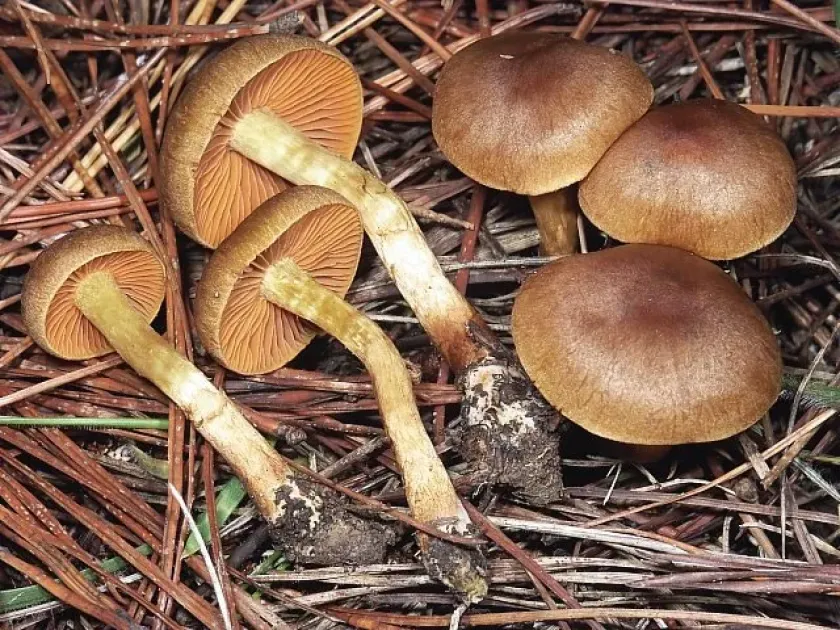
The most obvious sign of its presence is the growth of fruiting bodies. The cap ranges from 3 to 8 cm in diameter and is typically cinnamon-brown to ochre-colored, often showing a silky or metallic sheen.
A key identification feature is the color of the gills, which are bright yellow or golden in young specimens. As the fungus matures and spores are released, these gills turn a rusty brown color.
The stem is cylindrical and often features remnants of a cobweb-like veil, known as the cortina, which is characteristic of the Cortinarius genus. This is most visible before the cap fully expands.
In terms of plant interaction, there are no pathological symptoms such as necrosis, wilting, or rotting directly caused by this fungus. Its activity is strictly subterranean and involves complex root-fungus exchanges.
The flesh of the mushroom does not change color when cut, which is another useful field identification mark. The scent is often described as mild, similar to radishes or damp forest soil.
Pathogen
The Cinnamon cort (Cortinarius cinnamomeus) is a mushroom belonging to the Cortinariaceae family. It is primarily a mycorrhizal fungus, meaning it forms a symbiotic relationship with tree roots rather than acting as a traditional plant pathogen.
While often beneficial, this fungus exists in a complex ecological balance with its host trees. It provides the tree with minerals and water in exchange for carbohydrates, making it a critical component of healthy forest soil ecosystems.
The mycelium of this fungus threads through the forest floor, decomposing organic matter and integrating into the rhizosphere. Its biological activity helps cycle nutrients, which is essential for maintaining forest health over long periods.
Reproduction is carried out through spores released from the gills under the cap. These spores are wind-dispersed, allowing the fungus to colonize new areas where suitable host trees and soil conditions are present.
It is not categorized as a disease-causing agent for agricultural crops. In forestry, its presence is generally viewed as an indicator of a well-established and biologically diverse forest environment.
Conditions for development
Cinnamon cort thrives in moist environments with abundant leaf or needle litter. It is most commonly found in coniferous or mixed forests where the soil is slightly acidic and rich in organic matter.
The development of fruiting bodies occurs during periods of moderate temperatures and regular rainfall. Autumn is the peak season, as the high humidity levels are optimal for the growth of the mushroom caps.
Dense tree stands are ideal for this fungus, as they maintain the stable microclimate and moisture levels required for the mycelium to remain active throughout the growing season.
Optimal temperature ranges for growth are typically between 12°C and 20°C. Extreme temperatures, particularly hard frosts or prolonged summer droughts, inhibit the formation of the visible mushroom body.
Soil management practices that significantly alter the acidity or disrupt the organic horizon of the forest floor can negatively impact the population of this fungus, as it is highly specialized for specific forest niches.
Why it matters
There is no direct damage to agricultural crops or healthy trees. The fungus does not produce toxins that harm plant tissue or inhibit the growth of the host plant in standard ecological settings.
Potential harm is limited to theoretical ecological competition, where an overabundance of one fungal species might suppress other beneficial microorganisms in the soil. However, such cases are rare and not of economic concern.
In nursery settings, excessive fungal colonization in overly wet soil could theoretically contribute to poor aeration, but this is a management issue regarding drainage rather than a fault of the fungus itself.
It is not a threat to wood quality or tree health. Confusing this fungus with pathogenic root rot agents often leads to unnecessary and potentially harmful applications of fungicides in forest management.
The true value of this fungus lies in its contribution to soil health. It promotes the efficient uptake of nutrients, which can actually increase the resilience of trees against environmental stressors.
Protection
No control measures are required for the Cinnamon cort. It is an integral part of the forest biodiversity, and its presence should be encouraged rather than eradicated through chemical interventions.
In forestry management, the focus should remain on maintaining soil health and drainage. Proper site preparation and avoiding soil compaction help ensure that the natural balance of beneficial fungi is preserved.
If fungal overgrowth is observed in greenhouses or nurseries, it is an indicator of excessive moisture or poor aeration. Adjusting environmental controls to optimize oxygen levels in the substrate is the standard corrective measure.
Chemical fungicides should never be used to target this species, as they can devastate the entire mycorrhizal network, which is essential for the growth and survival of forest trees.
Monitoring forest health should be based on tree growth rates and leaf condition rather than the presence of non-pathogenic fungal fruiting bodies, which appear as a normal part of the seasonal cycle.
Discussion
No discussions yet — be the first.