
Chrysoporthe canker
Chrysoporthe cubensis
The causative agent of the disease is the ascomycete fungus Chrysoporthe cubensis, which is highly specialized in infecting the cambium and bark of Eucalyptus and other Myrtaceae species.
What the section contains
Chrysoporthe canker
The fungal life cycle involves both sexual and asexual spore production, allowing for both localized spread through water splash and long-distance dispersal via wind.
The fungus can survive as saprophyte on dead tissues, making old stumps or infected slash major reservoirs of inoculum in commercial plantations.
Infection is primarily facilitated through natural openings, branch stubs, or mechanical injuries to the bark caused by insects or management activities.
The pathogen is known for its genetic diversity, which complicates the development of long-lasting resistance in various Eucalyptus clones used in forestry.
The most characteristic sign is the development of localized bark cankers that often result in the swelling and cracking of the tree bark as the tree attempts to wall off the infection.
Significant gum exudation is typically observed in the vicinity of the canker, often appearing as amber-colored resin streaming down the trunk.
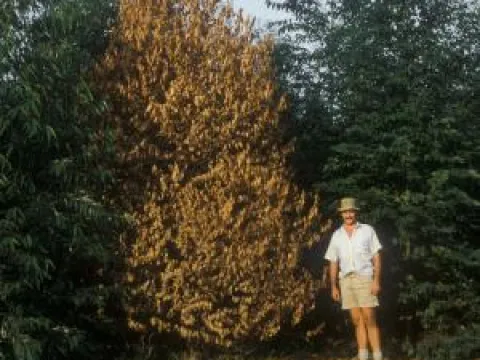
As the infection progresses and girdles the stem, the leaves in the crown begin to wilt, change color to a reddish-bronze tone, and eventually undergo total desiccation.
Under humid conditions, the fruiting bodies of the fungus (pycnidia and perithecia) may emerge through the bark, appearing as tiny black spots or structures.
Peeling back the bark at the site of the lesion reveals dark, necrotic tissues in the cambium layer, clearly demarcated from healthy, lighter-colored tissue.
The disease thrives in warm and humid environments, which are typical for many tropical and subtropical regions where Eucalyptus is cultivated on a large scale.
High rainfall events correlate with increased spore dispersal, as splashing water effectively moves the conidia from infected bark to healthy entry points on the host.
Young, rapidly growing trees are especially susceptible during their first few years in the field, as they often experience stress from transplanting or environmental fluctuations.
Dense plantation spacing limits airflow and increases canopy humidity, creating an ideal microclimate for the fungus to establish and spread between trees.
Nutrient deficiencies or poor site preparation that leads to tree stress significantly lowers the natural resistance of the host, facilitating rapid pathogen colonization.
The primary economic impact is the severe loss of juvenile trees in plantations, resulting in failed harvests and the need for costly replanting operations.
In surviving trees, the formation of deep cankers and internal rot significantly reduces the volume and quality of timber, rendering it unsuitable for high-value wood products.
Infection causes a substantial reduction in tree growth rates and biomass production, directly impacting the profitability of forest industries.
Girdling cankers prevent the transport of water and nutrients, leading to the gradual death of the tree, even if it has reached a significant size.
Widespread outbreaks can destabilize regional forestry efforts, necessitating changes in species selection and significant shifts in silvicultural practices.
The most reliable control strategy is the selection and breeding of disease-resistant clones and hybrids that can tolerate the presence of the pathogen.
Silvicultural management, such as maintaining appropriate stand density to ensure adequate ventilation, helps to mitigate the spread of spores within the plantation.
Sanitation measures, including the removal and destruction of severely infected trees, are essential to minimize the inoculum pressure in the vicinity of healthy stands.
Minimizing mechanical damage during thinning or pruning operations is critical, as any open wound serves as a primary port of entry for the fungal pathogen.
- Regular monitoring of plantations for early signs of infection.
- Disinfection of forestry tools between trees to prevent cross-contamination.
- Use of fertilizers to maintain tree vigor and resistance.