
Chrysoporthe
Chrysoporthe
Chrysoporthe is a genus of ascomycete fungi, with Chrysoporthe cubensis being the most recognized pathogen causing serious stem canker diseases.
What the section contains
Chrysoporthe
The fungus primarily infects the cambium and bark tissues of susceptible hosts, leading to the formation of necrotic lesions and restricted nutrient flow.
Its reproductive cycle involves the production of conidia, which are easily dispersed by rain splash and wind, facilitating rapid spread within plantations.
Taxonomically, it belongs to the Cryphonectriaceae family and was historically linked to other similar canker-causing fungi in tropical and subtropical regions.
Survival is achieved through dormant mycelium in infected bark and plant debris, allowing the pathogen to persist even during unfavorable environmental conditions.
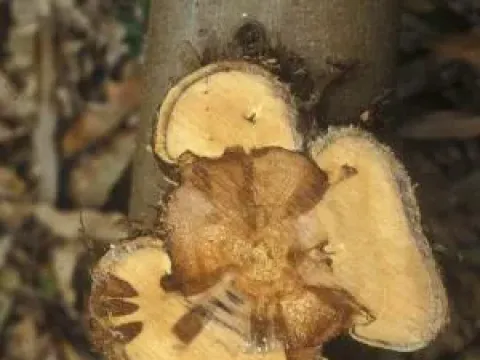
The initial signs of infection include localized discoloration of the bark, which turns reddish-brown or brown at the point of fungal entry.
A hallmark symptom is the development of sunken cankers on the main stem, often accompanied by noticeable gum exudation as a defensive response.
As the disease progresses, the cankers can girdle the stem, causing the upper portion of the tree to wilt, yellow, and eventually die.
Tiny black fruiting bodies (pycnidia) of the fungus may emerge through the bark cracks, signaling active sporulation and high infection risk.
In severe cases, trees may show epicormic branching below the canker site as the plant attempts to survive the loss of apical dominance.
Development of the fungus is favored by high humidity and warm temperatures, typically ranging between 20°C and 28°C, which accelerate spore germination.
Dense plantation layouts with poor air circulation create a microclimate that keeps the bark moist for longer periods, promoting fungal colonization.
Trees under abiotic stress, such as drought or nutritional deficiency, show increased susceptibility to Chrysoporthe infection.
Mechanical injuries resulting from thinning operations, pruning, or insect attacks provide essential entry points for the fungal spores to invade the xylem.
High rainfall events combined with wind help disperse conidia across large areas, leading to rapid disease outbreaks in forest stands.
The primary economic impact is the reduction in timber volume and quality, as severe cankering renders the wood useless for industrial applications.
Widespread infection can lead to high mortality rates within young plantations, requiring costly replanting and land management adjustments.
The presence of the disease necessitates strict quarantine measures, which can limit the movement of plant material and affect forest industry logistics.
Secondary colonization by opportunistic pests and decay fungi often accelerates the death of trees weakened by the initial Chrysoporthe infection.
Management of the disease requires continuous surveillance and early intervention to prevent the pathogen from becoming endemic in a region.
Selection and breeding of resistant cultivars or clones is the most sustainable and effective approach to managing Chrysoporthe in commercial forestry.
Implementation of good silvicultural practices, including proper spacing and weed control, helps improve tree vigor and reduces humidity-related risks.
Sanitation is critical; all infected or dead trees should be promptly removed and destroyed to reduce the local inoculum load of the fungus.
Care must be taken during pruning or thinning to avoid unnecessary wounding of the trunk, as these sites are primary infection gateways.
Monitoring programs should be established to identify early signs of outbreaks, allowing for rapid management actions to limit further spread.