
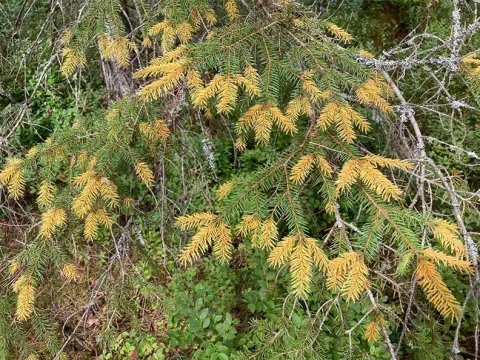
Chrysomyxa
Chrysomyxa
The disease is caused by rust fungi of the genus Chrysomyxa, which belong to the Basidiomycota phylum. The most prevalent species, Chrysomyxa ledi, is a significant pathogen of various spruce species.
What the section contains
Chrysomyxa
This fungus exhibits a complex, heteroecious life cycle, meaning it requires two different plant hosts to complete its development: spruce as the primary host and Labrador tea (Rhododendron tomentosum) as the alternate host.
The pathogen overwinters as mycelium within the leaves of its alternate host or as spores on fallen needles, remaining viable throughout the dormant season.
In spring, basidiospores are released and carried by wind currents to young spruce needles, where they initiate the primary infection process during favorable weather.
Within the spruce tissue, the fungus develops aecia, which eventually rupture the needle epidermis to release aeciospores, facilitating further spread of the rust throughout the forest.
The initial signs of infection manifest as small yellow-orange spots on the needles, which expand and darken as the fungal colonization of the plant tissue progresses.
By mid-summer, characteristic bright yellow or orange blister-like aecia emerge on the underside of the needles, resembling powdery pustules filled with spores.
Affected needles lose their vibrancy, begin to yellow prematurely, wither, and eventually drop, leading to significant thinning of the spruce branches.
In young trees, severe infection can cause distortion of new shoots and a general decline in the tree's health and vitality, making it prone to stunted growth.
The overall appearance of the tree canopy becomes noticeably rusty, a visual symptom that becomes particularly prominent during the peak spore-dispersal period.
High relative humidity and consistent rainfall during the spring and early summer are critical environmental factors that promote the development of the disease.
The proximity of spruce stands to areas inhabited by the alternate host, Labrador tea, is a major factor in the widespread distribution of the rust.
Stagnant air and poor ventilation within dense plantings maintain the moisture levels on the needles necessary for spore germination and infection establishment.
Moderate temperatures ranging between 15°C and 20°C create an ideal thermal environment for the fungus to thrive, reproduce, and successfully infect healthy plant tissues.
Trees that are already under physiological stress from drought, poor soil quality, or secondary pest damage are significantly more susceptible to Chrysomyxa attacks.
The disease drastically reduces the photosynthetic capacity of the tree by causing premature needle loss, which disrupts the tree’s overall carbon and energy balance.
Chronic infection weakens the tree's immune system, leaving it significantly more vulnerable to secondary fungal pathogens and opportunistic insect pests.
In forest nurseries, the disease can cause devastating losses of seedling crops, leading to significant economic impacts for commercial forestry operations.
Ornamental spruce trees suffer severe aesthetic damage, rendering them unsuitable for landscaping or urban greening projects, which necessitates costly remedial actions.
Prolonged defoliation and weakened growth vigor result in reduced timber production and lower quality wood in commercial forest plantations over time.
The most effective long-term preventative measure is maintaining spatial separation between spruce plantations and patches of Labrador tea to break the fungal life cycle.
Sanitation practices, such as the pruning and removal of heavily infected branches, can help to reduce the primary inoculum load within a specific area.
Applying copper-based fungicides or systemic chemical treatments during the critical spring period effectively protects new growth from infection by the basidiospores.
Improving cultural practices, such as proper spacing and thinning, promotes better air circulation in the canopy, reducing the likelihood of moisture accumulation.
Prioritizing the selection of rust-resistant spruce varieties or cultivars during new planting programs is a proactive strategy to minimize future disease outbreaks.