
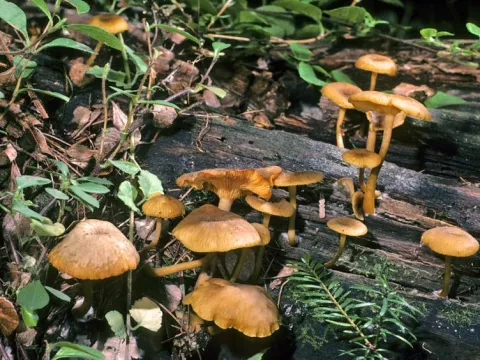
Chrysomphalina chrysophylla
Chrysomphalina chrysophylla
Chrysomphalina chrysophylla is a species of gilled fungus in the family Hygrophoraceae. It is important to note that this fungus is a saprotroph, meaning it does not cause diseases in living agricultural crops or horticultural plants.
What the section contains
Chrysomphalina chrysophylla
The fungus acts as a wood-decaying organism. It primarily colonizes dead wood of coniferous trees, playing a vital role in the carbon cycle by breaking down complex structural materials like lignin and cellulose.
Its morphological features include distinct golden-yellow gills on the underside of the cap. The cap itself is typically umbilicate or funnel-shaped, which aids in water management and spore release.
The mycelium grows within the woody substrate, secreting enzymes that gradually soften and decompose the wood fibers. This biological process is essential for soil health as it recycles nutrients back into the ecosystem.
Because it strictly feeds on dead biomass, Chrysomphalina chrysophylla is considered beneficial for forest health. It contributes to the cleanup of forest litter and facilitates the succession of other fungal species.
The development of this fungus is closely tied to the availability of decaying coniferous wood. It is commonly found on rotting logs, stumps, and fallen branches in moist, temperate forest habitats.
High humidity is a key environmental requirement for the emergence of fruiting bodies. Therefore, they are most frequently observed during periods of frequent rainfall and moderate temperatures, typically in the autumn.
The fungus requires a stable microclimate provided by the canopy of mature forests. Excessive exposure to direct sunlight and wind can desiccate the mycelium and inhibit the production of spores.
Temperature fluctuations play a significant role in the seasonal timing of this species. It thrives in cool to mild conditions, avoiding the extreme heat of summer and the deep freeze of winter.
- Requires decaying coniferous timber.
- Thrives in high-humidity forest environments.
- Sensitive to extreme drought conditions.
- Prefers shaded, protected habitats.
- Optimal growth occurs during the autumn season.