
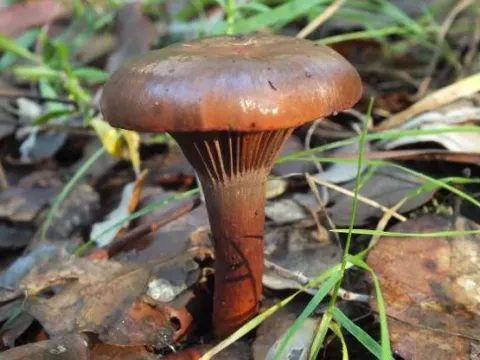
Chroogomphus fulmineus
Chroogomphus fulmineus
Chroogomphus fulmineus is not a plant disease, and it does not act as a pathogen for any agricultural or forestry crops.
What the section contains
Chroogomphus fulmineus
This organism is a macrofungus belonging to the Gomphidiaceae family, recognized primarily for its role as a mycorrhizal partner.
It establishes a mutualistic relationship with the roots of coniferous trees, specifically pine trees, facilitating nutrient exchange.
Unlike pathogenic fungi that penetrate and destroy plant cells, the mycelium of this species lives in harmony with the host tree's root system.
Therefore, it should not be categorized under plant diseases, as it does not cause any physiological distress or structural damage to trees.
The development of Chroogomphus fulmineus fruit bodies is strictly dependent on the presence of specific coniferous forest ecosystems.
Optimal growth conditions involve well-drained, sandy soils typical of pine forests with a significant layer of needle litter.
Moderate temperatures and high humidity levels, usually observed in late summer and throughout the autumn, trigger the formation of mushrooms.
The fungus requires a stable microclimate provided by forest canopy cover to protect the delicate mycelial network from desiccation.
The successful establishment of the species is also tied to the overall health and age of the host pine trees in the surrounding area.
There is no evidence of harm caused by this fungus to plants, making it a harmless and beneficial component of the forest soil biodiversity.
It does not cause root rot, leaf spots, or any other signs of infection that would necessitate chemical control or sanitary measures.
On the contrary, the presence of such mycorrhizal fungi is often an indicator of a thriving, healthy forest ecosystem that resists environmental stress.
No agricultural protection strategies are required, and the application of fungicides for this species would be counterproductive to forest health.
- Supports tree nutrient absorption
- Promotes forest soil structure
- Maintains natural ecological balance
- Indicates healthy pine forest conditions