
Chromulinales algae
Chromulinales
Description
Symptoms
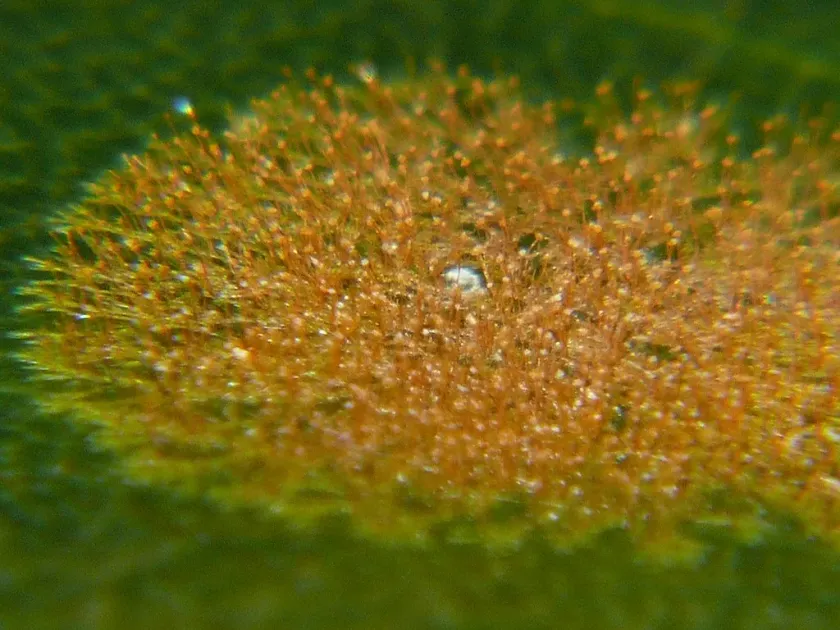
The primary symptom is the appearance of a golden, yellowish, or brownish film on the leaf surface. This coating often has a slippery or oily texture, distinguishing it from the powdery growth of true mildew.
Visible colonies usually start at the base of leaves or along leaf veins, where moisture persists the longest. Over time, these colonies coalesce, covering large parts of the plant's surface.
The tissue underneath the algal colony often begins to show signs of chlorosis, as the algae block sunlight, depriving the plant of the light intensity needed for efficient photosynthesis.
As the colonization progresses, the leaves may curl, wither, or drop prematurely. In young seedlings, the growth may be severely stunted, leading to a loss of vigor and overall crop density.
- Golden or brownish surface coating.
- Slippery and oily texture of the film.
- Localized chlorosis and yellowing.
- Stunting of new vegetative growth.
Pathogen
Chromulinales is an order of golden-brown algae (Chrysophyceae). While primarily aquatic, certain species can colonize the aerial parts of plants under specific environmental conditions, acting as epiphytic pathogens.
These organisms are eukaryotic and photosynthetic. They survive by attaching themselves to the plant epidermis, often forming thick, gelatinous films or mats that cover the host surface.
The reproduction cycle includes the production of zoospores, which are motile stages that allow the pathogen to spread rapidly across fields or greenhouses via splashing water or condensation.
These algae can form dormant cysts that allow them to persist on surfaces, soil, or greenhouse structures during dry periods, making them resilient to minor fluctuations in environmental conditions.
Although they do not infect plant tissues in the traditional sense, their presence as a surface layer causes significant physiological stress to the host, distinguishing them from common fungal pathogens.
Conditions for development
High relative humidity is the primary driver for Chromulinales development. Frequent misting, dense morning dew, and excessive irrigation are the most common factors that promote algal growth.
Temperatures ranging from 15°C to 25°C are ideal for the rapid proliferation of these algae. In greenhouse environments with poor airflow, these conditions can be sustained for long periods.
Overcrowded plantings prevent air circulation, trapping moisture on leaf surfaces. This creates a stagnant microclimate that is highly conducive to the colonization of algae.
Light levels also play a role; while algae are photosynthetic, they often thrive in lower-light areas of a canopy where moisture persists longer due to lack of evaporation.
Contaminated irrigation water is a significant vector for the introduction and spread of the algae. Water taken from surface ponds or poorly maintained reservoirs can harbor high spore counts.
Why it matters
The primary damage is the physical obstruction of the plant's surface, which impedes photosynthesis and gas exchange. By blocking stomata, the algae disrupt the plant's ability to breathe and regulate moisture.
The algae produce metabolic by-products that can be harmful to the plant's epidermis, leading to cellular damage, reduced vigor, and increased susceptibility to secondary infections.
The presence of algal mats drastically reduces the market value of produce. For leafy greens and ornamental plants, the aesthetic damage caused by the coating makes the product unsellable.
In intensive production, the stress caused by algal coverage leads to significant yield losses. Growth retardation affects the overall harvest timing and the uniformity of the crop.
Management costs increase due to the need for frequent cleaning of greenhouse structures, equipment, and the implementation of more aggressive disease control protocols.
Protection
The most critical step in control is humidity management. Ensuring good ventilation and airflow within the greenhouse is essential to allow leaf surfaces to dry quickly after irrigation.
Irrigation practices should be adjusted to avoid overhead watering whenever possible. Drip irrigation or soil-level watering helps maintain dry foliage and inhibits algal attachment.
Copper-based fungicides are often effective in controlling algae on plant surfaces, as they disrupt the cell wall integrity of the algae and prevent further colonization.
Spacing plants correctly prevents the microclimate saturation that algae require to thrive. Pruning or removing old, infected leaves can reduce the initial inoculum load in the field.
Implementing a strict sanitation program, including the periodic disinfection of greenhouse benches, containers, and irrigation pipes, is vital to preventing the spread and recurrence of algal infections.
Discussion
No discussions yet — be the first.