
Chroogomphus helveticus
Chroogomphus helveticus
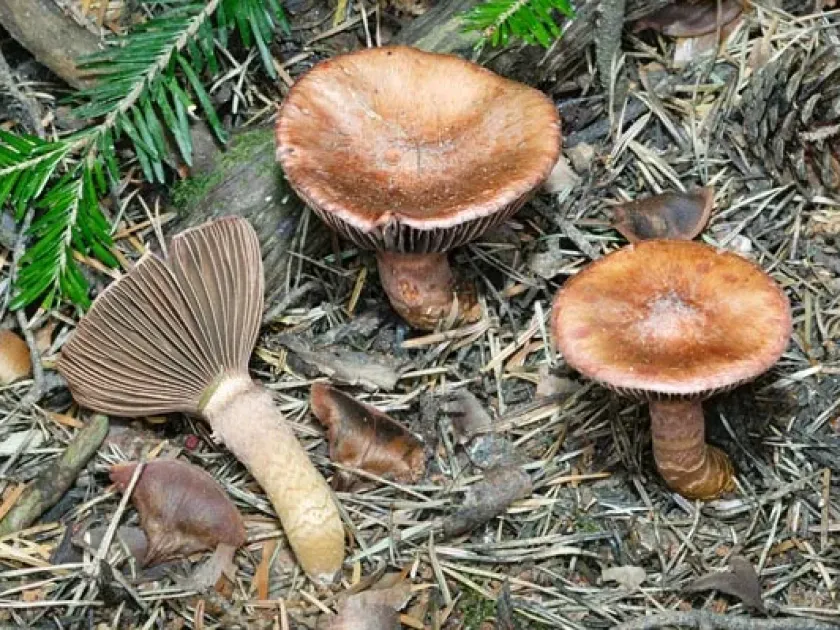
Description
Pathogen
Chroogomphus helveticus is a species of mushroom belonging to the family Gomphidiaceae. It is strictly a mycorrhizal fungus and does not function as a plant pathogen.
The organism develops a symbiotic relationship with coniferous trees, particularly spruce and pine. This interaction involves the formation of ectomycorrhiza, which is essential for nutrient exchange.
By extending the root surface area, the fungus helps the host tree absorb water and minerals from the soil, effectively promoting tree vigor and overall growth.
Because it receives carbohydrates from the plant in exchange for soil nutrients, it is classified as a mutualist rather than an infectious agent.
In forest management, it is recognized for its positive role in maintaining soil structure and biodiversity, having no harmful effect on host tissues.
Conditions for development
The development of the fruit bodies of Chroogomphus helveticus is heavily dependent on specific climatic conditions, primarily occurring in high-humidity mountain forests.
A thick layer of pine or spruce litter is required to provide the stable microclimate needed for the mycelium to spread and form fruit bodies during the late summer and autumn.
The species prefers temperate zones with moderate rainfall. It is highly sensitive to soil compaction and environmental pollution, which can halt its development.
Spore dissemination is facilitated by wind and local wildlife, allowing the fungus to establish in suitable habitats across different forest patches.
Changes in forest canopy density that significantly alter the moisture levels of the forest floor can negatively affect the survival of the mycelium network.
Why it matters
Chroogomphus helveticus poses no danger to forest plantations or agricultural crops. It is not associated with any known plant diseases or structural decay of trees.
Claims suggesting this fungus acts as a disease agent are factually incorrect, as its presence is generally a sign of a healthy, functioning ecosystem.
It does not deplete the plant's resources to a degree that would cause chlorosis, necrosis, or wilting of the host species.
In terms of economic impact, the fungus is considered a non-pest and is often studied for its culinary value and ecological importance in sustaining woodland life.
No control or mitigation measures are necessary for this organism, as it contributes to the sustainability and resilience of coniferous forest stands.
Discussion
No discussions yet — be the first.