
Chrysanthemum cercospora leaf spot
Chuppomyces handelii
Description
Symptoms
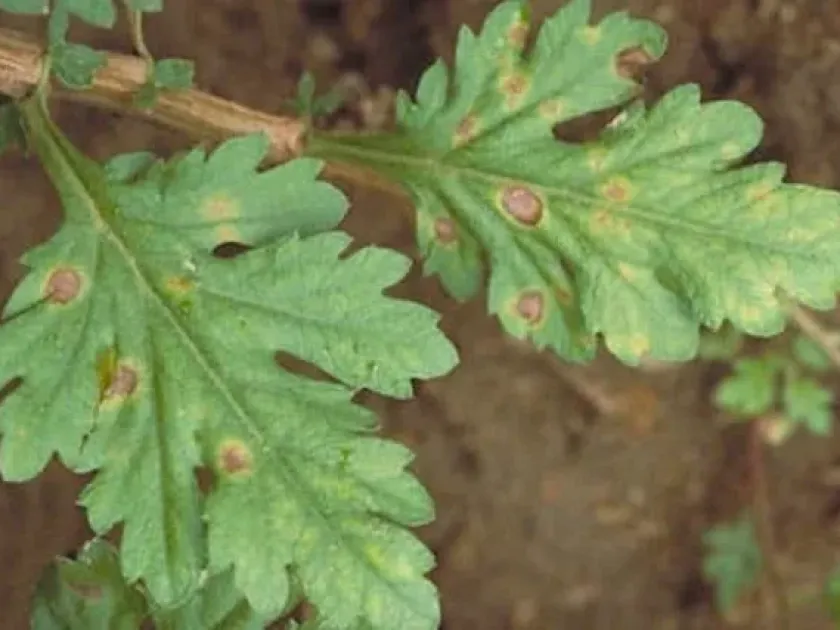
The symptoms appear as small, circular, or irregular spots on the leaves. These spots usually start as dark brown or black lesions on the lower foliage.
As the disease progresses, the spots expand and may coalesce, creating large necrotic areas on the leaf surface. A light-colored center often forms within the older spots.
Under high humidity, a greyish or olive-colored fungal growth, which represents the sporulation of the fungus, can be observed on the underside of the leaf spots.
Severe infestations cause rapid yellowing, wilting, and premature abscission of the leaves, starting from the base of the stem and moving upwards.
If left untreated, the infection may spread to the petioles and stems, resulting in stunted development and poor flower quality.
Pathogen
The disease is caused by the fungus Chuppomyces handelii (formerly known as Cercospora chrysanthemi). This pathogen specifically targets plants within the Asteraceae family.
It is classified as a leaf spot disease, characterized by the localized destruction of leaf tissue. The fungus survives in plant debris and infested soil, waiting for the right conditions to reactivate.
The mycelium grows within the leaf tissue, eventually erupting through the stomata to produce spores. These spores are dispersed by water splashes or wind currents.
Infection cycles can repeat multiple times during a single growing season if environmental factors remain favorable for the fungal growth.
As a specialized parasite, Chuppomyces handelii can survive in diverse environments, from greenhouse conditions to open garden beds.
Conditions for development
High humidity and moisture are the primary drivers of this disease. Rain, heavy fog, and frequent overhead irrigation provide the perfect environment for spore germination.
Warm temperatures, ranging from +20°C to +25°C, are optimal for the rapid development of the fungus within the host plant tissues.
Poor ventilation, whether in greenhouses or dense garden plantings, prevents leaf surfaces from drying, allowing the fungus to infect plants easily.
The persistence of water films on the leaf surface is a critical requirement for the initiation of a new infection cycle.
Nutritionally stressed or overcrowded plants exhibit increased susceptibility to Chuppomyces handelii, making them the first targets for disease outbreak.
Why it matters
This disease severely degrades the aesthetic value of chrysanthemums, rendering them commercially unviable for the cut flower market.
By compromising the leaf surface, the fungus inhibits photosynthesis, which stunts plant growth and reduces the overall vigor of the chrysanthemum.
Premature leaf drop leads to aesthetic disfigurement, often leaving stems bare and weak, which may eventually lead to plant death in severe cases.
The pathogen can be transmitted via contaminated cuttings, facilitating the introduction of the disease into new greenhouses or gardens.
Weakened plants are more vulnerable to secondary infections, which complicates the diagnosis and increases the cost of treatment.
Protection
Sanitation is the most effective preventative measure. Remove and destroy all fallen leaves and infected plant parts to reduce the fungal inoculum.
Ensure proper spacing between plants to improve air circulation and reduce the duration of leaf wetness after watering.
Fungicide applications are recommended when conditions favor disease development. Use systemic and protective fungicides as part of an integrated management program.
- Choose healthy, certified disease-free cuttings
- Avoid overhead irrigation to keep foliage dry
- Implement strict sanitation of gardening tools
- Rotate fungicides to prevent pathogen resistance
Regular monitoring of your crop is essential for early detection, which allows for faster control and prevents widespread loss.
Discussion
No discussions yet — be the first.