
Chrysanthemum anthracnose
Colletotrichum chrysanthemi
Description
Symptoms
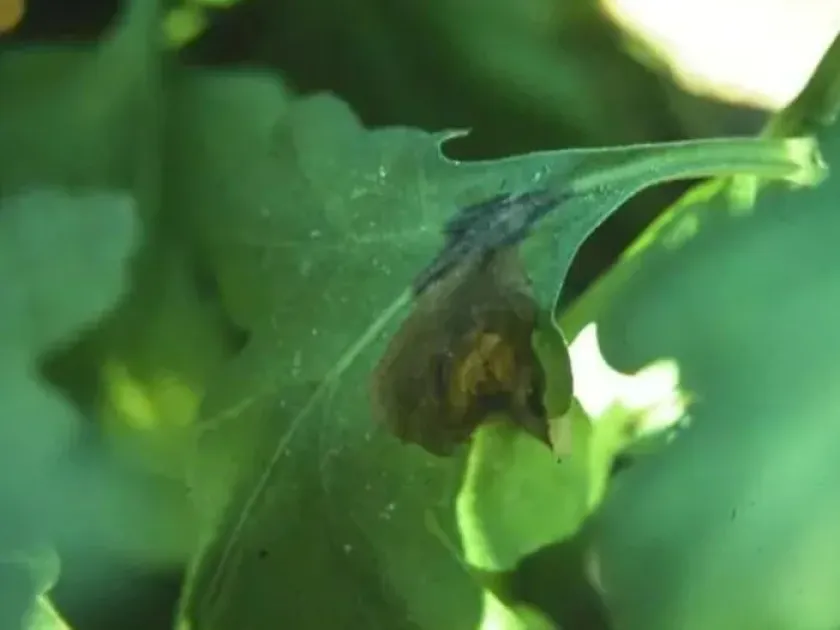
The primary symptom is the emergence of small brown or dark brown spots on the leaf surface. Over time, these spots expand, becoming rounded or irregular depending on local conditions.
The centers of the spots often lighten or crack, leading to premature leaf drop. Under high humidity, a pinkish or whitish spore mass can be observed on the affected areas.
On stems, the disease appears as elongated, sunken dark lesions that can cause the stem to bend or break due to the disruption of nutrient and water transport.
Infection of flower buds prevents them from opening properly, leading to decay and drying out, which renders the plant unsuitable for decorative or commercial use.
- Necrotic leaf spots
- Stem distortion and breakage
- Premature defoliation
- Bud decay
- Spore mass on infected tissues
Pathogen
The causal agent of anthracnose is the fungus Colletotrichum chrysanthemi, which belongs to the group of imperfect fungi. The pathogen survives in soil on plant debris and spreads via infected planting stock.
The infection targets aerial plant parts: leaves, stems, and flower buds. The mycelium penetrates the tissues, causing necrosis and destroying cellular structures of the host plant.
Microscopic conidia of the fungus are spread quickly by raindrops, irrigation water, and wind, ensuring the rapid infection of neighboring plants in gardens or greenhouses.
The pathogen's life cycle is closely tied to environmental humidity. Under favorable conditions, the fungus produces numerous spore-bearing structures that act as sources for further infection.
Diagnosis often requires laboratory confirmation, as symptoms can mimic other fungal diseases affecting ornamental plants and chrysanthemums in particular.
Conditions for development
High relative humidity, exceeding 80%, is the primary driver for disease development. Heavy rainfall or overhead irrigation creates the ideal moisture level for fungal spores to germinate.
The optimal temperature for pathogen development ranges from +20°C to +25°C. In such conditions, the incubation period is significantly shortened, accelerating the spread of the disease.
Dense planting of chrysanthemums reduces airflow, maintaining moisture on leaves for longer periods and facilitating the transmission of the fungus between plants.
Poor agricultural practices, such as lack of weeding or imbalanced nutrition, weaken the natural immunity of the flowers, making them more susceptible to Colletotrichum infection.
Outbreaks most frequently occur during prolonged foggy periods or dramatic temperature shifts when water droplets remain on plant surfaces for extended hours.
Why it matters
The main impact is the complete loss of commercial value. Plants showing leaf spotting and distorted stems are disqualified from sale and floral arrangements.
Severe infection causes plant stunting, inhibits bud development, and results in gradual plant death, depleting nutrient reserves in the root system.
In greenhouse settings, anthracnose can destroy a significant portion of the production in a very short time, causing substantial economic losses for growers.
Infected plants become a persistent reservoir of the pathogen, which is extremely difficult to eradicate without complete sanitization and substrate replacement.
The spread of this disease creates significant barriers to the export of horticultural products, as the pathogen is monitored by phytosanitary authorities worldwide.
Protection
Protection is based on strict adherence to cultural practices: avoiding overhead irrigation, ensuring good ventilation, and removing all infected plant residues.
Using certified healthy planting material and implementing quarantine protocols for new plants are crucial steps to prevent the introduction of the infection to the site.
Preventive fungicide treatments using copper-based products help inhibit spore germination on leaf surfaces, minimizing the risk of primary infection.
Upon detection of initial symptoms, immediate application of systemic fungicides is required to stop the growth of the fungal mycelium within the plant tissues.
It is recommended to rotate products from different chemical classes regularly to prevent the development of resistance in the pathogen against active ingredients.
Discussion
No discussions yet — be the first.