
Ceriporia
Ceriporia
The causative agent of this condition is a fungus from the Ceriporia genus, which belongs to the group of wood-decaying fungi responsible for active wood decomposition.
What the section contains
Ceriporia
Biologically, this object is a xylotroph, meaning it feeds on the components of woody tissues, specifically breaking down cellulose and lignin.
During its life cycle, the fungal mycelium actively penetrates the sapwood and heartwood, secreting specific enzymes to decompose complex organic structures.
The type of infection caused is classified as white rot, where wood loses its original color, becoming light and developing a fibrous texture.
Mycological activity is most pronounced during the growing season, when specific temperature and moisture levels facilitate the spread of basidiospores through bark wounds.
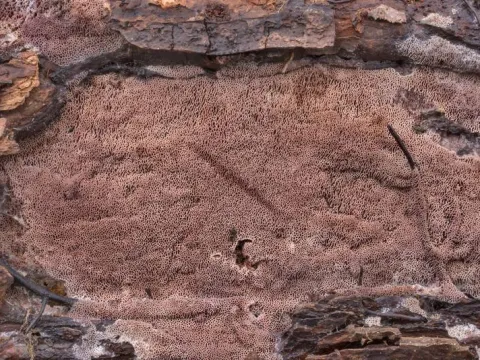
The primary external sign of the fungus on trunks or stumps is the formation of characteristic fruit bodies shaped as resupinate, flattened sheets.
Ceriporia fruit bodies can display various colors, ranging from cream to yellowish or pinkish hues, tightly attached to the substrate.
The surface of the sporiferous layer is often covered in small pores, giving the structure an appearance similar to a fine-meshed sponge or net.
Inside the infected wood, tissue discoloration and a loss of mechanical strength become visible, leading to gradual softening of the trunk.
In later stages, the tree becomes brittle and prone to windthrow or breakage, which is a direct consequence of the structural degradation of the lignin.
Fungal development requires high moisture levels in the wood substrate, typically found in shaded and damp forest ecosystems.
Optimal temperature conditions for mycelial growth fall within a moderate range characteristic of temperate forest zones during summer months.
Infection occurs primarily through mechanical injuries such as frost cracks, structural fissures, insect damage, or human-made wounds.
The fungus spreads actively via spores carried by air currents over significant distances during periods of high humidity.
The presence of weakened trees or decaying plant debris creates an infection reservoir, facilitating the spread to healthy individuals.
The primary damage involves the reduction of wood quality, rendering it unsuitable for construction or commercial timber purposes.
Trees infected with Ceriporia lose their resistance to adverse weather, leading to the premature death of the stand.
In landscaping and gardening, this fungus poses a significant safety risk, as rotted trees may collapse unexpectedly.
The progressive decay of the root system and the lower trunk leads to stand degradation and substantial economic losses.
Rot development also invites secondary infestation by trunk pests, further suppressing the plant's physiological processes.
The primary prevention method is adhering to proper silvicultural practices, including the timely removal of dead and decaying wood.
Regular sanitary pruning of diseased branches and sealing wounds with professional-grade pruning paint are recommended to protect trees from spores.
Maintaining optimal stand density is a crucial measure to prevent excessive moisture accumulation and create an environment unsuitable for fungal growth.
If infection clusters are identified, full felling and removal of affected trees, along with the immediate disposal of infested wood, are necessary.
Fungicide application is generally limited to early infection stages or as a preventive measure during decorative pruning in gardens.