
Ceriporia reticulata
Ceriporia reticulata
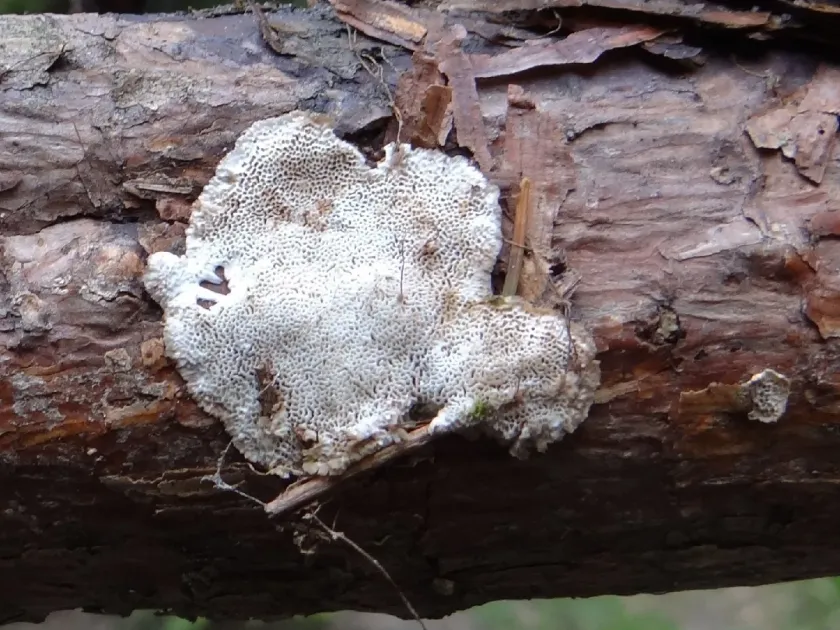
Description
Pathogen
Ceriporia reticulata is a species of wood-decay fungus belonging to the phylum Basidiomycota. It is a known agent of white rot, a process in which the fungus effectively degrades both cellulose and lignin in woody plant tissues.
The fungus manifests as resupinate, crust-like fruiting bodies that often coalesce to form larger patches on logs, stumps, or damaged trunk areas. The hymenium exhibits a characteristic porous surface, which is a key identifying feature.
The mycelium of the pathogen colonizes the internal fibers of the wood, absorbing nutrients and breaking down complex organic structures. Its color profile typically ranges from pure white to various shades of pale cream or yellow.
Ceriporia reticulata primarily functions as a saprotroph, recycling decaying wood in forest ecosystems. However, under specific conditions of high humidity and bark damage, it can act as a pathogen affecting weakened living trees.
Reproduction is facilitated by basidiospores, which are dispersed by air currents or wood-dwelling insects. Upon landing on suitable substrate, the spores germinate, initiating the colonization process that leads to wood decay.
Conditions for development
High humidity and consistent moisture levels are the most critical factors for the survival and expansion of Ceriporia reticulata. The fungus thrives in stagnant, damp environments where ventilation is minimal.
Temperature plays a significant role, with the optimal growth range typically falling between 18 and 25 degrees Celsius. These conditions ensure the mycelium can spread rapidly through the substrate during the growing season.
Forests with thick undergrowth or poorly managed garden sites provide ideal habitats. Lack of air circulation prevents the drying of bark surfaces, making them highly susceptible to spore germination and hyphal penetration.
Mechanical injuries, such as broken branches, pruning wounds, or frost cracks, serve as entry points for the pathogen. Once established, the fungus can extend its reach deeper into the tree's vascular system.
During the winter months, the fungus remains dormant within the woody tissue as mycelium. It resumes its development immediately when temperatures and moisture levels normalize, maintaining a perennial presence in the infected wood.
Why it matters
The primary harm caused by this fungus is the loss of structural integrity in the wood. As it degrades the lignin-cellulose matrix, the wood becomes soft, brittle, and structurally compromised.
In ornamental or fruit trees, this leads to a decrease in overall vitality, reduced canopy density, and eventual dieback of branches. The tree loses its ability to transport water and nutrients efficiently through the affected sections.
Trees infected by white rot fungi are prone to mechanical failure. Heavy winds can easily snap damaged trunks or branches, posing significant safety hazards in managed landscapes and residential areas.
Furthermore, the decay created by Ceriporia reticulata encourages secondary infestations by wood-boring insects and other opportunistic pathogens. This creates a cascade of damage that can kill the host tree over several seasons.
In commercial forestry, the presence of such decay reduces the timber quality and economic value of the wood. Once infected, logs often become unsuitable for industrial processing or construction purposes.
Protection
The most effective strategy is a proactive approach focusing on site sanitation. Removing dead wood, old stumps, and fallen debris reduces the local spore load and limits the breeding ground for the pathogen.
Pruning wounds are the most common entry points for the fungus. Applying specialized tree wound paints or sealing agents after cutting helps protect the exposed wood until natural callus formation occurs.
Maintaining proper tree health is paramount; well-fertilized and correctly watered trees have stronger defense mechanisms against fungal attacks. Pruning should be performed to ensure good air circulation within the canopy.
If an infection is identified on a living tree, one may attempt to excise the decayed wood down to healthy tissue. Following this, the area should be treated with a systemic fungicide and monitored for further signs of rot.
Regular inspections, especially following severe weather events, are essential to identify damage early. By managing mechanical injuries immediately, the risk of establishment for Ceriporia reticulata is significantly minimized.
Discussion
No discussions yet — be the first.