
Ceriporia tarda
Ceriporia tarda
Description
Symptoms
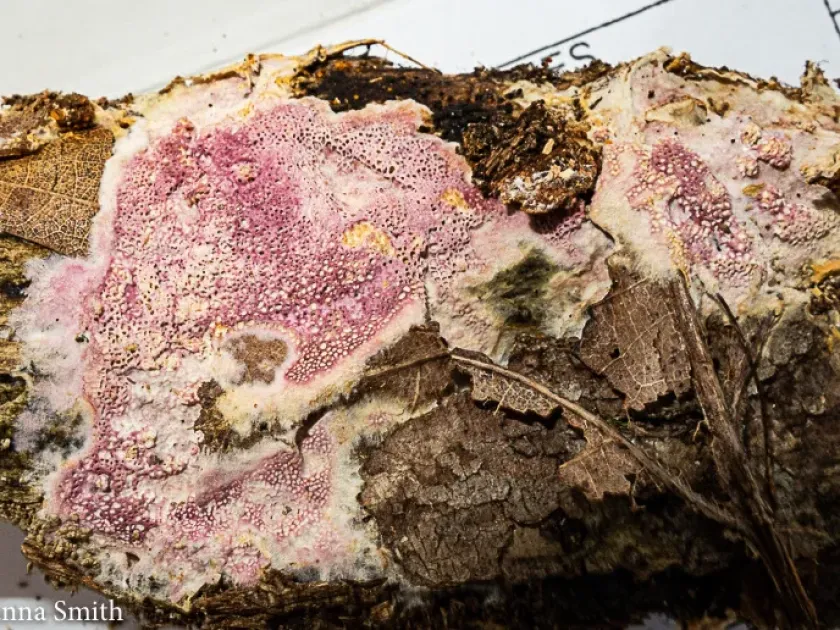
The most visible sign of infection is the emergence of resupinate fruiting bodies on the surface of trunks or stumps, often appearing in clusters within bark crevices.
Inside the infected wood, the primary symptom is the development of white rot. The wood loses its original color and structural density, becoming bleached and friable over time.
In advanced stages of decay, the wood texture becomes stringy and loses almost all mechanical strength, which can be detected by probing the trunk surface with a tool.
Secondary symptoms include the overall decline of tree health, characterized by leaf chlorosis, premature senescence, and the gradual dieback of individual branches in the canopy.
Localized weeping or discolored sap patches on the bark may also indicate the internal presence of the fungal mycelium colonizing the underlying cambium layers.
Pathogen
Ceriporia tarda is a species of wood-decaying fungus belonging to the order Polyporales. It is a basidiomycete that plays a key role in the decomposition of woody substrates in temperate forest ecosystems.
Biologically, it operates as a saprotroph, though it can transition to a weak parasite on stressed or damaged trees, utilizing its enzymatic toolkit to digest lignocellulosic compounds.
The fungus develops mycelial networks that penetrate deep into the xylem of trees, effectively breaking down the structural integrity of the wood through the production of specialized enzymes.
The fruiting bodies of Ceriporia tarda are typically resupinate, meaning they grow flat against the bark or wood surface. They often display a distinct pinkish or cream coloration during the active growth phase.
Reproduction is facilitated by the release of basidiospores from the porous surface of the fruiting body, which are then dispersed by wind and insect vectors to new susceptible hosts.
Conditions for development
High relative humidity is the most critical factor for the successful development and spread of Ceriporia tarda within a stand or orchard.
The fungus thrives in moderate temperature ranges, typically between 18°C and 25°C, which are common during the spring and early autumn growth cycles.
Oxygen availability is necessary for the aerobic respiration processes of the fungus, which explains why it is often found in the outer sapwood layers rather than deep in waterlogged heartwood.
Poor airflow within dense, overcrowded plantations creates a microclimate that prevents moisture evaporation, effectively promoting the germination of fungal spores on tree surfaces.
Wounds caused by frost, pruning, or animal activity provide the necessary entry points for the pathogen to bypass the tree's natural physical and chemical defense mechanisms.
Why it matters
The economic impact of this fungus is significant, as it severely degrades the quality and market value of timber, rendering it unsuitable for structural or fine woodworking applications.
By compromising the internal wood structure, the fungus significantly increases the risk of windthrow and trunk breakage, posing a danger to both forest infrastructure and personnel.
In orchards, Ceriporia tarda can lead to the premature death of fruit-bearing trees, resulting in substantial losses in yield and requiring the costly removal of affected specimens.
The pathogen predisposes the host to secondary infestations by wood-boring insects, which further accelerate the deterioration process and the eventual collapse of the tree.
Ecologically, heavy infestations can lead to the fragmentation of habitats as affected trees succumb to decay, potentially altering the composition and structure of the surrounding forest stand.
Protection
Effective management begins with stringent sanitation practices, including the prompt identification and removal of infected wood and debris to minimize the primary inoculum source.
To prevent initial infection, it is vital to minimize physical wounding during forest operations and regular pruning, as open wounds are the primary sites of fungal entry.
The application of protective antifungal sealants or specialized wood dressings to pruning cuts can significantly lower the risk of infection by preventing spore colonization.
Maintaining appropriate stand density ensures sufficient air circulation, which helps keep the surface of trunks drier and less conducive to the growth of fungal mycelium.
In high-value plantations or nursery settings, the use of targeted systemic fungicides may be considered as a preventative measure if the surrounding environmental pressure remains high.
Discussion
No discussions yet — be the first.