
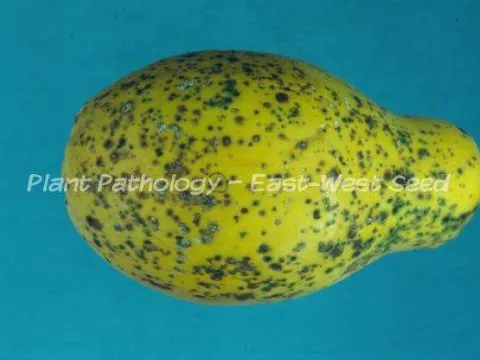
Cercospora spot of papaya
Cercospora papayae
The disease is caused by the fungus Cercospora papayae. It is a highly specialized pathogen that primarily targets papaya trees, severely affecting their physiological functions.
What the section contains
Cercospora spot of papaya
The fungus overwinters primarily in infected plant debris left on the ground. Once environmental conditions become favorable, the fungal mycelium begins to produce spores, initiating the infection cycle.
Conidia are the primary source of spread, moving easily via wind currents and rain splashes. They land on leaves or fruits and penetrate the plant tissue through stomata or small wounds.
Once inside, the mycelium proliferates, secreting enzymes that break down plant cells. This destructive process results in the typical spot patterns seen on leaves and fruit skins.
This pathogen thrives in tropical climates where high humidity and moderate temperatures provide the perfect backdrop for continuous annual infections.
Early symptoms appear as small, circular, or irregular spots on the leaves. These spots start as chlorotic patches and gradually turn brown or gray with a darker border.
A distinctive feature is the development of a grayish-olive velvety growth on the underside of the leaf spots. This corresponds to the sporulation stage of the fungus.
As the infection progresses, leaves turn yellow and drop prematurely. Significant defoliation is a major sign of severe infection, leading to a visible decline in the plant's health.
On the fruits, the disease manifests as small, sunken spots. These spots may enlarge and coalesce, often causing the fruit to become deformed and unsightly.
The overall plant vigor drops significantly. The loss of leaf surface area directly impacts the photosynthesis rate, resulting in weaker growth and reduced yield quality.
High humidity and consistent rainfall are the primary catalysts for the development of Cercospora papayae. The fungus requires moisture to germinate and establish infection.
The optimal temperature for fungal growth is between 22 and 28 degrees Celsius. Within this thermal range, the reproductive rate of the fungus is at its peak.
Poor orchard sanitation, such as failing to remove infected leaves, ensures a constant supply of spores. This allows the disease to persist throughout the growing season.
Dense planting patterns reduce air circulation within the canopy. Stagnant air keeps foliage wet for longer periods, providing a perfect opportunity for the spores to penetrate tissues.
Trees that are nutritionally stressed or poorly managed are significantly more vulnerable. A weak immune system makes it difficult for the plant to resist the fungal invasion.
The primary economic harm is the reduction in marketable yield. Infected fruits are rejected by markets, and total yield is often lower due to poor tree health.
Defoliation forces the tree to redirect energy to leaf production rather than fruit ripening. This leads to smaller, less flavorful papayas with poor shelf life.
The costs associated with fungicides and manual labor for sanitation represent a significant financial burden on large-scale papaya growers.
Severe and chronic infection can lead to the death of young plants and reduce the long-term productivity of an entire orchard.
The presence of the disease also poses a risk of spreading to neighboring healthy plantations if control measures are not strictly enforced.
Proactive management begins with site selection and proper spacing. Ensuring sufficient airflow is critical to reducing the humidity levels around the papaya canopy.
Sanitation is the cornerstone of control. All fallen leaves and infected fruits must be collected and removed from the field to disrupt the fungal life cycle.
- Regular pruning of the canopy to ensure light penetration and airflow.
- Application of copper-based fungicides to create a protective barrier.
- Rotation of chemical products to prevent the development of fungicide resistance.
- Regular monitoring for early signs of leaf spots during the rainy season.
- Balanced nutrient management to promote tree vigor and disease resistance.
During the rainy season, the frequency of fungicide applications should be increased because rainfall can wash off protective treatments.
Integrated disease management (IDM) is highly recommended, combining good cultural practices with chemical interventions to ensure sustainable papaya production.