
Cereal anthracnose
Colletotrichum cereale
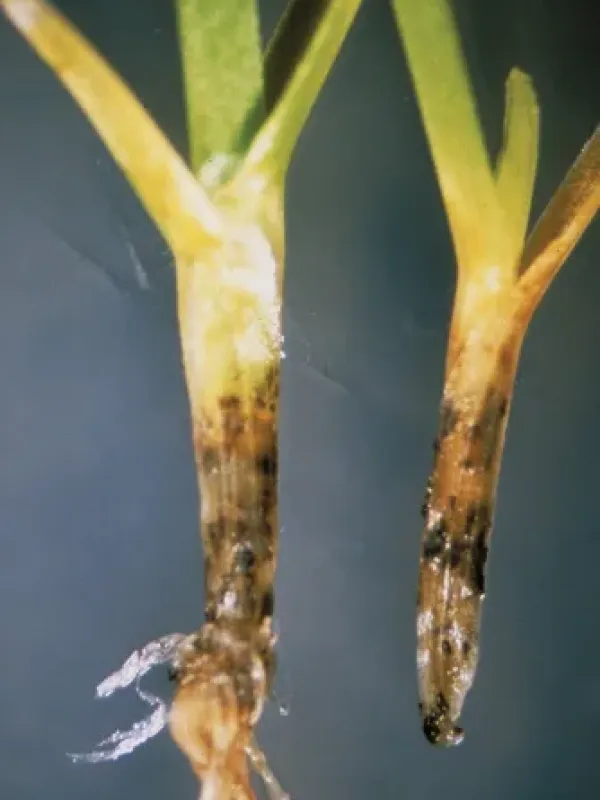
Description
Symptoms
Early symptoms include the appearance of small, water-soaked, or discolored spots on leaf blades that gradually expand into larger, irregular necrotic lesions.
A distinctive feature of the disease is the presence of tiny, black, hair-like structures (setae) within the lesions, visible upon close inspection or with a magnifying glass.
- Chlorosis (yellowing) of the leaves and premature wilting.
- Dark, discolored lesions on the stem base (crown rot).
- Thinning of the stand due to plant death during early development.
- Shriveled or poor quality grain in the infected heads.
Under high humidity, a pinkish or salmon-colored gelatinous mass of spores may appear on the necrotic tissues, indicating active sporulation of the fungus.
In cases of severe infection, the stems become weak and brittle, leading to lodging, which significantly complicates the harvesting process for farmers.
Pathogen
Cereal anthracnose is caused by the fungus Colletotrichum cereale, which is a versatile pathogen known to infect various cereal crops including wheat, rye, and barley.
The fungus functions as a hemibiotroph, initially feeding on living tissues before eventually killing the host cells to complete its reproductive cycle.
Reproduction is facilitated by the production of asexual spores called conidia, which are borne in specialized structures known as acervuli, often characterized by dark bristles.
The pathogen can survive as mycelium or sclerotia in soil debris or crop residue, allowing it to persist in fields between growing seasons if not managed properly.
Dissemination primarily occurs via rain splash and wind, which carry the conidia from infected residue or lower leaves to the healthy upper parts of the plants.
Conditions for development
The development of Colletotrichum cereale is heavily favored by warm temperatures, typically between 20°C and 25°C, accompanied by high moisture levels.
Periods of frequent rainfall or prolonged leaf wetness are critical for the germination of spores and the successful infection of the cereal host.
Dense planting patterns reduce air circulation within the canopy, creating a humid microclimate that acts as an incubator for the rapid spread of the pathogen.
Plants weakened by other stressors, such as drought, nutrient deficiency, or insect damage, are significantly more susceptible to successful fungal colonization.
Excessive nitrogen fertilization can also increase plant susceptibility by producing softer, more vulnerable tissue that is easily penetrated by the fungus.
Why it matters
The economic impact of cereal anthracnose includes yield loss due to reduced grain filling and the death of individual tillers, which lowers the overall plant count.
Severe crown infections disrupt the plant's vascular system, hindering the transport of water and nutrients, which is fatal to the plant during grain development.
Lodging caused by stem base rot leads to significant harvesting losses and increased grain degradation when ears touch the soil surface.
The disease reduces the quality of harvested grain, making it less viable for milling or as high-quality seed material for the following year.
If the infection becomes established in a field, it can be extremely difficult to eradicate due to the long-term survival of the fungus in soil and residues.
Protection
Cultural practices, such as rotating crops with non-host species, are the first line of defense to break the life cycle of the pathogen and reduce soil inoculum.
Tillage techniques that incorporate or bury crop residues are effective in speeding up the decomposition of infected material, thereby limiting the pathogen's survival.
Seed treatment with systemic fungicides is essential to protect young seedlings from early-season infections and to ensure vigorous crop emergence.
During the growing season, timely scouting and the application of fungicides are necessary if environmental conditions are conducive to disease development.
Maintaining balanced soil fertility, particularly adequate levels of potassium, helps improve the plant's overall structural integrity and natural resistance to infection.
Discussion
No discussions yet — be the first.