
Cercospora leaf spot of water hyacinth
Cercospora piaropi
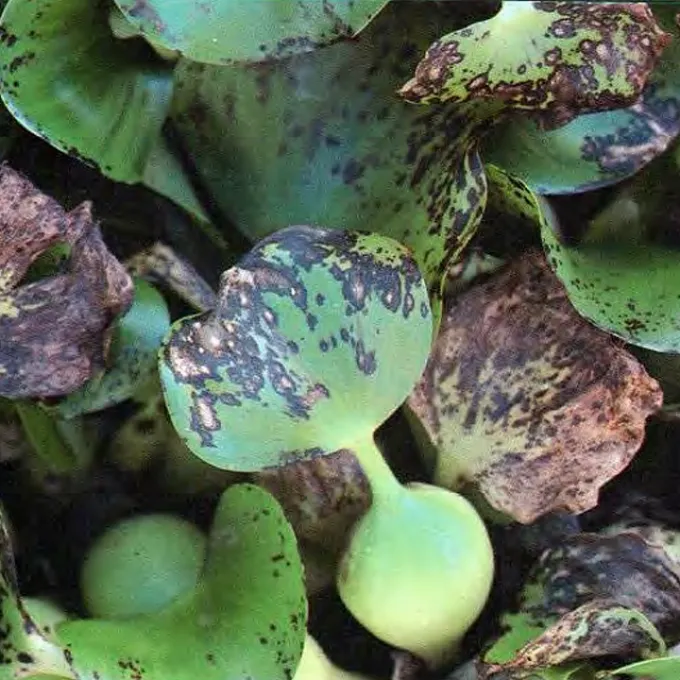
Description
Symptoms
The first clinical signs of infection are the appearance of small, chlorotic spots on the leaf blades that gradually transition to necrotic lesions.
As the infection matures, these spots expand into irregular brown patches, often with a darker border indicating the boundary between living and dead tissue.
A distinctive velvety growth of fungal sporulation may become visible on the underside of the necrotic spots, especially under humid conditions.
- Development of brown necrotic leaf spots.
- Yellowing (chlorosis) around the affected tissue.
- Leaf curling and deformation as lesions grow.
- Premature senescence and collapse of leaves and petioles.
Severe infestations cause leaves to lose their buoyancy, leading to the sinking and eventual decomposition of the plant matter within the water column.
Pathogen
The causative agent of this disease is the fungus Cercospora piaropi, a specialized pathogen known to infect water hyacinth (Eichhornia crassipes).
This fungus belongs to the class of Deuteromycetes and relies on asexual spores known as conidia for its rapid dispersal through the environment.
The life cycle of the pathogen is closely adapted to the physiology of its host, allowing it to survive and reproduce specifically on the aquatic plant tissue.
Upon landing on the leaf, the pathogen uses moisture to germinate and penetrate the epidermal layer, establishing a nutritional link with the host plant.
The fungal mycelium spreads systemically within the leaf tissue, causing localized tissue death and structural collapse of the affected plant parts.
Conditions for development
The fungus thrives in environments characterized by high humidity and warm temperatures, which are necessary for the germination of fungal conidia.
Stagnant water conditions promote the accumulation of moisture on the leaf surfaces, creating an ideal microclimate for the pathogen to establish itself.
High plant density acts as a catalyst for disease spread, as direct leaf-to-leaf contact facilitates the movement of spores between healthy and infected plants.
Weather events such as frequent rainfall followed by intense solar heat significantly escalate the infection rate of Cercospora piaropi.
Plants under nutrient stress or in shaded environments demonstrate lower resistance to this pathogen compared to those growing in optimal aquatic conditions.
Why it matters
The primary impact of the disease is the substantial reduction in the photosynthetic capacity of the plant due to the loss of functional leaf area.
In ornamental aquaculture, the presence of leaf spot significantly diminishes the aesthetic appeal of water hyacinth displays, causing economic losses.
The reduction in vigor and growth rate can weaken the plant, making it susceptible to secondary bacterial infections or rot in the stems and roots.
In cases of high-intensity outbreaks, the disease can lead to the collapse of entire populations of water hyacinth within a localized ecosystem.
Conversely, in ecological management, this fungus serves as a natural tool for biocontrol, preventing the invasive spread of the plant in waterways.
Protection
Sanitation practices are essential, involving the regular removal and safe disposal of all symptomatic plant material to reduce the inoculum load.
Maintaining proper spacing between individual plants is crucial to ensure adequate airflow and reduce the humidity levels that favor fungal growth.
While chemical control with fungicides is theoretically possible, it is rarely implemented in natural water bodies due to severe environmental and water quality regulations.
Improving the health of the host plant through proper nutrient balance can enhance its resistance to infection and reduce the impact of the disease.
Early monitoring of pond populations allows for the prompt identification of infected plants, preventing the spread across the entire water collection.
Discussion
No discussions yet — be the first.