
Cercosporidium leaf spot
Cercosporidium
Description
Symptoms
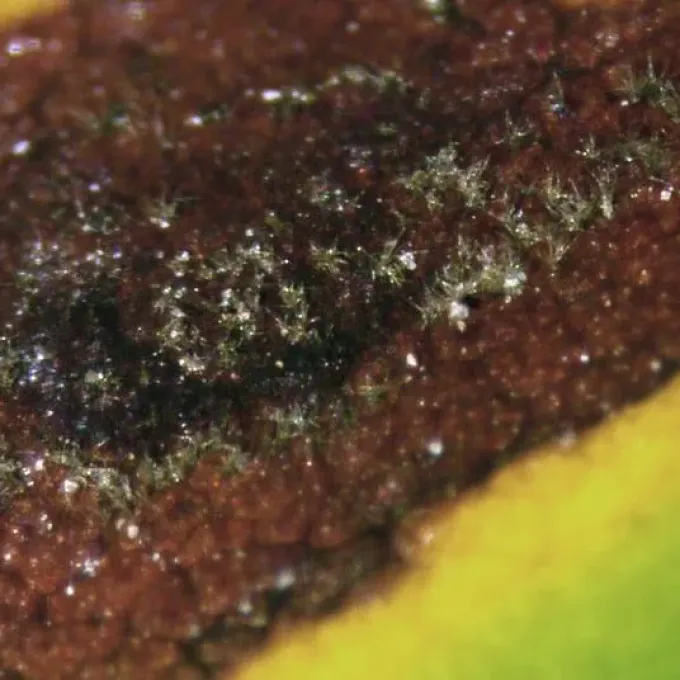
The primary symptom of the disease is the development of circular or oval spots on leaves, appearing brown to dark brown, often surrounded by a light-colored chlorotic halo.
On the underside of the leaf, within the spot areas, a dense olive-black mass of conidiophores and spores can be observed. Under severe conditions, these spots coalesce, covering large parts of the leaf surface.
Affected plant tissues eventually yellow and die, leading to premature leaf drop. This significant loss of foliage reduces the plant's photosynthetic capacity, resulting in overall weakness and reduced vigor.
Dark, elongated, and slightly sunken lesions may appear on stems and petioles as the infection progresses. In some instances, the fungus can also infect fruits or pods, causing small necrotic pits.
Plants severely infected by the disease appear stunted, lose turgor pressure, and show significant growth reduction compared to healthy counterparts in the same field.
Pathogen
The causal agent of Cercosporidium leaf spot is the fungus Cercosporidium personatum, currently classified as Passalora personata. This pathogen belongs to the class of deuteromycetes and is a specialized parasite of many economically important crops.
The life cycle involves the formation of conidiophores that emerge through the stomata of leaves, producing conidia. These spores are the primary source of infection that spreads the disease throughout the growing season.
The fungus survives the winter primarily as mycelium or stromata on crop debris left in the field. It can persist in the soil for several growing seasons, creating a continuous threat to subsequent plantings.
Spore dissemination occurs passively through wind, rain splashes, or irrigation. Once landing on a susceptible host plant, the spores germinate and penetrate the tissue through natural openings or small wounds.
This pathogen demonstrates high biological plasticity, allowing it to adapt to varying climatic conditions and potentially develop resistance to certain chemical classes of fungicides over time.
Conditions for development
Development of Cercosporidium leaf spot is favored by high relative humidity (above 80%) and moderate temperatures, typically ranging from +20°C to +28°C.
Frequent rainfall, heavy dew, and prolonged fog provide the necessary moisture for spore germination and rapid secondary infection cycles within the crop canopy.
Dense planting configurations and lack of crop rotation create an ideal microclimate for the pathogen to thrive and spread rapidly during the peak of the growing season.
Nutrient deficiency, particularly low potassium levels, can compromise the plant's natural resistance, making it more susceptible to successful fungal colonization.
The infection usually reaches its most active stage during the second half of the season, when environmental factors align to support the pathogen's peak reproductive activity.
Why it matters
The primary damage is the extensive destruction of leaf tissue, which inhibits photosynthesis and disrupts the plant’s ability to allocate nutrients to seeds, fruits, or roots.
Premature defoliation leads to stunted fruit development, poor seed fill, and significant reductions in quality parameters such as protein or oil content in the harvest.
Infected crops are more prone to secondary infections and pest attacks, which complicates disease management and leads to cumulative economic losses.
During severe epiphytotic outbreaks, yield losses can range from 30% to 50%, depending on the crop variety's susceptibility and the timing of the initial infection.
The reduction in quality also affects the seed market, as infected seeds may show poor germination rates and reduced vigor for the following planting cycle.
Protection
The most fundamental control measure is a robust crop rotation strategy, ensuring that susceptible hosts are not planted in the same field for at least 3–4 years.
Deep plowing and incorporation of crop residue are essential to bury the fungal inoculum, thereby reducing the risk of primary infection in the following spring.
When initial disease symptoms appear, the application of systemic fungicides (such as triazoles or benzimidazoles) is crucial to suppress pathogen spread and protect the plant's foliage.
Selecting and planting resistant or tolerant varieties remains one of the most effective long-term strategies for minimizing the impact of Cercosporidium leaf spot.
- Use high-quality, certified seeds.
- Manage weeds to remove alternative hosts.
- Ensure balanced fertilization.
- Monitor fields regularly for early signs of infection.
Discussion
No discussions yet — be the first.