
Cercospora rice leaf spot
Cercospora janseana
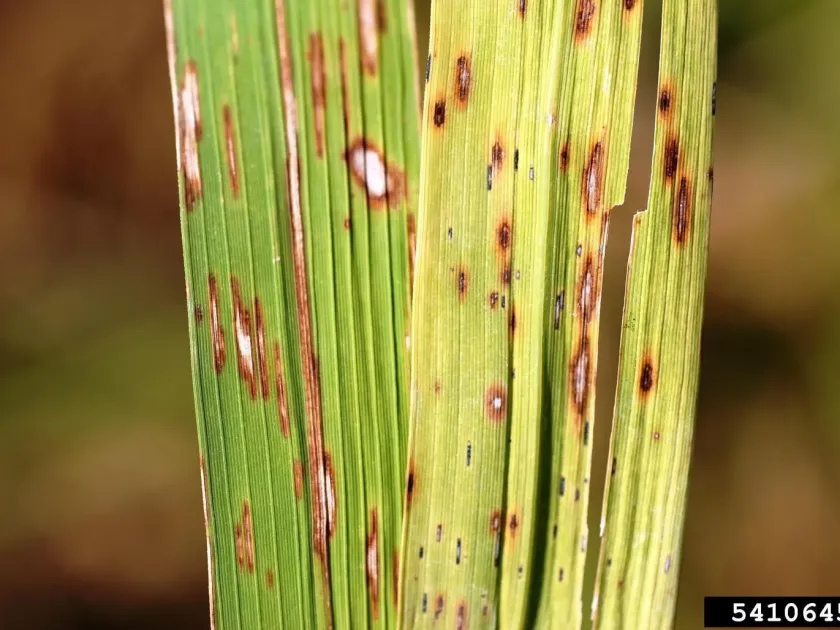
Description
Symptoms
The characteristic symptom is the formation of narrow, linear lesions on leaves, leaf sheaths, and occasionally on glumes, often referred to as narrow brown leaf spot.
These spots are typically rectangular or elongated, oriented parallel to the leaf veins, with a color ranging from reddish-brown to dark brown or gray.
Under conditions of high humidity, a grayish-olive fungal growth consisting of conidiophores and conidia can be observed on the surface of the lesions.
In cases of severe infection, lesions may coalesce, leading to rapid chlorosis, leaf death, and significant reduction in the plant's green surface area.
Early leaf senescence caused by the pathogen forces the plant to lose the necessary photosynthates required for grain filling, resulting in reduced quality.
Pathogen
The causal agent of Cercospora rice leaf spot is the imperfect fungus Cercospora janseana (syn. Cercospora oryzae), classified within the Hyphomycetes group.
The pathogen consists of a septate mycelium that invades plant tissues and produces conidia (spores) that emerge through stomata to facilitate secondary infection cycles.
The fungus survives during the off-season as mycelium and conidia in infected plant debris left in the field or in the soil, and it can also be seed-borne.
Primary infection typically initiates when spores are disseminated by wind or splashing rain, landing on susceptible young rice leaves under favorable conditions.
As the pathogen colonizes the leaf tissue, it secretes toxic metabolites that disrupt cellular functions, leading to the development of necrotic lesions.
Conditions for development
Cercospora janseana development is strongly influenced by environmental factors, particularly temperature and moisture availability in the rice canopy.
Optimal growth and sporulation of the fungus occur in warm conditions, typically ranging from 25°C to 30°C (77°F to 86°F).
High relative humidity, frequent rainfall, and prolonged periods of leaf wetness are essential for spore germination and successful host penetration.
Dense crop stands create a microclimate with reduced airflow and trapped moisture, which significantly promotes the spread and severity of the disease.
Poor agricultural practices, such as excessive nitrogen fertilization and lack of proper crop rotation, contribute to an increased risk of disease outbreaks.
Why it matters
The primary economic impact of Cercospora leaf spot is the reduction of the photosynthetic capacity of the crop, directly affecting yields.
Severe infection results in premature leaf death, which prevents the proper filling of grains, leading to lower grain weight and increased empty glumes.
Quality reduction is a critical concern, as affected rice crops produce smaller, thinner, and less attractive grains with lower market value.
In addition to direct yield loss, the disease weakens the plant, making it more susceptible to environmental stresses and secondary opportunistic infections.
Large-scale epiphytotics can cause substantial financial losses for rice producers, requiring intensive management efforts to mitigate damages.
Protection
The most effective management strategy involves the use of resistant or tolerant rice varieties developed to withstand pathogen penetration.
Sanitation practices, including the deep incorporation of crop residues into the soil, are vital to reduce the initial inoculum density in the field.
Ensuring the use of certified, clean, and treated seeds is a fundamental step to prevent the introduction of the pathogen into healthy plots.
Balanced crop nutrition and optimized water management help to maintain plant health and improve natural resistance against fungal infections.
Fungicide applications are recommended when disease pressure is high, particularly during the early vegetative stages to prevent significant spreading.
Discussion
No discussions yet — be the first.