
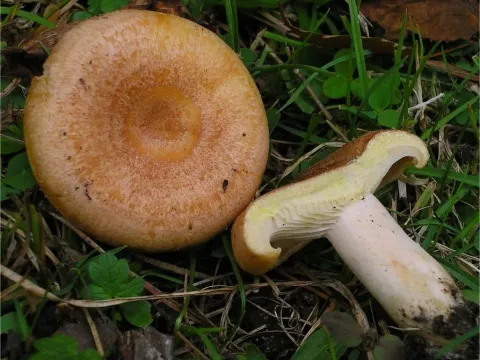
Golden milkcap
Lactarius chrysorrhoeus
The golden milkcap (Lactarius chrysorrhoeus) is a basidiomycete fungus belonging to the Russulaceae family. It is important to clarify that this organism is not a plant pathogen, but rather a symbiotic partner essential for many trees.
What the section contains
Golden milkcap
This fungus establishes an ectomycorrhizal relationship with the root systems of hardwood trees, particularly oak and beech. The mycelium forms a sheath around the roots, facilitating nutrient and water uptake for the host tree.
The fungus is a classic example of a forest-dwelling mycorrhizal species. Its mycelium network exists beneath the forest floor, living in harmony with the host tree's root system without causing any damage.
Its name is derived from its distinctive milky latex, which turns a golden-yellow color upon exposure to air. This chemical reaction is the primary diagnostic feature used by mycologists to identify the species.
As a non-pathogenic inhabitant of the forest, it plays a vital role in organic matter decomposition. It helps maintain soil structure and supports the overall health of the forest biome.
The fruiting body features a cap that can reach up to 8 cm in diameter. It typically exhibits a pale orange or rosy-buff color, often marked with distinctive concentric zones, giving it a patterned appearance.
The gills are crowded and decurrent, showing a creamy to yellowish hue. When injured, both the gills and the cap flesh exude a bitter, acrid latex that rapidly changes color to a deep yellow.
The stem is usually stout and often becomes hollow as the mushroom matures. The flesh is notably bitter and peppery, which renders it inedible, distinguishing it from popular culinary mushrooms.
There are no signs of disease on the host trees associated with this fungus. The trees appear perfectly healthy, as the mycorrhizal association provides them with significant survival advantages.
Reproduction is achieved through basidiospores that are released from the gills. These spores are wind-dispersed, allowing the fungus to colonize suitable forest soil where tree hosts are present.
The golden milkcap thrives in moist, well-drained forest soils enriched with leaf litter. It shows a preference for deciduous woodlands, specifically areas dominated by oak trees.
Growth is most active during periods of high humidity, typically from mid-summer through late autumn. Mild temperatures between 15°C and 22°C provide the ideal environment for fruiting.
The fungal mycelium is highly sensitive to soil disturbance. Deep tilling or environmental degradation can destroy the delicate network, preventing the formation of fruiting bodies.
Optimal conditions require an established forest canopy that protects the forest floor from excessive evaporation. Consistent moisture levels are critical for the development of the mushrooms.
This species is highly adapted to the seasonal cycle of temperate forests. It remains dormant as mycelium during the colder months, ready to reactivate when conditions become favorable.
This fungus is not harmful to crops, orchards, or managed gardens. Its ecological niche is strictly confined to natural forest environments where it lives in association with specific tree species.
The only harm posed by this species is the potential for accidental consumption. Due to its acrid taste and specific compounds, it is considered inedible and can cause gastrointestinal distress if ingested.
In the context of forestry, it is viewed as a beneficial organism. Mycorrhizal fungi are known to improve tree resistance to environmental stressors, including drought and nutrient deficiency.
It does not cause wood decay or structural degradation in living trees. Unlike pathogenic fungi, the golden milkcap acts as an ally to the tree, not as a destructive agent.
There is no economic damage associated with this species. It does not threaten timber production or the vitality of forest stands in any measurable way.
No control measures are necessary for the golden milkcap. Since it is a beneficial mycorrhizal fungus, any attempts to eradicate it would be ecologically unsound and counterproductive.
Foraging safety is the only relevant point for management. Educating the public about the identification of non-edible species is the best way to prevent accidental ingestion.
If mushroom populations need to be limited in specific recreational areas, simple physical removal of the fruiting bodies before sporulation is sufficient to reduce density.
Promoting forest health through sustainable land management practices ensures that the symbiotic relationships between trees and fungi remain balanced and productive.
The use of fungicides should be strictly avoided in forested areas where mycorrhizal fungi are present, as these chemicals can indiscriminately harm the beneficial fungal network.