
Golden didymella
Didymella aurea
The causative agent of this disease is the ascomycete fungus Didymella aurea, which is classified as an obligate or facultative parasite depending on the host species.
What the section contains
Golden didymella
The fungus produces pseudothecia as part of its sexual reproduction cycle, which release ascospores to initiate primary infections.
Overwintering occurs through dormant mycelium and mature fruiting bodies located on plant debris or infected living bark.
The pathogen utilizes a conidial stage for rapid asexual spread across the host population during the humid summer months.
The biological specialization of Didymella aurea allows it to effectively colonize specific woody or herbaceous tissues by secreting enzymes that degrade plant cell walls.
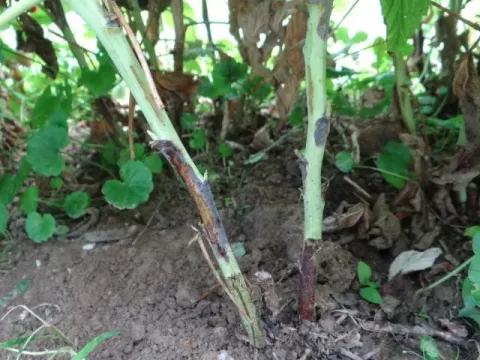
Initial infection signs typically appear as small chlorotic lesions that gradually develop a distinctive golden-yellow hue.
Small dark pycnidia or pseudothecia appear within the dead tissue of the spots as the infection progresses into the fruiting stage.
Infected areas of bark or leaf tissue often exhibit cracking and necrotic ulcerations as the pathogen kills the localized host cells.
A dark, clearly defined margin often develops around the lesions, acting as a boundary between necrotic and healthy tissues.
Under high humidity conditions, a delicate mycelial growth may be visible on the surface of the lesions, marking active sporulation.
The development of Didymella aurea is highly dependent on environmental moisture, requiring high relative humidity for spore germination.
The ideal temperature range for the fungus to thrive and colonize new tissue is generally between 18°C and 24°C.
Dense planting schemes that restrict airflow provide the stagnant air conditions necessary for the pathogen to establish and spread.
Prolonged leaf wetness caused by frequent rain or heavy dew acts as a primary facilitator for the infection process.
Plants that are already under physiological stress, such as those with nutrient deficiencies or physical damage, show increased susceptibility to the fungus.
Premature defoliation resulting from the infection severely impacts the plant's capacity for photosynthesis and energy storage.
The development of necrotic cankers on woody stems can lead to branch dieback and, in severe cases, the death of the entire plant.
The disease significantly weakens the plant's overall immune system, making it more vulnerable to secondary fungal and bacterial invaders.
Ornamental and agricultural economic value is drastically reduced due to the unsightly damage and decreased plant vigor.
The accumulation of inoculum in the field ensures that the disease remains a persistent threat to susceptible crops in subsequent growing seasons.
Sanitary pruning and the strict removal of infected plant material are crucial steps to reduce the primary inoculum load.
Improving spacing and ensuring adequate crown ventilation can significantly lower the infection rate by disrupting the fungal microclimate.
The application of contact or systemic fungicides during the early stages of disease appearance is vital for containment.
- Sterilization of pruning tools to prevent mechanical transmission.
- Use of disease-resistant plant varieties where available.
- Avoidance of overhead irrigation to minimize leaf and stem moisture.
Enhancing plant health through balanced fertilization and proper soil moisture management helps improve natural defense mechanisms.