
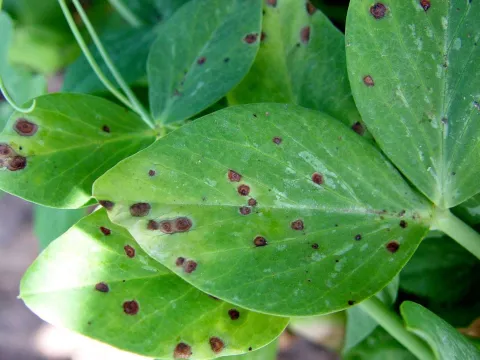
Pea Ascochyta blight
Fusicladium pisicola
Ascochyta blight is caused by fungi belonging to the genus Ascochyta, specifically Ascochyta pisi, Ascochyta pinodes, and Ascochyta pinodella. These pathogens are known to cause severe damage across various pea-growing regions globally.
What the section contains
Pea Ascochyta blight
The pathogen survives in crop debris and is transmitted via infected seeds. The fungal mycelium remains dormant in the seeds, becoming active once the seed begins to germinate in moist conditions.
The lifecycle involves the production of pycnidia, which contain numerous pycnidiospores. These spores are disseminated primarily through rain splashes, wind, and movement of equipment within the field.
The fungi exhibit high genetic variability, enabling them to adapt to diverse climatic conditions and overcome certain plant resistance mechanisms over time.
Infection is initiated when spores land on the plant surface and form germ tubes. These tubes penetrate the host tissue through stomata or wounds, leading to the establishment of the disease.
Initial symptoms include the appearance of small, round, or oval lesions on leaves, stems, and pods. These spots are typically brownish-gray with a distinct dark margin.
A diagnostic characteristic is the presence of tiny black spots within the lesions, which are the fungal fruiting bodies known as pycnidia.
When pods are affected, the lesions become sunken. As the infection progresses, it can reach the developing seeds, causing them to shrink, darken, and lose their germination capacity.
Stem infections can be severe, particularly near the soil line, leading to weakening of the stalk, plant lodging, and premature death of the foliage.
In humid conditions, the foliage may exhibit yellowing and necrosis, significantly reducing the plant's photosynthetic capacity and hindering grain filling.
Ascochyta blight thrives in cool, wet environments. Frequent rainfall, high humidity, and prolonged morning dew create optimal conditions for fungal spore germination.
The disease development is most rapid at temperatures ranging from 15 to 22 degrees Celsius. High moisture levels are essential for the spread of the pathogen through the canopy.
Dense planting patterns reduce air circulation, keeping the plant foliage damp for longer periods and creating a microclimate favorable for fungal proliferation.
Short rotations, where peas are grown in the same field too frequently, lead to a high accumulation of inoculum in the soil, increasing the probability of early-season outbreaks.
Improper soil management or leaving infected crop residues on the surface provides a constant source of infection for subsequent pea crops.
This disease is considered one of the most destructive fungal infections of peas, capable of causing yield reductions ranging from 20% to over 50% in extreme cases.
The infection severely degrades seed quality, making the grain unsuitable for both market sales and future planting due to lower germination rates and poor vigor.
By compromising the plant structure, the blight interferes with nutrient uptake and transport, resulting in shriveled seeds and stunted pod development.
Field losses are exacerbated by the premature defoliation of plants, which forces the plant to shut down its development cycle before the seeds have fully matured.
The economic impact is further magnified by the costs associated with fungicide applications and the need for rigorous seed cleaning processes.
The primary control strategy is the implementation of a strict crop rotation, allowing a gap of at least 4 years between pea crops to allow soil inoculum to decline.
Seed treatment with professional-grade fungicides is essential to eliminate internal and external seed-borne infections before the crop is sown.
Utilizing resistant or tolerant cultivars is the most sustainable approach to minimize the risk of yield losses and reduce dependency on chemical control methods.
Proper field hygiene, including the deep incorporation of crop residues, helps prevent the survival and dispersal of the fungal pathogen.
- Sourcing certified, disease-free seed stocks for planting.
- Managing weed hosts that may harbor the fungus.
- Applying foliar fungicides at the onset of symptoms during the growing season.
- Optimizing plant density to ensure adequate canopy airflow.