
Pea septoria
Septoria pisi
Description
Symptoms
Initial symptoms of pea septoria appear as small, light-yellow or light-brown spots, usually starting on lower leaves. Over time, these spots develop a distinct dark border and may change into an irregular or angular shape.
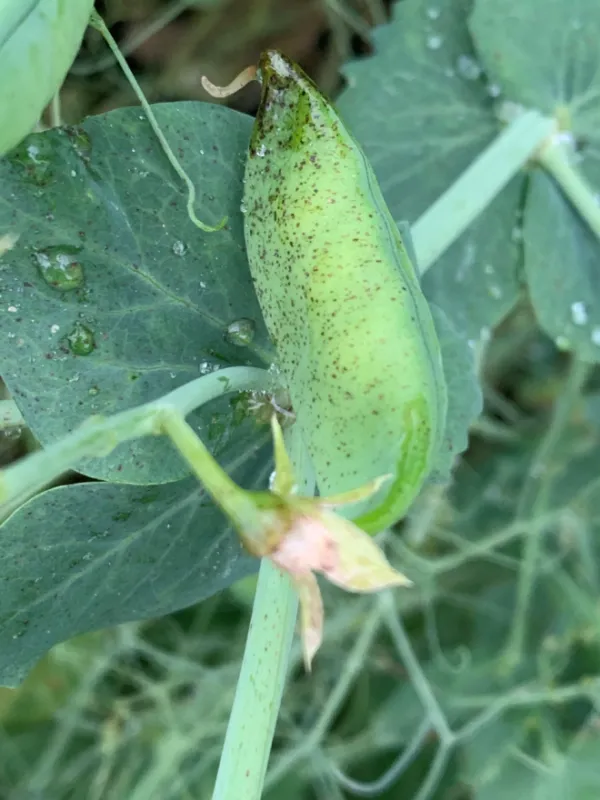
A hallmark of this disease is the appearance of tiny black dots within the infected spots, which are the pycnidia of the fungus. These can often be seen with the naked eye or a hand lens and serve as a definitive diagnostic feature.
As the infection progresses, spots enlarge and coalesce, eventually leading to chlorosis, necrosis, and premature leaf drop. This defoliation significantly reduces the plant's photosynthetic capacity at critical growth stages.
On stems, the disease presents as elongated, brownish or grayish lesions. If the infection is severe, these lesions can cause stem weakness, potentially leading to lodging, which hampers the mechanical harvesting process.
Pods can also be infected, showing dark brown spots that diminish seed quality. Infected seeds are often shriveled or discolored, leading to lower grain weight and reduced market value or germination potential.
Pathogen
The causal agent of pea septoria is the fungus Septoria pisi, which belongs to the class of Coelomycetes. This disease is a common foliar pathogen that targets peas throughout the entire growing cycle, impacting leaves, stems, and pods.
The fungus survives the winter primarily in crop debris left in the soil or through infected seeds. As temperatures rise and humidity increases, pycnidia (fruiting bodies) release spores that spread via rain splash or wind to neighboring plants.
Disease development is cyclical, with multiple infection rounds occurring during the growing season. Once the fungus invades plant tissue, it produces new pycnidia, creating a persistent cycle of secondary infections that can rapidly compromise a field.
Although it thrives in moderate temperatures and high humidity, the pathogen is highly adaptable. Its ability to remain latent in the soil for several years means that once established, the disease risk remains a recurring challenge for farmers.
The biology of Septoria pisi relies heavily on moisture availability. Rain events are the primary trigger for the dispersal of conidia, which explains why the disease is often more prevalent in years with frequent rainfall during the vegetative stages.
Conditions for development
The development of pea septoria is highly dependent on environmental conditions, particularly high humidity and rainfall. Optimal temperatures for the fungus range from +18°C to +25°C, providing the perfect window for spore germination.
Dense planting patterns promote the disease by creating a humid microclimate where air circulation is restricted. This keeps the foliage wet for longer periods, allowing spores more time to germinate and penetrate the tissue.
Poor crop rotation practices contribute significantly to the disease pressure. Continuously growing peas on the same field allows the fungus to accumulate in the soil, leading to higher initial infection rates year over year.
Insect pests, such as aphids or weevils, play an indirect role by causing wounds on the plant surface. These microscopic entry points make it significantly easier for the fungus to bypass the plant's natural defenses.
Nutrient imbalances, particularly excessive nitrogen fertilization, encourage succulent plant growth that is more susceptible to fungal attack. Balanced nutrition, specifically adequate potassium, helps maintain cell wall integrity and plant resistance.
Why it matters
The primary impact of pea septoria is the significant reduction in green leaf area, which limits the plant's ability to produce energy through photosynthesis. This loss directly correlates to lower yields and poor pod development.
Infection leads to reduced seed weight and quality, as the plant cannot adequately fill the pods during the late stages of growth. Severe outbreaks can result in yield losses ranging from 15% to over 30% depending on the infection timing.
Seeds harvested from heavily infested fields have poor viability and vigor. When used for planting, these seeds lead to weak seedlings, high mortality rates, and uneven crop stands, negatively impacting the next season's output.
The disease weakens the structural integrity of the plant, increasing susceptibility to secondary infections and environmental stress. This general decline in plant vigor reduces the overall profitability of the pea crop.
Additionally, the costs associated with post-harvest sorting and quality reduction due to damaged seeds impose a financial burden on growers, affecting the total return on investment for the crop.
Protection
Implementing a strict crop rotation cycle—avoiding pea cultivation on the same plot for at least three to four years—is the most fundamental strategy for minimizing soil-borne inoculum.
Effective management of crop residues, including thorough plowing (tillage) after harvest, helps bury infected debris and accelerates the decomposition of the fungus, thereby reducing the available source of spores.
The selection of disease-resistant or tolerant cultivars is a cost-effective preventive measure. Growers should prioritize varieties that demonstrate reliable performance and resistance to local leaf spot pathogens.
Seed treatment with systemic fungicides is essential to protect emerging seedlings from early-season infections, ensuring a healthy establishment and robust early growth.
- Application of foliar fungicides during the budding and early flowering stages.
- Managing plant density to ensure adequate air circulation within the field.
- Using balanced fertilization to avoid overly lush, susceptible plant tissues.
- Timely monitoring and control of insect populations to prevent vector-based spread.
Discussion
No discussions yet — be the first.