
Bertia moriformis
Bertia moriformis
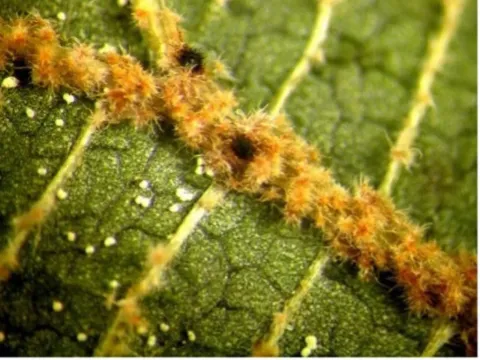
The fungus typically appears as dense, clustered fruiting bodies resembling small blackberries or mulberries. These structures are nearly spherical in shape and dark brown or black in color.
What the section contains
Bertia moriformis
The fruiting bodies (perithecia) are usually arranged in dense groups on the surface of the affected substrate. Individual structures range from 0.5 to 1.5 millimeters in diameter.
The surface of the perithecia has a characteristic bumpy texture, giving them a rough appearance. In dry weather, they may look like tiny charcoal bits attached to the bark.
The fungus is most often found on decaying deciduous wood. Its presence visually indicates advanced stages of decomposition in plant remains.
When inspecting affected wood, a lack of prominent mycelial growth is common, as the fungus primarily forms compact and distinct fruiting bodies.
The pathogen is the fungus Bertia moriformis, which belongs to the division Ascomycota. It is a typical saprotrophic organism specialized in the breakdown of cellulose.
Biologically, this species is not a pathogen of living plant tissues. It leads a saprotrophic lifestyle, developing exclusively on dead or severely weakened wood.
The life cycle involves the formation of ascospores within perithecia, which are dispersed by wind or water droplets. This ensures the colonization of new woody substrates.
The fungus plays an active role in nutrient cycling within forest ecosystems by facilitating the degradation of lignin and cellulose in dead wood.
From an agronomic perspective, the presence of Bertia moriformis is an indicator that the tree has reached a stage of decay or is in a critical condition.
Successful development of the fungus requires high humidity of both the air and the substrate. Shaded and damp forest areas provide the ideal environment.
It prefers decaying wood of broad-leaved trees such as beech, birch, alder, or oak. It most frequently colonizes branches and logs lying on the forest floor.
The temperature optimum for vegetation and fruiting falls within moderate ranges typical of temperate climate zones during spring and autumn.
Contact between wood and soil accelerates the colonization process, as the fungus gains access to additional moisture and essential micronutrients.
Under prolonged rainy conditions, the fruiting of the fungus becomes more abundant, promoting the mass dispersal of spores to neighboring plant debris.
Bertia moriformis causes no direct harm to healthy agricultural crops. It lacks the ability to infect living cambium or healthy root systems.
The main "danger" lies in the accelerated destruction of woody debris. While this is a beneficial process in the forest, it may signal the presence of rotting stumps in gardens.
The accumulation of numerous fruiting bodies on a garden plot indicates poor sanitary management of the area regarding dead standing wood.
The fungus may indirectly indicate the presence of decay pockets in the garden, which can become habitats for other more harmful plant-pathogenic fungi.
By leaving rotting wood colonized by this fungus, a gardener creates micro-environments that may harbor secondary pests which could spread to weakened fruit trees.
Specific fungicides are not required for controlling this fungus, as it is a saprotroph. Protection measures are purely preventive in nature.
The primary control method involves timely sanitary logging and the removal of dead trees, stumps, and woody debris from the garden area.
It is recommended to conduct regular cleaning of the site to remove plant remains that could serve as a substrate for fungal mycelium.
Maintaining tree health through proper care, fertilization, and pruning is important to prevent the occurrence of dead wood patches.
- Regular monitoring of tree bark condition.
- Disposal (burning or removal) of woody waste.
- Sanitary pruning of damaged or diseased branches.