
Bertia
Bertia
The disease is caused by fungi belonging to the genus Bertia, with Bertia moriformis being the most frequently identified species in this group.
What the section contains
Bertia
These fungi are classified as ascomycetes and are primarily known for their ability to colonize decaying or stressed woody tissue.
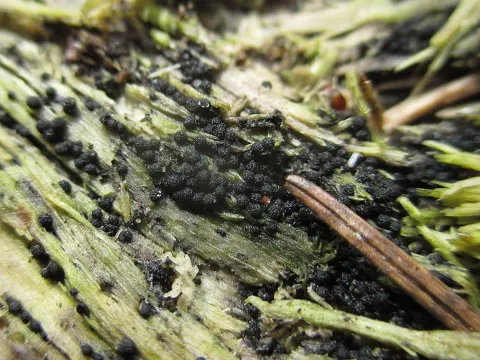
The pathogen produces small, characteristic, pear-shaped or globular fruiting bodies known as perithecia, which often grow in dense clusters on the surface.
The life cycle involves the release of spores that spread via wind and rain, allowing the fungus to find and colonize new, vulnerable hosts.
While often acting as a saprotroph, the fungus can behave as a weak parasite, exploiting existing wounds or necrotic tissue on trees.
The most visible symptom is the appearance of numerous small, black, mulberry-like bumps or fruiting bodies on the surface of the bark.
Infected areas often show signs of tissue softening, discoloration, and eventual disintegration of the outer protective bark layers.
Severe infestations can lead to localized oozing of sap or exudate from cracks, signaling the disruption of internal plant vascular systems.
As the infection progresses, the underlying cambium layer may die, resulting in localized necrotic zones that restrict nutrient flow.
The presence of dense clusters of dark perithecia is a definitive sign that the plant has been colonized by the fungus for a significant period.
Persistent high humidity and wet bark surfaces are primary drivers for the colonization and development of Bertia fungi.
The fungus thrives in environments with poor air circulation, which prevents the bark from drying out after rainfall or morning dew.
Trees that are already stressed due to drought, frost damage, or improper pruning are significantly more susceptible to infection.
Optimal growth usually occurs during moderate temperatures, making spring and autumn critical periods for monitoring the spread of the fungus.
Accumulation of dead woody debris and lack of sanitation in gardens create a reservoir for fungal spores to survive and propagate.
The primary harm is the gradual degradation of the tree’s health, which impairs its structural integrity and overall vigor over time.
By damaging the vascular pathways, the fungus reduces the plant's ability to transport water and essential nutrients effectively.
Affected trees suffer from reduced productivity and aesthetic value, often leading to premature decline or death of affected branches.
Wounds and necrotic zones caused by the fungus facilitate the entry of more aggressive secondary pests and pathogens.
Economic damage includes the costs associated with increased maintenance, remedial surgery, or the complete removal of infected specimens.
Strict sanitation practices, including the prompt removal and disposal of all dead or diseased branches, are the most effective management strategies.
All mechanical damage to the bark should be immediately cleaned and treated with protective horticultural paints or fungicides to prevent colonization.
Maintaining tree vigor through balanced fertilization and appropriate irrigation helps the plant develop a stronger immune response against fungal attacks.
Early spring application of copper-based fungicides can help suppress spore populations and protect the surface of susceptible woody tissues.
- Implement regular pruning to improve canopy aeration and decrease moisture retention on branches.
- Protect tree trunks from sunscald and frost damage using white latex paint to minimize entry points for pathogens.