
Bermudagrass smut
Ustilago cynodontis
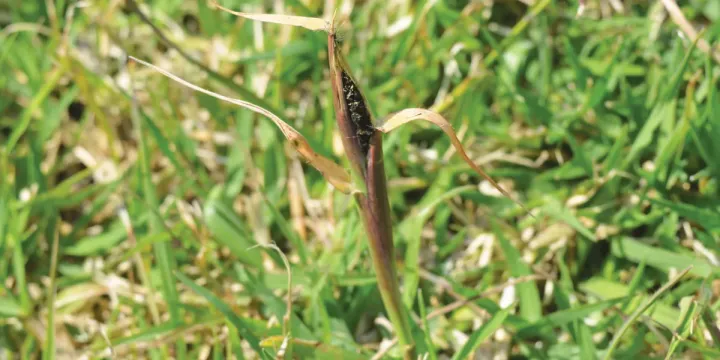
Description
Symptoms
The primary symptom of Bermudagrass smut is the transformation of the host plant's inflorescences into a black, dusty mass of fungal teliospores. During the disease progression, the spikelets of the Bermudagrass are completely destroyed and replaced by these spores.
Infected plants often appear chlorotic and exhibit stunted growth compared to healthy specimens. The appearance of the inflorescence becomes highly atypical, as it deforms and easily releases dust upon the slightest mechanical disturbance or wind gust.
Usually, the infection involves the entire reproductive part of the plant, preventing the formation of viable seeds. Fungal spores are disseminated across the field via air currents, which facilitates the rapid infection of neighboring plants.
Infested areas appear as patches covered with dark powder, which are particularly noticeable during the flowering stage. In later stages, only the deformed axes remain, lacking fertile spikelets.
Diagnosis is performed visually in the field, although microscopic examination of the spores, which possess a specific wall ornamentation, is required to confirm the pathogen species definitively.
Pathogen
The causal agent of this disease is the microscopic fungus Ustilago cynodontis, which belongs to the class Basidiomycetes and the order Ustilaginales. It is a highly specialized parasite that primarily attacks members of the genus Cynodon.
The biology of the pathogen is closely tied to the life cycle of its host, Bermudagrass. The fungus overwinters as teliospores in the soil or on plant debris, maintaining viability for several years.
The infection enters the plant tissues at the early stages of development, infecting meristematic tissues. The fungal mycelium spreads systemically, growing inside the stem as the plant develops.
As the plant matures, the mycelium concentrates in the inflorescence area, where active spore formation occurs. This turns the plant's reproductive organs into a potent source of infection within the agroecosystem.
The spores of the fungus are characterized by high resistance to adverse environmental factors, making Ustilago cynodontis a persistent pathogen in regions where it has become established.
Conditions for development
Disease development is most intensive under conditions of moderate humidity and warm temperatures, typical for the active growing season of Bermudagrass. The optimal temperature for spore germination is generally between 20 and 25 degrees Celsius.
Wind currents play a significant role in disease spread, transporting lightweight teliospores over long distances. Infection of new plants typically occurs when spores germinate under high soil moisture conditions.
Dense stands or areas with high nitrogen content may contribute to faster spread within the population. The pathogen persists better in sites where Bermudagrass is grown continuously for many years.
Infection levels vary depending on the weather conditions of the current season; prolonged rains during the flowering stage promote more active infection of young shoots.
The microclimate within the turf is also critical: dense vegetation retains moisture for longer periods, creating ideal conditions for basidiospore germination and contact with vulnerable plant tissues.
Why it matters
The main damage caused by Bermudagrass smut is the complete loss of seed productivity in infected plants. Because the disease is systemic, infected specimens are almost never capable of producing healthy seed material.
In agricultural practice, this leads to a decrease in the quality of pastures and forage lands where Bermudagrass is a vital component. The disease renders the grass less suitable for use as green fodder.
The gradual displacement of healthy plants by infected ones leads to the degradation of grass stands in hayfields. This requires additional management costs to restore the quality composition of forage crops.
Bermudagrass smut contributes to the buildup of inoculum in the soil, creating long-term risks for future growing cycles. This necessitates changes in crop rotation or the implementation of soil decontamination measures.
Beyond direct economic loss, the pathogen complicates breeding programs and the use of Bermudagrass in landscaping or reclamation projects by reducing the purity of the planting material.
Protection
Management strategies include using only healthy, certified planting material that is free from pathogen spores. It is essential to clean seeds thoroughly to remove any impurities that might harbor teliospores.
Agronomic methods include regular mowing of the grass stand before the onset of mass fungal sporulation. This interrupts the pathogen's life cycle and reduces the spore load in the environment.
Adherence to crop rotation is an effective way to suppress the disease: alternating crops prevents the pathogen from accumulating in the soil to critical concentrations.
The use of chemical fungicides for seed treatment or the protection of growing plants may be advisable in conditions of high epidemiological risk. Product choice must align with regulatory guidelines for the specific type of turf.
Regular phytosanitary monitoring of fields allows for the detection of infection hotspots at early stages. Timely removal and destruction of initial infected plants significantly prevent the widespread contamination of the area.
Discussion
No discussions yet — be the first.