
Raspberry ascospora dieback
Clethridium corticola
The first symptoms of ascospora dieback on raspberries usually appear in the second half of the summer on the current season's canes.
What the section contains
Raspberry ascospora dieback
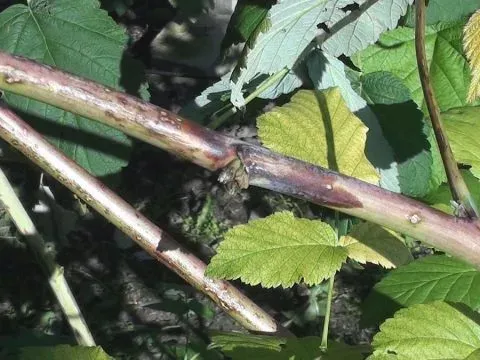
Characteristic symptoms include light brown or purple spots that form primarily around the leaf axils, where infection often begins.
As the disease progresses, the center of the spots turns white or grey, and a distinct darker border appears around the affected areas on the cane bark.
Small black fruiting bodies, known as pycnidia, erupt through the outer skin of the infected canes, giving the surface a speckled appearance.
In severe cases, the bark starts to crack and peel, significantly weakening the canes and often leading to bud mortality or stunted growth in the following season.
The causal agent of this disease is the fungus Clethridium corticola, which specifically targets the stems and canes of Rubus idaeus.
This fungal pathogen survives the winter in infected canes and leaf debris, remaining dormant until conditions become favorable for spore production.
It spreads via spores that are released during humid weather and transported by wind or water splashes to healthy canes, where they colonize the tissue.
The fungus invades the cortex of the stems, disrupting vascular tissues and hindering the transportation of nutrients throughout the plant.
Continuous infection cycles throughout the growing season can lead to rapid colonization of a raspberry plantation if left unchecked.
High humidity and consistent rainfall are the primary environmental conditions that trigger the outbreak and spread of ascospora dieback.
Dense, overcrowded plantations provide a poor environment for air circulation, allowing moisture to persist on the canes for extended periods.
Temperatures ranging from 15°C to 22°C (59°F–72°F) are considered ideal for the germination of fungal spores and the subsequent infection process.
Excessive use of nitrogen-based fertilizers results in succulent, fast-growing canes that are physically softer and more susceptible to fungal entry.
Poor sanitation, such as leaving diseased pruning debris on the ground, creates a primary reservoir for the pathogen to persist year after year.
Ascospora dieback is a serious threat to raspberry production, causing a notable decrease in fruit quantity and quality due to cane damage.
Damaged canes are less winter-hardy and more prone to cold injury, which often results in the loss of buds and reduced yield in the following spring.
The disease weakens the overall structure of the plant, making it more vulnerable to secondary infections and opportunistic pests that can kill the canes.
If not managed correctly, an infected patch can become economically non-viable, requiring complete removal and replanting of the affected area.
The disease poses a significant risk to nursery operations, as infected canes can spread the pathogen to healthy garden locations through trade.
Effective management requires an integrated approach focusing on rigorous sanitation and the strategic application of protective fungicides.
The most important cultural practice is the immediate removal and destruction of all infected canes after the harvest to eliminate the inoculum source.
Thinning out the canopy improves air movement and sunlight penetration, which helps dry out the canes and discourages fungal growth.
Applying appropriate fungicides during the growing season can protect emerging canes from new infections, especially during wet periods.
- Selecting resistant raspberry cultivars for new plantings.
- Avoiding overhead irrigation to prevent spreading fungal spores.
- Ensuring balanced fertilization to promote strong, resistant canes.
- Regularly clearing weeds to improve air circulation at the base of the plants.