
Ascosphaerosis
Ascosphaerales
The causative agent of this disease is the fungus Ascosphaera apis, which specifically targets the larvae of honey bees.
What the section contains
Ascosphaerosis
The fungus reproduces through spores that are highly resilient and can remain dormant in the environment for several years.
When larvae ingest the spores with contaminated food, the fungus begins to grow, filling the internal body cavity with mycelium.
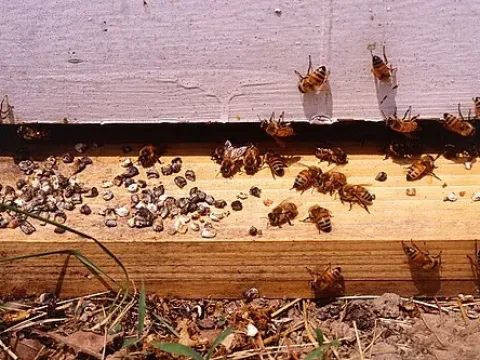
This biological process leads to the death of the larva, turning it into a hardened, shriveled structure often described as a chalky mummy.
The pathogen thrives in the unique microclimate of the beehive, utilizing the larvae as the primary substrate for its development.
The most recognizable sign is the presence of white, chalk-like mummies found on the landing board or the bottom board of the hive.
In the honeycomb, the brood pattern appears scattered, with empty cells mixed among sealed ones, indicating the removal of infected larvae.
Infected larvae become grey or black over time as the fungus produces its reproductive structures, commonly called fruiting bodies.
Beekeepers may notice the bees attempting to clean out the infected cells, creating debris that is visible at the entrance of the hive.
Under close inspection, the dead larvae exhibit a fuzzy white coating of fungal growth before they completely harden.
High humidity within the brood nest is the primary environmental factor that promotes the growth of the fungal mycelium.
Chilling of the brood, often caused by inadequate hive insulation or a disproportionate brood-to-worker ratio, triggers the infection.
Spring management practices that expand the brood nest too rapidly often leave the larvae vulnerable to temperature fluctuations.
Poor ventilation within the hive contributes to moisture accumulation, creating the perfect nursery for the spores to germinate.
The presence of old, contaminated combs provides an abundant source of spores, making the disease difficult to eradicate once it establishes.
The disease significantly decreases the worker bee population, which in turn leads to lower honey production and weakened colony growth.
Weakened colonies are less efficient at thermoregulation, making them more susceptible to additional infections and environmental stress.
In severe cases, the entire colony may collapse, leading to a complete loss of the bee family if early interventions are not applied.
The fungus can easily spread to other hives on the apiary through drifting bees, shared equipment, or the exchange of frames.
Economic losses include the cost of medication, replacement of equipment, and the substantial loss of potential pollination and honey yield.
The most effective strategy involves replacing contaminated combs with fresh, disinfected ones to reduce the spore load in the colony.
Improving hive hygiene and ensuring proper ventilation are essential steps to lower the humidity levels favored by the fungus.
Beekeepers should ensure the colony is strong enough to cover all frames, which helps in maintaining the necessary brood nest temperature.
Treatment with registered antifungal agents can help suppress the spread of the disease within the hive during the active season.
Implementing regular monitoring and replacing old queens with young, vigorous ones can significantly enhance the colony's natural resistance.