
Ascosphaerosis
Ascosphaeraceae
The causative agent of ascosphaerosis is the sac fungus Ascosphaera apis. This pathogen specifically infects honey bee larvae in both capped and uncapped brood cells.
What the section contains
Ascosphaerosis
The fungus reproduces sexually, forming fruiting bodies known as spores, which are contained in protective capsules called spore cysts. These spores represent the primary reservoir for the infection within the hive and on beekeeping equipment.
Once ingested by the larva with food, the spores germinate into mycelium. The fungal growth permeates the larval body, eventually erupting through the cuticle and covering the insect in a white, cottony layer.
Infection typically occurs in larvae aged 3–4 days, a period when their immune system is vulnerable and hive conditions may favor rapid fungal development.
It is important to note that the fungus is highly resilient to environmental stressors, allowing spores to remain viable in dry honeycomb and hive woodenware for several years.
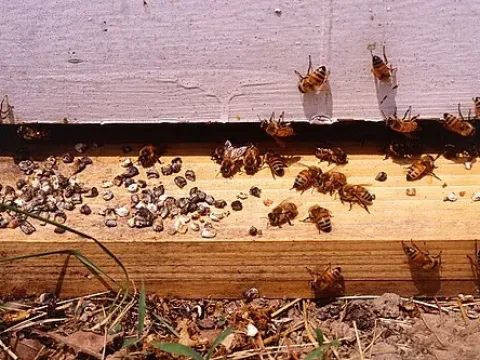
The primary symptom of the disease is the transformation of dead larvae into hard, chalk-like mummies, which is why the condition is commonly known as "chalkbrood."
In the early stages, the dead larva becomes soft and flaccid, then develops a white, fuzzy fungal growth. Eventually, the larva undergoes mummification and hardens completely.
During routine hive inspections, beekeepers may find mummified larvae at the bottom board or on the entrance, as house bees attempt to clean out the infected cells.
In capped brood, one may observe perforated or sunken cappings. Upon opening these cells, a shriveled, chalky mummy is revealed instead of a healthy pupa.
As the infection progresses, black spots may appear on the surface of the mummies, indicating the development of mature fungal fruiting bodies.
Fungal development is promoted by high humidity within the hive, poor ventilation, and extreme temperature fluctuations that weaken the bee colony's ability to regulate the nest environment.
Outbreaks are most common in early spring when the population is shifting and nests often face chilling if the cluster is too small to maintain the necessary warmth.
Stress factors, including improper use of antibiotics, poor nutrition, or keeping colonies in damp, shaded locations, significantly increase the likelihood of infection.
Pathogen spread within an apiary occurs through drifting bees, drones, or shared use of contaminated tools, feeders, and communal water sources.
The fungus thrives at temperatures between 25 and 30 degrees Celsius, which coincides with the ideal temperature range required for brood rearing in the hive.
Ascosphaerosis causes significant economic losses by reducing colony strength due to heavy brood mortality.
The disease impedes colony development as nurse bees exhaust their energy reserves cleaning out infected cells instead of caring for healthy brood.
In severe cases, colony productivity drops drastically, leading to substantial losses in honey production and other hive-derived products.
If left unmanaged, an infected colony may weaken to the point of collapse, becoming highly susceptible to secondary pests like wax moths or other viral and bacterial pathogens.
The constant presence of spores creates a persistent reservoir of infection that can spark an epidemic throughout the entire apiary under unfavorable conditions.
Management of ascosphaerosis relies heavily on strict sanitation practices, including regular disinfection of hives, frames, and tools using approved antimicrobial agents.
Providing optimal environmental conditions is critical; this involves insulating hives during spring and improving airflow to prevent excess moisture accumulation.
Treatment involves the application of authorized antifungal medications, which can be administered through dusting of frames or mixed with sugar syrup feeding.
To improve apiary health, beekeepers should replace old, darkened comb with fresh foundation and requeen colonies with young, genetically resistant queens.
- Isolating infected colonies
- Regular supplemental feeding
- Monitoring hive humidity
- Sanitizing beekeeping tools