
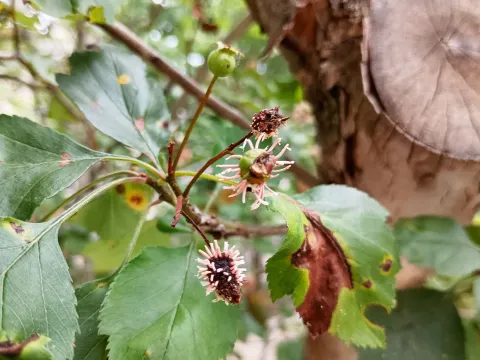
Amorphothecaceae
Amorphothecaceae
The family Amorphothecaceae belongs to the order Dothideales. The key species is Amorphotheca resinae, which is known for its ability to thrive in diverse environments, often acting as a saprotroph but capable of opportunistic parasitism.
What the section contains
Amorphothecaceae
This fungus exhibits a robust mycelial growth pattern, often appearing as mold on various substrates. It reproduces primarily through conidia, which are highly resistant to environmental stress and easily wind-dispersed.
The organism possesses a sophisticated enzymatic system allowing it to break down complex organic polymers. This metabolic flexibility explains its prevalence in many agricultural and industrial settings.
The lifecycle is adapted to survive long periods of environmental stress. Once favorable conditions return, the dormant structures germinate, leading to rapid colonization of available organic matter.
Its persistence in the environment makes it a challenging subject for phytosanitary control. Understanding its biology is crucial for minimizing risks in agricultural production.
High relative humidity and moderate to warm temperatures are the primary drivers of Amorphothecaceae development. It grows most actively in the range of +20°C to +30°C.
Stagnant air and poor ventilation in greenhouses or storage facilities create microclimates that favor fungal spore germination. Preventing air stagnation is a vital step in environmental control.
Nutrient-rich environments, especially those containing sugars or decomposing organic matter, act as primary infection sites. Keeping fields and storage areas clean is essential.
Plant injuries serve as entry points for the pathogen. Whether caused by mechanical damage or insect feeding, these wounds drastically increase the vulnerability of the crop.
Rainfall and high soil moisture levels during the growing season can promote the spread of spores from the soil surface to the lower leaves and fruits of susceptible plants.
The primary impact of Amorphothecaceae is the degradation of plant tissues, leading to rot and structural weakness. This reduces the economic value of crops significantly.
In stored products, the fungus can proliferate rapidly, turning healthy produce into soft, decayed material. This is particularly problematic for root crops and fruits in storage.
Seedlings are particularly susceptible, as the fungus can cause damping-off or inhibited growth. This often leads to sparse crop stands that require replanting.
The presence of the fungus can also contaminate harvests with toxic metabolites, rendering the produce unfit for both human consumption and animal feed.
Overall physiological stress on the plant reduces yield potential. Infected plants show reduced photosynthetic capacity and stunted growth, directly affecting harvest quality.
Crop rotation is a fundamental practice to break the infection cycle. Avoiding the planting of susceptible crops in the same soil for consecutive seasons reduces inoculum buildup.
Maintaining strict sanitation standards, including the removal and destruction of crop residues, is crucial. This limits the survival of the fungus between growing seasons.
Fungicides, particularly those with contact and systemic activity, should be used as part of an integrated pest management (IPM) program to control active outbreaks.
Proper environmental control in storage—including temperature regulation and dehumidification—prevents the fungus from damaging harvested produce.
Strengthening plant immunity through balanced nutrition and effective pest control helps the plant resist potential colonization by the fungus.