
Amoebophilus
Amoebophilus
Description
Pathogen
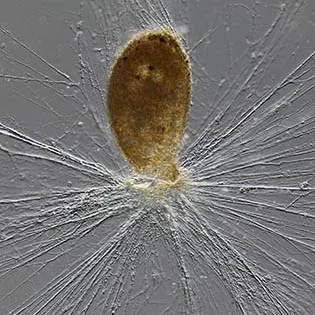
Amoebophilus is a genus of predatory myxobacteria that are specialized in parasitizing soil amoebae. These microorganisms occupy a specific niche within the rhizosphere.
The biological nature of this organism is strictly parasitic towards protozoa. By attacking and lysing amoebae, Amoebophilus exerts a top-down control on the microbial communities surrounding plant roots.
These bacteria belong to the Amoebophilaceae family. Their specialized life cycle is entirely dependent on the availability of host cells, which makes them highly sensitive to changes in soil microbial density.
Although not a primary plant pathogen, their presence modulates the composition of the soil microbiome, which is essential for plant health and development.
Current research classifies them as biotic regulators that can influence the transfer of nutrients in the root zone.
Conditions for development
The proliferation of Amoebophilus is primarily driven by the population density of their prey. High moisture levels in the soil are essential for their motility and ability to encounter hosts.
They thrive in environments rich in organic matter, which typically supports a larger population of soil protozoa and other microorganisms.
Soil temperature plays a significant role in their metabolic activity, with temperate conditions providing the ideal environment for their predatory behavior.
A well-aerated soil structure supports a diverse community of amoebae, which in turn allows for the establishment of stable Amoebophilus colonies.
Changes in soil chemistry, particularly pH levels, can fluctuate their population dynamics, as they prefer environments consistent with general soil fertility.
Why it matters
The harm caused by Amoebophilus is largely ecological rather than direct. They disrupt the microbial loop, which is critical for nutrient cycling in the soil.
By consuming amoebae, they can reduce the rate at which nitrogen and phosphorus are mineralized and made available for plant uptake by the roots.
This imbalance can lead to stress in young crops, as the rhizosphere becomes less efficient at providing necessary growth factors.
Indirectly, the depletion of beneficial microbial populations allows opportunistic pathogens to flourish, potentially leading to increased susceptibility to root diseases.
In intensive farming, a loss of microbial diversity due to such predatory pressures can decrease the overall soil health and long-term productivity of the land.
Protection
Management strategies focus on maintaining a balanced soil ecosystem through sustainable agricultural practices rather than direct chemical eradication.
Crop rotation is highly effective as it alters the root exudate profile, promoting a more stable and diverse microbial population that naturally limits predatory explosions.
Maintaining optimal soil moisture through precision irrigation helps prevent the environmental extremes that might favor the rapid expansion of these specific myxobacteria.
The application of composts and organic amendments should be balanced to prevent localized spikes in microbial prey populations.
- Monitor soil health through regular microbial assays.
- Incorporate balanced green manures into the crop rotation.
- Avoid over-saturation of soils to regulate aerobic micro-environments.
Discussion
No discussions yet — be the first.