
Amoebophilus penardii
Amoebophilus penardii
Description
Symptoms
The primary symptom of an infection by Amoebophilus penardii is the visible loss of pigment in algal colonies. Infected sections typically turn pale or yellowish as the internal photosynthetic machinery of the host cells is systematically destroyed.
Microscopic examination of affected tissue reveals clear signs of cellular wall deformation and the presence of the amoeboid parasite on the surface of the host. In advanced cases, the tissue loses its structural integrity and becomes soft or slimy to the touch.
Necrotic patches are another common indicator of infestation. These patches represent areas where the parasite has completely overwhelmed the host population, leading to mass cell death and the subsequent decay of the organic matter.
Infected cultures often exhibit stunted growth and reduced reproductive rates before the physical signs of necrosis become apparent. This subtle degradation makes early detection vital for preventing a total population collapse within the cultivation system.
Additionally, the presence of foul-smelling organic decay in the water is often a late-stage sign of an Amoebophilus penardii outbreak. This decay is fueled by secondary bacteria colonizing the dead material left behind by the primary parasitic infection.
Pathogen
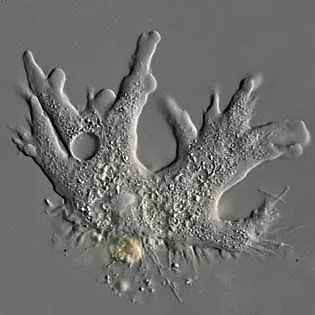
Amoebophilus penardii is a specialized parasitic organism categorized as a protozoan that targets various species of algae. This pathogen acts as an obligate parasite, drawing nutrients directly from the host cells through complex enzymatic mechanisms designed to degrade cell walls.
Characterized by its amoeboid movement, the pathogen can actively navigate in aquatic environments to locate suitable hosts. Its lifecycle is highly adapted to the biological rhythm of the algae it infects, ensuring efficient transmission within dense colonies or cultivation setups.
The biology of Amoebophilus penardii is closely linked to its ability to penetrate and destabilize the cellular structure of algae. Once it attaches to a host, it begins a rapid process of nutrient extraction, which inevitably leads to the decline of the host cell's metabolic functions.
Scientific observation identifies this organism as a significant factor in limiting algal productivity. Its persistence in water systems is supported by a robust ability to endure varying environmental conditions, making it a persistent challenge in managed aquatic environments.
Understanding the life cycle of this pathogen is crucial for effective management. It transitions between motile and stationary forms, allowing it to survive both in open water and when attached to infected organic substrates, ensuring its continued existence in the host environment.
Conditions for development
Amoebophilus penardii thrives in environments characterized by stable, warm temperatures, typically ranging from 18°C to 25°C. These conditions maximize the metabolic activity of the parasite, allowing it to spread more rapidly through an algal population.
High population densities of algae significantly facilitate the transmission of the pathogen. In closed-loop cultivation systems, stagnant water or poor flow dynamics allow the parasite to concentrate, creating high-risk areas for rapid infection outbreaks.
The presence of excessive organic matter in the water acts as a catalyst for the pathogen's growth. Proper water chemistry management, including stable pH and nutrient levels, is essential, as fluctuations can create windows of vulnerability for the host algae.
Seasonal changes play a pivotal role in the prevalence of this disease. During peak growing seasons when algae are most active, the risk of pathogen transmission increases, requiring farmers to implement stricter monitoring and environmental control measures.
Poor sanitation and infrequent cleaning of equipment represent major risk factors. If reservoir surfaces, filters, or delivery piping are not sanitized, they act as persistent reservoirs for the pathogen, allowing for constant re-infection of new batches.
Why it matters
The economic impact of this pathogen is significant, as it can lead to the total destruction of algal biomass. For commercial aquaculture and algal farming, an Amoebophilus penardii infestation often results in the loss of entire harvest batches.
Beyond direct biomass loss, the pathogen necessitates costly remediation efforts. Water decontamination, chemical treatments, and the labor-intensive process of cleaning infected tanks add substantial overhead costs to the production cycle.
The biological integrity of the cultivation system is compromised during an outbreak. The presence of decaying organic matter and parasitic activity shifts the ecological balance, often rendering the water environment hostile to other desirable species or growth parameters.
The pathogen's resilience makes it difficult to eradicate, often leading to recurring outbreaks. This persistence requires farmers to implement long-term sanitation protocols, which can disrupt production schedules and impact overall market consistency.
Finally, the release of toxins and the potential for secondary bacterial infections during the decay phase of an infestation create a hazardous environment. This complicates the disposal of infected material and necessitates strict adherence to biosecurity protocols.
Protection
Preventative management is the most effective approach against Amoebophilus penardii. This includes rigorous sanitation protocols for all equipment, tanks, and water-delivery systems to minimize the initial introduction and survival of the pathogen.
Ultraviolet (UV) sterilization of circulating water is highly recommended as a non-chemical method to neutralize the motile stages of the parasite. This technology provides a continuous barrier against the spread of infection without leaving toxic residues in the water.
Active monitoring, including regular microscopic analysis of algal samples, is essential for early detection. If patches of infection are identified, immediate mechanical removal and disposal of the affected area can prevent the spread to healthy parts of the crop.
Maintaining optimal water flow and avoiding overcrowding are critical agrotechnical practices. By ensuring that algae are not under stress, their natural resistance to parasitic invasion is significantly improved, reducing the effectiveness of the pathogen's attack.
- Implement UV water sterilization units.
- Perform routine cleaning and disinfection of cultivation tanks.
- Maintain optimal algae population density to prevent overcrowding.
- Conduct regular microscopic health checks.
- Dispose of infected biomass immediately to contain outbreaks.
Discussion
No discussions yet — be the first.