
Amethyst deceiver
Laccaria amethystina
Description
Symptoms
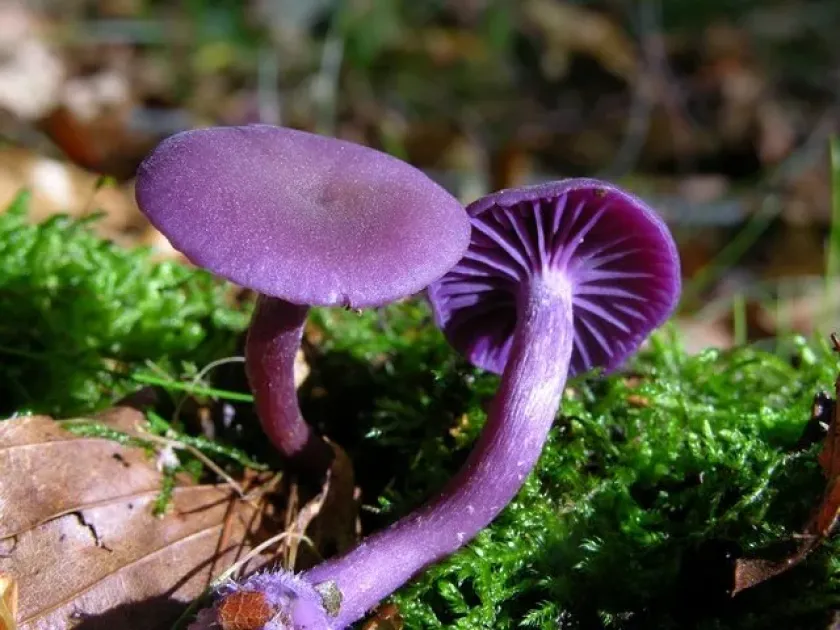
The primary identification feature is the vibrant amethyst-colored cap, which can fade to brownish hues with age.
The gills are widely spaced, thick, and retain a deep purple color, serving as a reliable visual characteristic.
The stalk is fibrous and similarly colored, often displaying a light-colored mycelium at the base.
The spore print is white, which is a key diagnostic factor for mycologists identifying the species in the field.
The flesh is thin, firm, and lacks a strong odor, distinguishing it from several other mushroom species found in the same habitat.
Pathogen
It is crucial to clarify that Laccaria amethystina is not a plant disease or a pathogen. It is a common edible forest mushroom.
The organism is a fungus that produces distinct bright violet fruiting bodies in woodland environments.
This species is not a plant parasite and does not affect agricultural crops or healthy forest trees in a negative way.
In biological terms, it acts as a beneficial soil organism that forms symbiotic relationships with trees.
Scientific research recognizes this mushroom as an important part of the forest ecosystem due to its mycorrhizal functions.
Conditions for development
The mushroom thrives in moist deciduous and coniferous forests, often hidden within deep leaf litter or moss.
Fruiting occurs primarily during the summer and autumn months, especially after periods of rainfall.
It prefers symbiotic association with oak, beech, and spruce trees, which define its natural distribution area.
The fungus requires stable soil moisture levels and protection from direct sunlight to maintain its purple pigment.
During dry spells, the mycelium remains dormant in the soil until more favorable weather conditions return.
Why it matters
This fungus causes no harm to agricultural plants, garden flowers, or commercial tree plantations.
It acts as a beneficial partner to its host trees, aiding in nutrient uptake through an extensive mycorrhizal network.
There is no economic damage or health risk associated with the presence of this fungus in managed or wild lands.
It is classified as a neutral or beneficial organism rather than a threat to agricultural productivity.
Reports of this species causing disease in plants are non-existent, as it is strictly a beneficial forest saprophyte and symbiont.
Protection
As this species is not a pathogen, there are no control methods or protection programs required for it.
If its appearance in lawns or gardens is undesirable, simple mechanical removal of the fruiting bodies is sufficient.
No chemical treatments, fungicides, or specific prophylactic measures are needed to manage this organism.
Maintaining appropriate soil aeration and drainage can naturally limit the growth of most fungal fruiting bodies in landscaped areas.
The focus should remain on proper plant health care, which naturally promotes a balanced soil microbiome without the need for control.
Discussion
No discussions yet — be the first.