
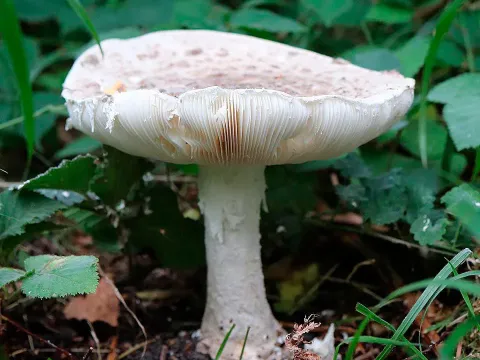
Amanita strobiliformis
Amanita strobiliformis
Amanita strobiliformis, commonly known as the warty amanita, is a basidiomycete fungus that possesses no phytopathogenic properties and does not cause diseases in plants.
What the section contains
Amanita strobiliformis
It operates strictly as a mycorrhizal fungus, establishing mutualistic symbiotic relationships with the root systems of various tree species, particularly deciduous ones.
In this symbiosis, the fungus assists the host tree in nutrient and water uptake from the soil, receiving carbohydrates in exchange for its services.
It lacks the enzymatic machinery required to degrade living plant tissues, confirming that it poses zero threat to agricultural crops or ornamental plants.
From an agronomical perspective, this species is regarded as an indicator of a balanced soil environment and a healthy microbial community.
The fungus thrives in well-drained, humus-rich soils, frequently inhabiting broad-leaved forests, woodland edges, and mature landscape garden settings.
Development of the fruiting body is favored by neutral to slightly alkaline pH levels and consistent soil moisture during the growing season.
Symbiosis with a host tree is a prerequisite for the survival and successful reproduction of this species, making it highly dependent on established flora.
The mycelium network requires undisturbed soil structures to expand, which is why it is rarely found in frequently plowed or chemically treated farmland.
Seasonal patterns, specifically temperature fluctuations in late summer and autumn, trigger the formation of the distinctive white, warty caps above the surface.
Amanita strobiliformis is entirely benign to the agricultural industry and presents no risk of damage to crops, vegetables, or fruits.
There is no evidence of this fungus causing wilting, root rot, or any form of necrosis in plants; it does not compete for space or nutrients.
On the contrary, the mycorrhizal association it facilitates generally enhances the resilience of trees to environmental stress, supporting general garden health.
Concerns regarding this fungus usually stem from mistaken identity or general misunderstandings about fungal roles in ecosystem functioning.
As a non-pathogenic organism, it requires no protective measures or eradication, as its presence is a sign of a biodiverse and clean environment.
- Avoid the use of heavy broad-spectrum fungicides in the immediate area to protect the beneficial mycelium.
- Maintain the health of existing trees, as the survival of the fungus is directly linked to the presence of its symbiotic partners.
- Ensure the soil remains aerated and minimally disturbed to allow the delicate fungal network to thrive.
- Educate garden workers to distinguish between beneficial mycorrhizal fungi and actual plant pathogens to prevent unnecessary chemical usage.
- Preserve the natural organic matter layer on the soil surface, which provides the necessary conditions for fungal growth and soil enrichment.