
Amanita lepiotoides
Amanita lepiotoides
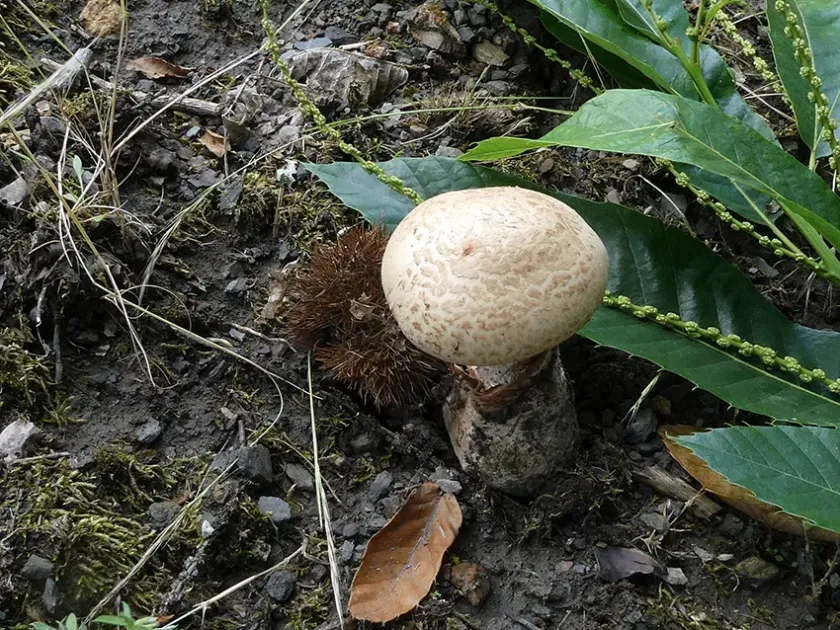
Description
Pathogen
Amanita lepiotoides is a gilled mushroom belonging to the Amanitaceae family. It is strictly classified as a saprotrophic fungus rather than a plant pathogen.
It thrives by decomposing organic matter in the soil and does not possess the biological mechanisms to invade or infect living plant tissues.
In agricultural settings, it does not cause diseases such as wilts, blights, or rots, which are typical of pathogenic fungal organisms.
The organism reproduces through basidiospores that colonize nutrient-rich substrates, particularly those containing high levels of leaf litter or decaying wood.
Its presence in a field is generally considered a sign of high soil organic content rather than an indication of an active disease outbreak.
Conditions for development
The development of Amanita lepiotoides requires high levels of soil moisture and stable temperatures ranging between 18 and 22 degrees Celsius.
It favors acidic to neutral soil environments that are rich in decomposing organic residues such as straw or woody debris.
Optimal growth occurs during periods of high humidity and rainfall, particularly in the autumn months when soil moisture remains consistently elevated.
The lack of mechanical soil disturbance, such as deep plowing, creates an ideal environment for the mycelium to persist and produce large fruit bodies.
Low light intensity and shaded areas near woodland borders or hedgerows provide the necessary microclimate for this species to establish its mycelial network.
Why it matters
There is no direct damage caused to agricultural crops by this fungus, as it does not parasitize any part of the plant structure.
The primary concern is the presence of physical fruit bodies which may hinder mechanical harvesting or field maintenance operations.
While it does not cause disease, heavy colonization of the soil might slightly alter the pH level, indirectly affecting nutrient availability for certain crops.
In greenhouse environments, the emergence of these fungi indicates excessive moisture and poor sanitation, which could potentially encourage other, more harmful pathogens.
It essentially serves as a competitive organism for nitrogen and minerals in the soil, though its impact on crop yield is usually negligible.
Protection
No chemical fungicide applications are required, as the species does not pose a threat to plant health and is not a target for disease control programs.
Standard agronomic practices such as deep tillage and crop rotation are highly effective at disrupting the fungal network and preventing fruiting.
Improving field drainage to reduce excess soil moisture will significantly decrease the suitability of the environment for the fungus.
Ensuring that all organic fertilizers and composts are fully decomposed before application prevents the accumulation of raw substrates for the fungi.
Maintaining a balanced soil pH through liming is another preventive measure that helps suppress the growth of species adapted to acidic conditions.
Discussion
No discussions yet — be the first.