
Amanita onusta
Amanita onusta
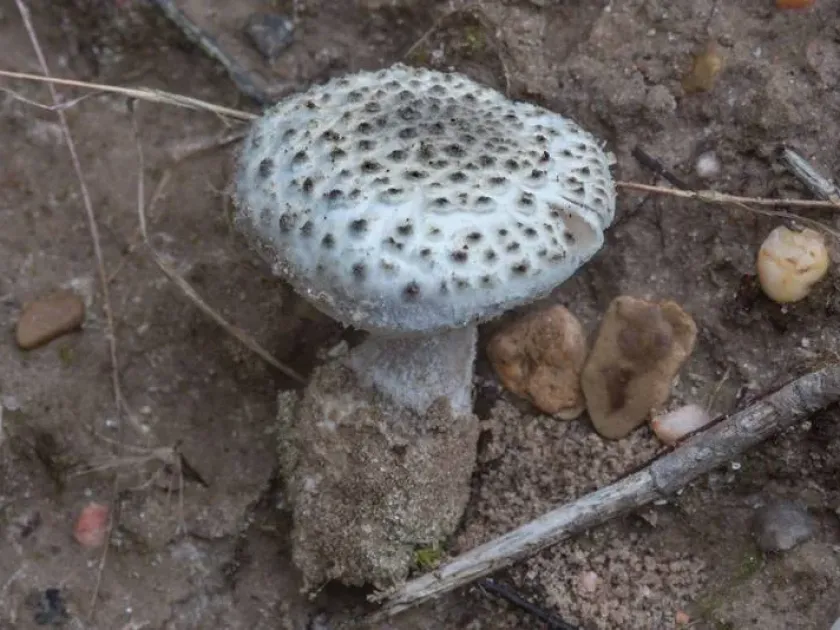
Description
Pathogen
Amanita onusta is not a plant disease or a crop pathogen. It is a species of gilled mushroom in the family Amanitaceae.
This fungus functions primarily as a mycorrhizal partner, creating symbiotic relationships with various tree species.
It does not cause infections, lesions, or biological damage to crops or agricultural vegetation.
The morphology of the fungus features a grey cap covered in small, friable warts or patches.
It is ecologically significant due to its role in forest soil nutrient cycling and symbiotic root colonization.
Conditions for development
The mushroom prefers humid forest environments, particularly those dominated by oak or pine trees.
Development typically occurs in late summer and autumn, provided that moisture levels in the leaf litter are high.
It thrives in acidic, well-drained soils rich in decaying organic matter and woody debris.
Environmental stability is key for the maturation of the basidiocarps produced by the mycelium.
Spore dissemination is carried out primarily through air currents, allowing the species to colonize suitable habitats.
Why it matters
There is no agricultural harm associated with Amanita onusta, as it is strictly a forest-dwelling fungus.
It does not possess the mechanisms to parasitize or negatively impact agricultural crops or horticulture plants.
The fungus is considered non-threating to commercial agriculture and forestry productivity.
Caution must be exercised, as like many Amanita species, it is considered inedible or toxic to humans.
No protective or control measures are required for this species, as it represents a natural component of wild habitats.
Discussion
No discussions yet — be the first.