
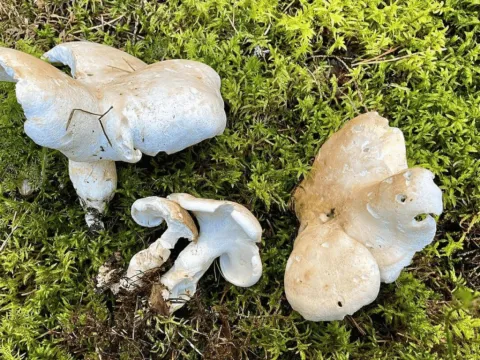
Albatrellus ovinus
Albatrellus ovinus
Albatrellus ovinus, commonly known as the sheep polypore, is a basidiomycete fungus that is often mistakenly labeled as a plant pathogen in inaccurate databases.
What the section contains
Albatrellus ovinus
In reality, this species is not a disease of agricultural crops or garden plants. It does not possess the mechanisms required to invade living plant tissues or disrupt their physiological processes.
The fungus functions primarily as a saprotroph within forest ecosystems, specifically in coniferous forests, where it assists in the decomposition of organic matter.
Its biological cycle is strictly environmental and tied to soil health and symbiotic relationships, making it harmless to the cultivation of fruits, vegetables, or cereals.
Therefore, it is taxonomically and agronomically incorrect to list it alongside harmful plant pathogens like rusts or blights.
The development of Albatrellus ovinus fruit bodies is highly dependent on specific forest conditions, particularly in spruce and pine-dominated stands.
It thrives in soils with high moisture content and acidic pH levels, typically found in temperate or subarctic regions.
The mycelium requires a stable substrate of decaying needles and forest litter, which is essentially absent in agricultural fields and crop-growing zones.
Optimal fruiting typically occurs during late summer and autumn, provided there is consistent rainfall to maintain the necessary ground humidity.
Any disruption to the natural canopy, such as clear-cutting or major soil tillage, creates conditions unsuitable for the survival of the fungus.
There is no evidence that the sheep polypore causes harm to trees, shrubs, or crops, as it does not compete with them for resources.
On the contrary, it plays a beneficial role in the ecosystem by contributing to nutrient recycling and soil structure improvement through its mycelial network.
The fungus does not release any substances that could impair the growth or quality of harvests, ensuring it remains an eco-friendly inhabitant of woodlands.
From an agronomical perspective, no protective measures or chemical treatments are required, as there is no "infestation" to control.
Instead of being an economic burden, Albatrellus ovinus is highly valued as an edible mushroom, frequently harvested for culinary purposes in many regions.